
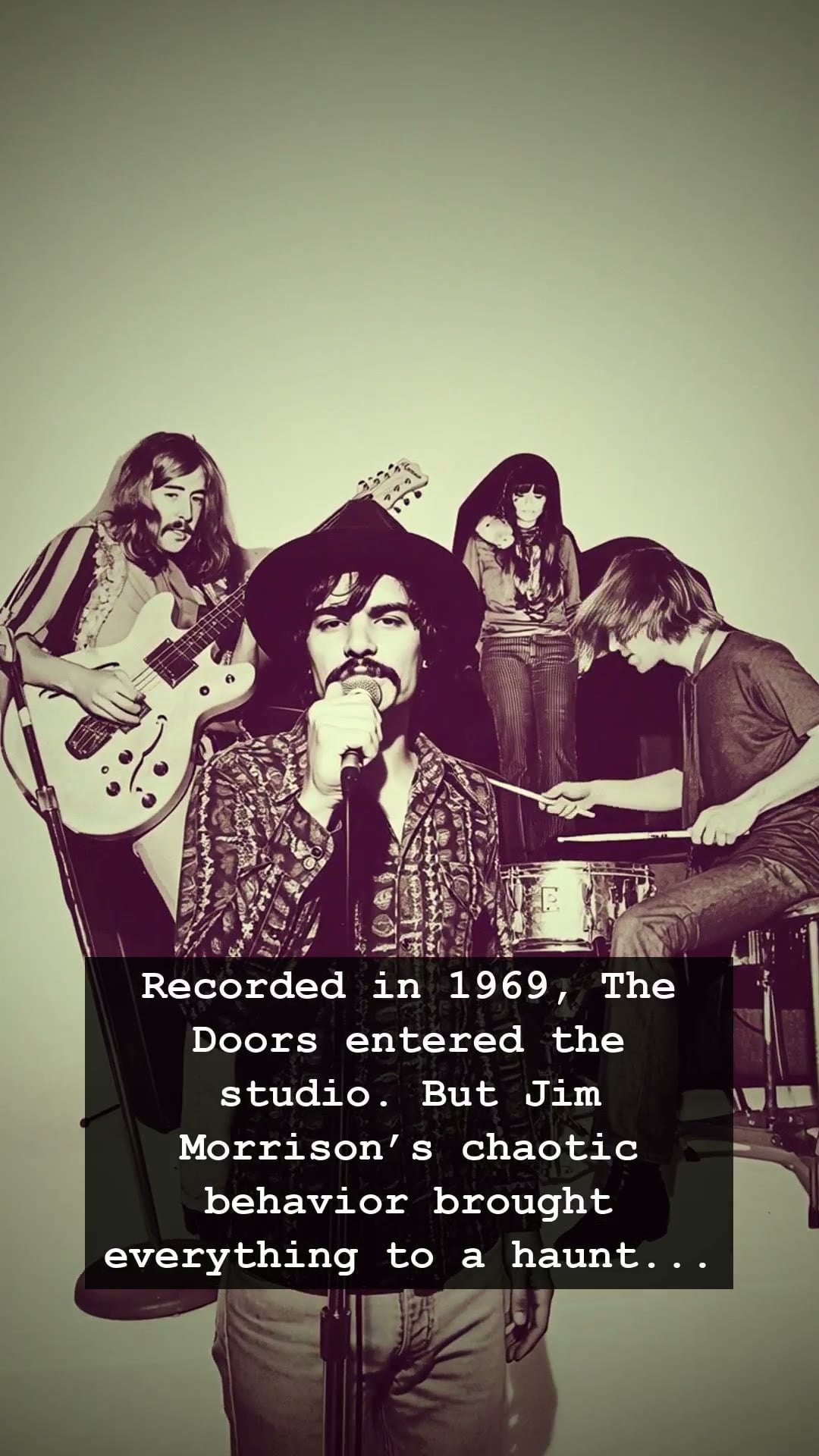
It was 1969, a year that smelled of patchouli, stale cigarettes, and the lingering ozone of a collapsing decade. Inside the sterile confines of an L.A. recording studio, the velvet-voiced icon of counterculture, Jim Morrison, sat slumped behind a microphone. What began as a routine attempt to capture the band’s electric chemistry quickly devolved into a haunting spectacle of erratic behavior and raw, unvarnished chaos. The Doors, once a cohesive force of psychedelic poetry, found themselves staring into the abyss of their own unraveling, wondering if their legendary frontman would even survive the night.
Jim Morrison was never just a singer; he was a living lightning rod, a poet who thrived in the shadows of the Sunset Strip. By the late sixties, the pressure of fame had transformed him from the enigmatic Lizard King into a man warring with his own shadow. The studio sessions of 1969 were meant to produce their next masterpiece, but the atmosphere was suffocating. Every take was interrupted by Morrison’s unpredictable outbursts and the heavy silence of bandmates who watched in helpless frustration. The camaraderie that had fueled their early hits at the Whisky a Go Go was being slowly suffocated by his deepening struggle with alcohol and the relentless demands of the limelight.
To understand the gravity of that moment, one must look at the cultural landscape of the era. This was the golden age of the jukebox and the transition from the flower-power optimism of the mid-sixties to a grittier, more nihilistic reality. As the decade closed, Jim Morrison represented the terrifying fragility of that transition. His performances were no longer just concerts; they were exorcisms. When he stepped up to the mic, the room would hold its breath, sensing that the man delivering the lyrics was walking a tightrope between brilliant artistic genius and total self-destruction.
Those 1969 sessions serve as a haunting reminder of the high cost of musical immortality. We often idealize these figures, viewing them through the lens of grainy concert footage or the static of a worn vinyl record, but the reality was far more jagged. Jim Morrison lived with a sense of urgency that bordered on recklessness, and his bandmates were forced to navigate the debris of his psyche just to capture the music that would eventually define a generation. It was a time when the myth was finally catching up to the man, creating a tension that bled into every chord they struck.
Even decades later, the story of Jim Morrison during these final turbulent years continues to fascinate. It speaks to our collective obsession with the tortured artist and the thin line between creative divinity and personal tragedy. As we listen to those timeless tracks today, we aren’t just hearing a band; we are hearing the echo of a man who burned out far too quickly. Though the lights in the studio dimmed long ago, the shadow of the Lizard King still dances in the corners of rock history, inviting us to keep listening for the truth hidden between the notes.