
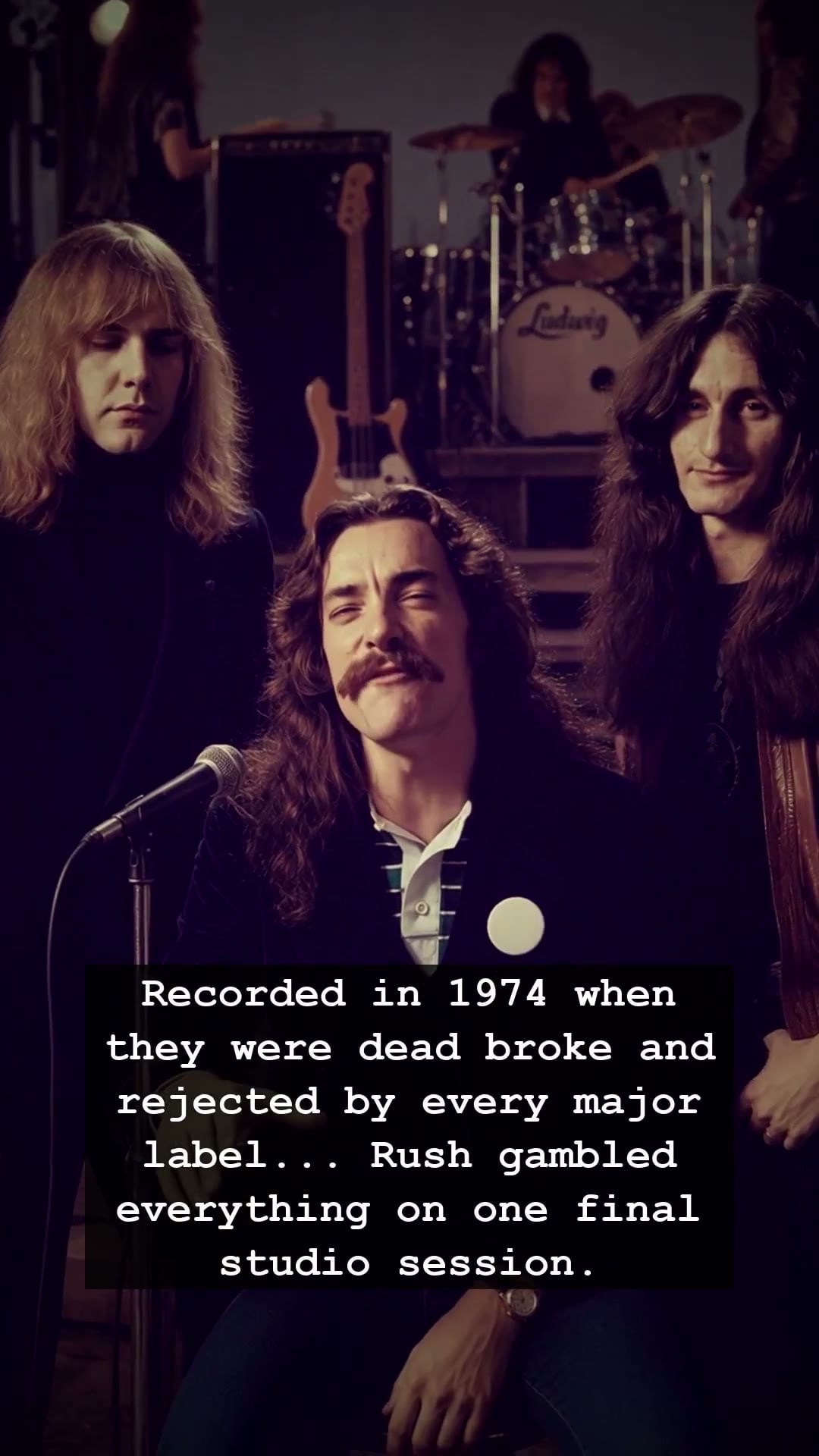
The year was 1974, and the air in Toronto felt heavy with the suffocating scent of failure. For three young men from the suburbs—Geddy Lee, Alex Lifeson, and John Rutsey—the dream of rock stardom was rapidly curdling into a desperate reality of empty pockets and closed doors. They had been rejected by every major label in the industry, told their sound was too aggressive, too complex, or simply not commercial enough. They were flat broke, living on nothing but the fuel of their stubborn ambition and a fading belief in the music they were creating. With their backs against the wall and the threat of total bankruptcy looming, they decided to make one final, reckless gamble. They pooled their remaining pennies to book a studio session, knowing full well that if this record failed to capture the electricity they felt in their cramped rehearsal spaces, the band called Rush would be nothing more than a footnote in history.
It is difficult to overstate just how bleak the landscape was for independent bands before the global saturation of the MTV era. The music business in the mid-seventies was a fortress guarded by gatekeepers who demanded safe, radio-friendly anthems. Rush, however, was playing something entirely different. They were crafting a sound that married the raw power of Led Zeppelin with a nascent, intellectual complexity that would soon define the progressive hard rock genre. During that make-or-break studio session, the trio channeled their shared frustration into their self-titled debut. They weren’t just recording songs; they were screaming into the void, hoping the echo would be loud enough to wake the world. The recording sessions were grueling, filled with the kind of high-stakes pressure that either breaks a band or binds them together for life.
The resulting self-titled album was a thunderous declaration of intent. Tracks like Working Man resonated with a working-class spirit that caught fire in the most unlikely of places. A DJ in Cleveland named Donna Halper famously spun the track, and the response was instantaneous. It was the crack in the foundation the band needed. That single act of rebellion against the industry status quo turned the tide, transforming Rush from a struggling club act into a cult phenomenon that would eventually fill stadiums around the globe. It proved that sometimes the most authentic art is born not in a boardroom, but in the desperate, late-night hours when you have absolutely nothing left to lose.
Looking back at that pivotal moment, it serves as a haunting reminder of the fragility of greatness. We often forget that the legends we celebrate on our old vinyl records were once just kids praying for a break. The story of Rush in 1974 is a testament to the raw, unpolished grit of the seventies, a time when a band could bypass the suits and find their audience through sheer sonic force. It is a story of survival, of sticking to one’s guns in the face of universal rejection, and of the incredible power of a single song to alter the course of music history.
Today, the legacy of that era persists in the scratches of a worn-out LP or the nostalgic hum of a vintage turntable. When we listen to those early tracks, we aren’t just hearing rock and roll; we are hearing the sound of a band refusing to die. It is a timeless narrative that resonates with anyone who has ever faced an impossible wall and decided to climb it anyway. Rush didn’t just survive their moment of crisis; they defined the blueprint for how a band can endure, evolve, and ultimately triumph against all odds. Their journey reminds us all that the most iconic stories are often the ones written on the edge of collapse.