
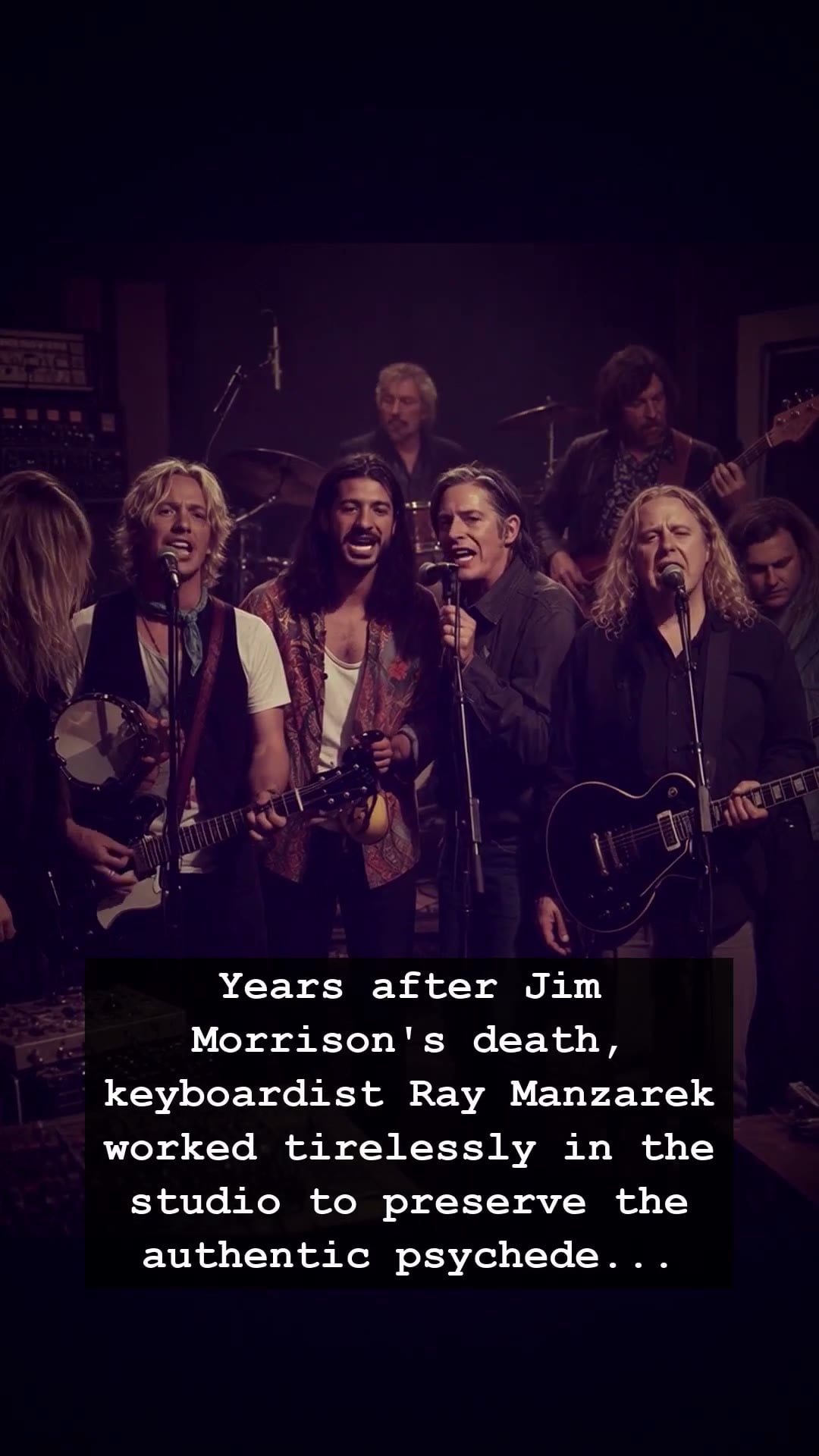
In the dim, smoke-filled haze of the 1960s, the world was mesmerized by the chaotic poetry of Jim Morrison, but the heartbeat of The Doors was always something much more cerebral. When the Lizard King finally fell silent in a Paris bathtub in 1971, the music world assumed the band’s story had reached its final, tragic chapter. Yet, for keyboardist Ray Manzarek, the silence was not an end, but a call to arms. Decades after the rest of the world had moved on to the neon glitz of disco and the synthesizers of the eighties, Ray Manzarek returned to the studio with a singular, haunting mission: to ensure that the psychedelic fire they ignited in West Hollywood never truly burned out.
Walking into the studio with Ray Manzarek was like stepping back into a time capsule of analog tape and velvet curtains. While the music industry shifted toward the corporate polish of the MTV era, Manzarek remained a guardian of the gritty, visceral sound that defined a generation. He labored relentlessly over original master tapes, his fingers—the same fingers that masterfully played the iconic bass lines on the Vox Continental organ—searching for every hidden nuance of their studio sessions. He wasn’t just mixing music; he was curating a ghost story, desperately trying to translate the raw, shamanistic energy of Morrison’s lyrics into a format that a new, uninitiated generation could finally understand.
The relationship between Manzarek and Morrison was a tempestuous collision of the intellectual and the primal. Ray Manzarek often spoke of their partnership as a two-headed monster, a creative tension that pushed The Doors into territory few bands dared to tread. It was this deep, almost telepathic bond that drove him to protect their legacy long after the headlines about scandal and excess had faded. To Ray, the songs were not just tracks on a record; they were architectural blueprints of a counterculture revolution, and he refused to let them become relics buried under the dust of forgotten jukeboxes.
His dedication during these late-career studio sessions was more than professional; it was a profound act of loyalty. He knew that the darkness inherent in songs like The End or Riders on the Storm required a delicate touch to preserve their original, unsettling magic. Even as he aged, his passion remained as sharp as it was during the peak of the Summer of Love. He understood that the legacy of The Doors wasn’t found in the tragic mythology of Jim Morrison alone, but in the intricate, swirling keyboard melodies that provided the canvas for that madness.
Today, as we look back at the landscape of American music, the influence of Ray Manzarek feels more vital than ever. He kept the flame burning, ensuring that the psychedelic legacy of The Doors would continue to haunt the speakers of those who crave something deeper than pop perfection. If you close your eyes and listen, you can still hear him in the mix, honoring the past while anchoring the music to eternity. Perhaps it is time to drop the needle once more and let the ghost of the sixties remind you of what real, unfiltered art sounds like.