
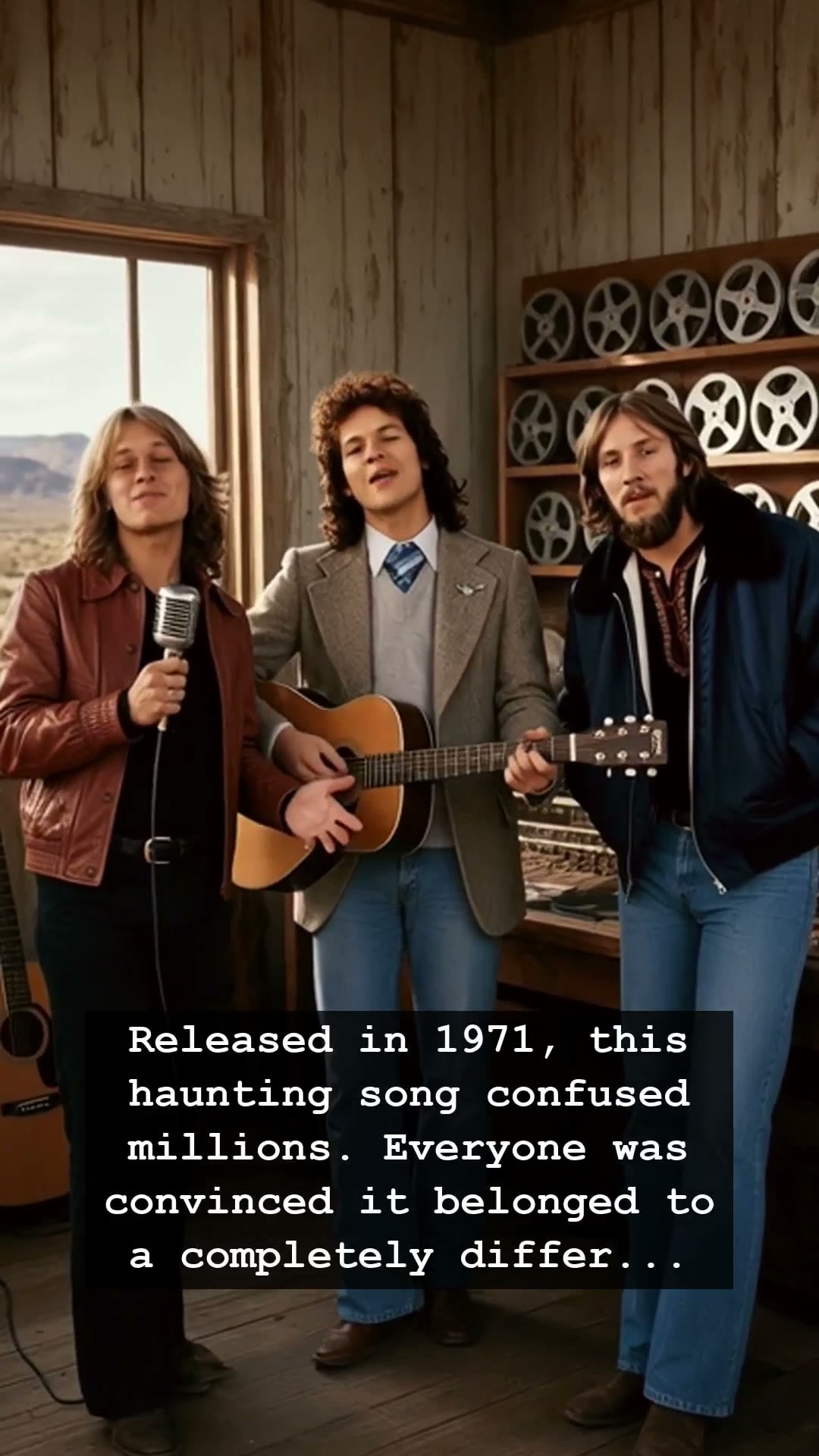
In the golden haze of 1971, the airwaves were dominated by the introspective, scratchy folk-rock that defined the era. When a new acoustic track started drifting through the speakers of AM radios and jukeboxes across America, listeners were instantly transported to the canyon-soaked soundscapes of their favorite folk legends. The harmonies were tight, the melody felt weary yet hopeful, and the vocal delivery possessed that distinct, fragile tremor that was synonymous with one man: Neil Young. For months, the public remained absolutely convinced that the song belonged to the Canadian icon. But the truth was far more surprising. It was not Neil Young at all, but a rising trio known as America, and the song that started it all was their debut hit, A Horse with No Name.
The irony of the situation was not lost on the music industry. The members of America—Dewey Bunnell, Dan Peek, and Gerry Beckley—were young musicians crafting their sound in London, far away from the sun-drenched hills of California. When they recorded that iconic, haunting track, they were simply channeling the influences that had shaped their musical upbringing. The resemblance was so uncanny that even the band themselves found it surreal. The acoustic guitar strumming, the desert-themed lyrics, and that specific, nasal resonance hit the radio listener’s ears like a ghost from a Neil Young record. It became one of the most famous cases of mistaken identity in rock history, fueling late-night debates in diners and record shops as fans scrambled to verify the artist.
This era was defined by the transition from the psychedelic experimentation of the late sixties into the more grounded, singer-songwriter movement of the early seventies. As the Woodstock generation began to age, they sought comfort in the stripped-back, organic sounds that America perfectly captured. Yet, the pressure to emerge from the shadow of a legend like Neil Young was intense. Critics often dismissed the band as a mere imitation, ignoring the clever songwriting and the unique harmonic arrangements that made America a distinct entity in their own right. They were caught in a cultural moment where authenticity was the ultimate currency, and being labeled a copycat could have been a career-ending death knell.
Despite the confusion, the song soared to the top of the charts, proving that the public was hungry for the desert-wanderer aesthetic regardless of the mystery surrounding its origin. Behind the scenes, the band navigated the chaotic life of rock stardom, dealing with the sudden weight of fame that often dismantled successful groups of that era. They were suddenly cast into the spotlight, riding the wave of FM radio popularity while fighting to establish their own legacy. It remains a fascinating testament to the power of a melody to haunt an entire generation, proving that even a mistaken identity can lead to legendary status.
Today, listening to the track brings back the smell of analog tape and the warmth of a spinning vinyl record. It stands as a portal to a time when songs were mysterious, when radio discovery felt like an act of detective work, and when a single haunting melody could unite a nation in wonder. Whether or not you ever believed it was Neil Young, the track remains a timeless staple of the American songbook. Next time you drop the needle on that record, close your eyes and listen closely; you might still hear the ghost of that 1971 mystery echoing through the desert wind.