
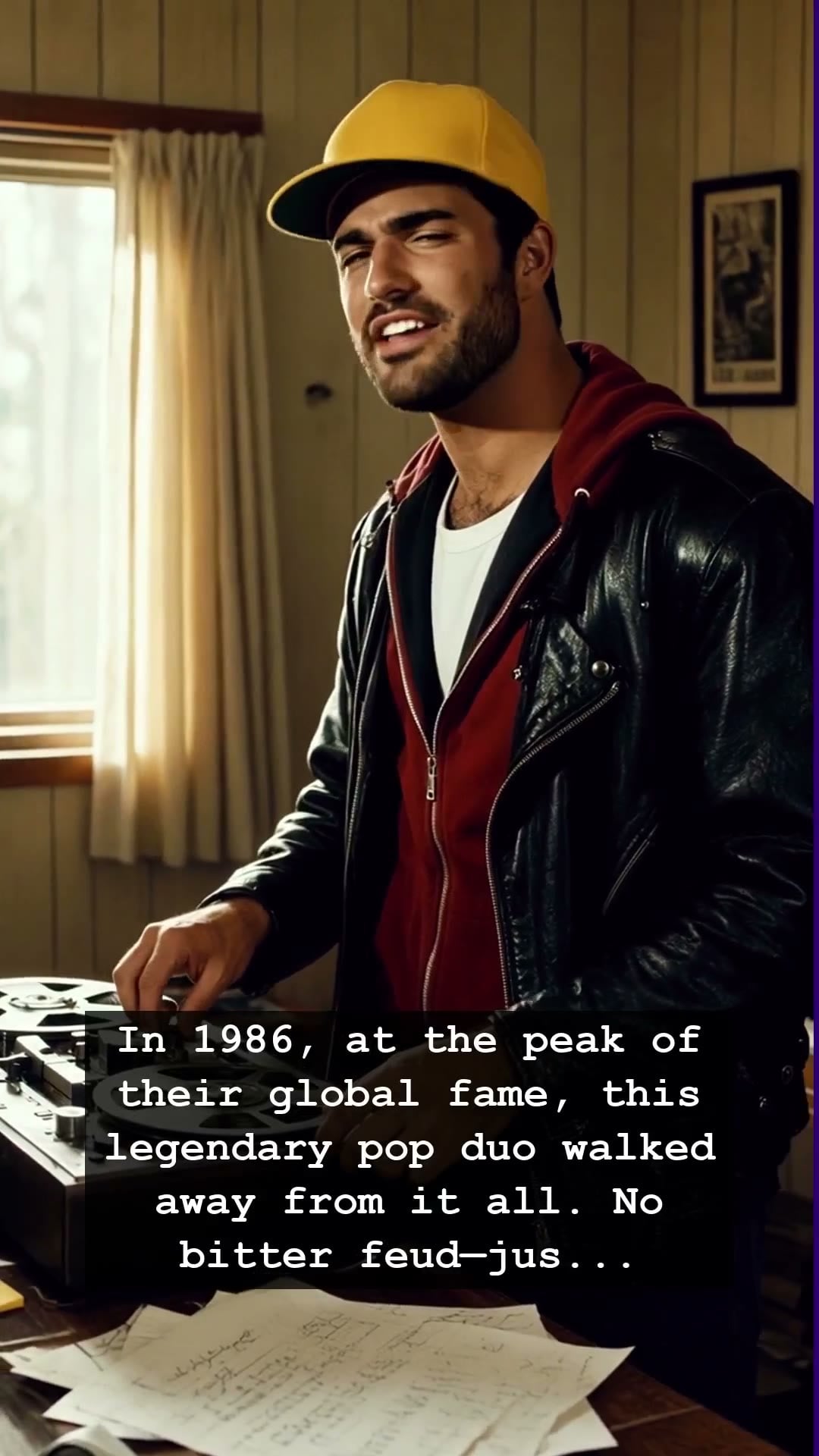
It was June 28, 1986. The air at Wembley Stadium was thick with the scent of hairspray, cheap perfume, and the electric tension of eighty thousand screaming fans. As the final notes of the Careless Whisper saxophone riff faded into the humid London evening, the world held its breath. George Michael and Andrew Ridgeley, the golden boys of the eighties who had defined a generation, stood shoulder to shoulder one last time. They weren’t just ending a concert; they were shuttering a global phenomenon. In an era dominated by the glitz of MTV and the rise of the Walkman, Wham! had become the heartbeat of youth culture. Yet, at the absolute zenith of their fame, they walked away, leaving a void that arguably never truly closed.
To understand the magnitude of that goodbye, one must recall the sheer velocity of the Wham! trajectory. They were the poster boys for a brighter, neon-soaked decade. From their humble beginnings in suburban Bushey, England, they rose to conquer the charts with hits like Wake Me Up Before You Go-Go and Freedom. They weren’t just musicians; they were symbols of a liberated, carefree youth. But behind the sequined jackets and the bright, infectious melodies, the machine was grinding them down. The relentless tour schedules, the screaming crowds, and the stifling expectations of fame began to feel like a gilded cage for a young George Michael, whose artistic ambitions were already outgrowing the pop-duo format.
Many music historians expected a messy public fallout, the kind of ego-driven disintegration that plagued so many rock bands of the sixties and seventies. Yet, what happened was entirely unexpected. There was no bitter feud, no tabloid-worthy lawsuits, and no desperate scramble for relevance. It was a clean, calculated, and deeply emotional exit. They chose to preserve the friendship over the franchise. In a business defined by greed and manufactured longevity, this deliberate act of self-preservation was almost radical. It served as a stark reminder that even at the height of fame, the individual artist remains human, vulnerable to the crushing weight of public scrutiny.
Looking back, the 1986 farewell concert stands as a poignant cultural landmark. It marks the precise moment when the playful innocence of early eighties pop began to transition into something more complex and somber. As the lights dimmed at Wembley, the era of Wham! effectively died, giving way to the sophisticated, melancholic maturity that would define George Michael’s legendary solo career. It is a story that still resonates with Gen X and Millennial fans today because it validates the courage to leave something you love before it consumes you entirely.
Decades later, the memory of that day remains etched in the collective consciousness of music lovers. We remember the frantic energy, the iconic outfits, and that bittersweet final bow. It wasn’t just the end of a band; it was a transition of an entire musical epoch. Sometimes, the most powerful thing an artist can do is stop, turning a fleeting moment into an eternal legend.