
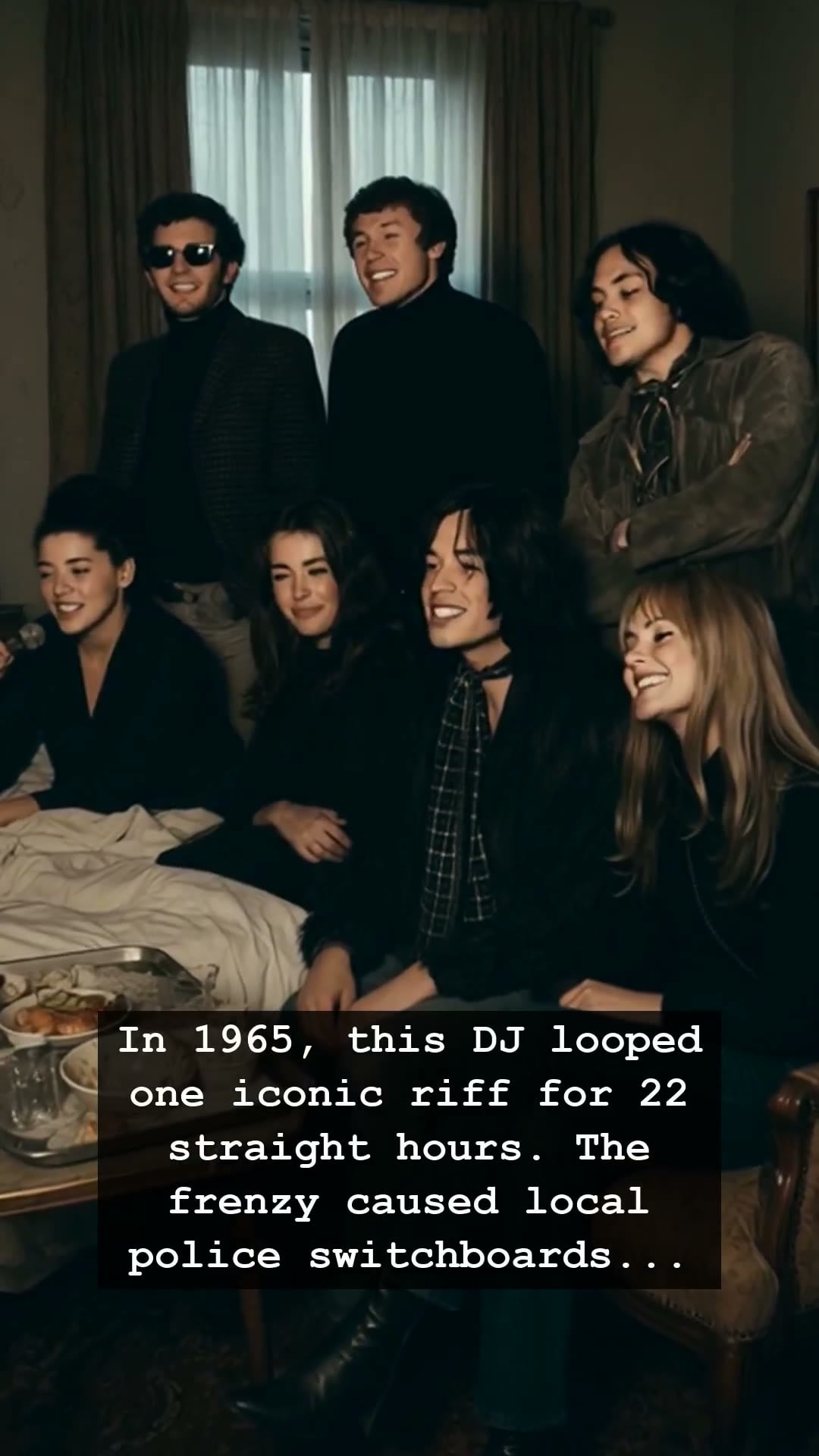
It was 1965, a year when the airwaves were still vibrating with the shock of a changing musical landscape. A daring DJ in Florida did the unthinkable: he locked himself inside his radio booth and played one electrifying guitar riff on a relentless loop for twenty-two hours straight. The sound was unmistakable, a gritty, snarling anthem that defined the rebellion of an era. It was The Rolling Stones, and the track was (I Can’t Get No) Satisfaction. The repetition became a fever dream for the local community, pushing the city to its breaking point as police switchboards lit up with frantic, confused calls from citizens who thought they had lost their grip on reality.
At the center of this auditory storm was Keith Richards and his iconic, fuzzed-out riff. That sound—recorded in a dusty hotel room—wasn’t just a melody; it was a manifesto. The Rolling Stones had captured the restlessness of a generation coming of age in the shadow of the post-war boom. While The Beatles were presenting a polished, suited-up charm, The Rolling Stones were the dark, brooding alternative. When that signature fuzz-tone blasted out of the speakers of a 1965 radio station, it sounded like the literal signal for a cultural revolution. It was loud, it was raw, and it was undeniably dangerous.
For those who remember the sixties, that riff is a time machine. It takes us back to the days of AM radio, the crackle of the Jukebox in a corner diner, and the scent of vinyl warming up under a needle. The Florida DJ’s stunt serves as a perfect microcosm for the impact of The Rolling Stones. Their music wasn’t meant to be polite; it was meant to be inescapable. By turning that riff into a twenty-two-hour endurance test, the DJ inadvertently highlighted the sheer addictive power of Mick Jagger and his bandmates. They were the heartbeat of a new decade, pulling fans into a trance that neither the parents nor the authorities could easily break.
Beyond the chaos of the switchboards, this moment speaks to the raw magnetism of 1960s rock. The Rolling Stones were masters of tension, using their music to mirror the conflicts boiling over in society. They were the architects of the bad-boy image that would eventually become the industry standard for arena rock legends. The frenzy caused by that repetitive, hypnotic loop is a testament to how deeply their music permeated the psyche of the public, creating a connection that went far beyond standard radio consumption.
Even today, that opening riff remains one of the most recognizable sounds in human history. When we listen to it, we aren’t just hearing a song; we are hearing the echo of a time when rock and roll still felt like a riot waiting to happen. The Rolling Stones changed the rules of the game, proving that a single, perfect idea could stop a city in its tracks. Does that wild, fuzzy sound still make your heart race the way it did back then?