
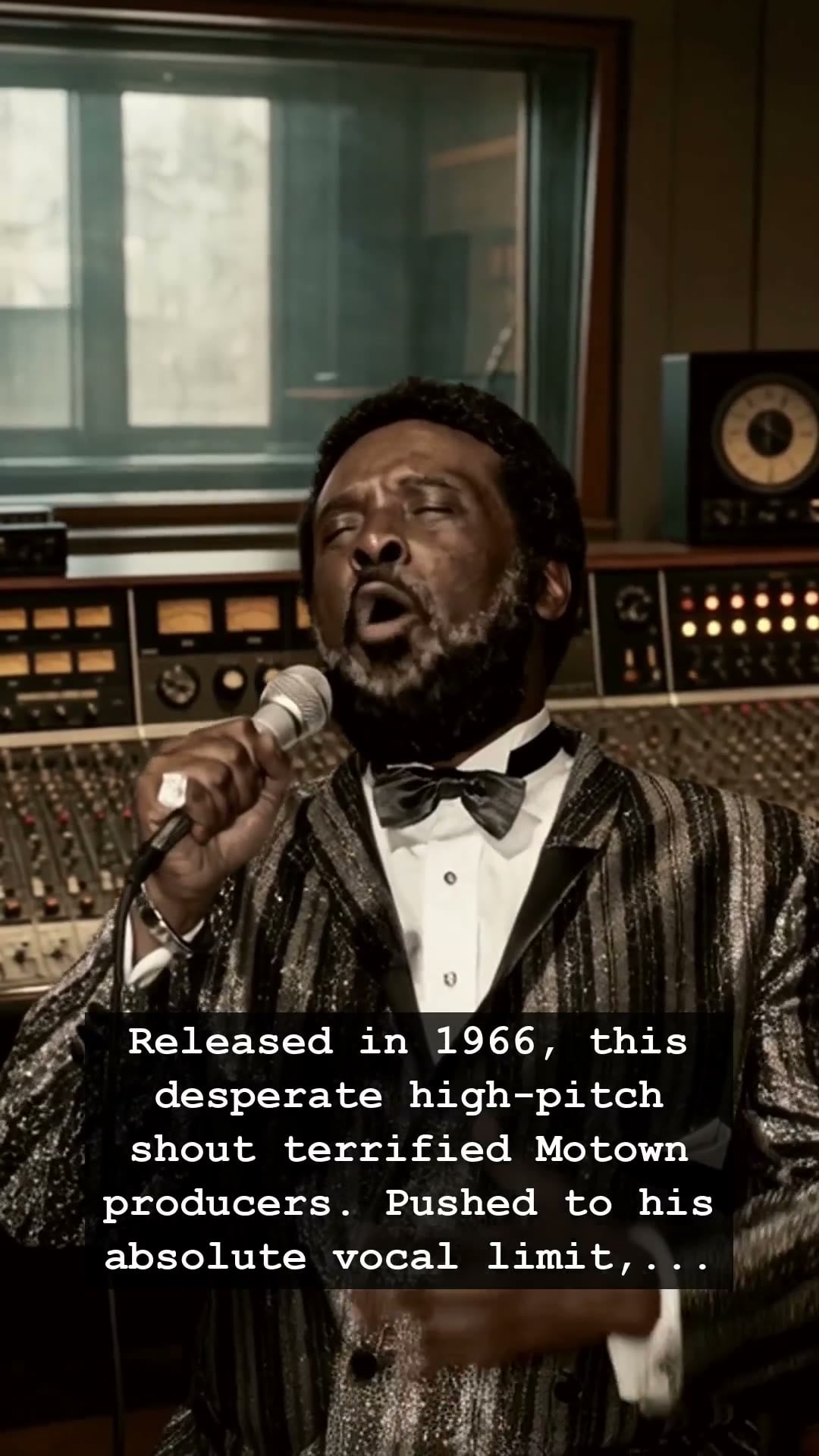
It was 1966, the golden era of Motown, a time when polished melodies were the gold standard for every hit emerging from Detroit. Inside the cramped, smoke-filled confines of Hitsville U.S.A., a session was unfolding that would push human vocal capability to its breaking point. Levi Stubbs, the powerhouse lead singer of The Four Tops, stood before the microphone. As the track for Reach Out I’ll Be There began to build, something shifted. Stubbs did not just sing the lyrics; he unleashed a raw, desperate, high-pitched shout that stopped the producers in their tracks. It was a cry so guttural and intense that it genuinely terrified those behind the glass, who feared the man might literally shatter his vocal cords before the recording was finished.
This was not the smooth, choreographed elegance the Motown machine was famous for. This was soul in its most primal, unvarnished state. For Levi Stubbs and The Four Tops, the pressure was immense. Motown was a hit-making factory, a place where songs were crafted with surgical precision to dominate the jukeboxes of mid-sixties America. Yet, Reach Out I’ll Be There demanded something different. It required an agony that felt authentic. Stubbs pushed himself to his absolute limit, channeling a lifetime of frustration and longing into a melody that defied the traditional constraints of popular rhythm and blues. He was singing for his life, and the result was nothing short of a masterpiece that echoed far beyond the studio walls.
When the song finally hit the airwaves, it became an instant cultural anchor. It was the soundtrack to a generation transitioning from the innocence of early rock and roll into the turbulent, introspective late sixties. Listeners could feel the urgency in the arrangement; the tension between the driving beat and the strained, pleading vocals captured the spirit of an era defined by social change and emotional upheaval. The Four Tops had managed to take the gloss of the Motown sound and infuse it with a grit that felt dangerous, yet deeply human. It was a stark reminder that even within the most structured pop environments, genius often arrives in the form of a breakdown.
Decades later, the legend of that recording session still haunts music historians and fans alike. It serves as a testament to what happens when an artist refuses to settle for a safe performance. Levi Stubbs did not just record a song; he documented a moment of vulnerability that changed the trajectory of soul music forever. Today, when you drop the needle on that record, you are not just hearing a classic hit. You are hearing the sound of a man standing on the edge of exhaustion, pouring his soul into the microphone, and creating something timeless in the process.
The legacy of The Four Tops remains a cornerstone of American music history. They were more than just a vocal group; they were architects of the sound that defined a decade. Looking back, the terror felt by those original producers was actually the sound of greatness being born. It reminds us that sometimes, the most enduring art comes from the moments where we stop trying to be perfect and instead choose to be real. Next time you hear those opening chords, listen closely for that desperate shout—it is the sound of history being written in real-time.