
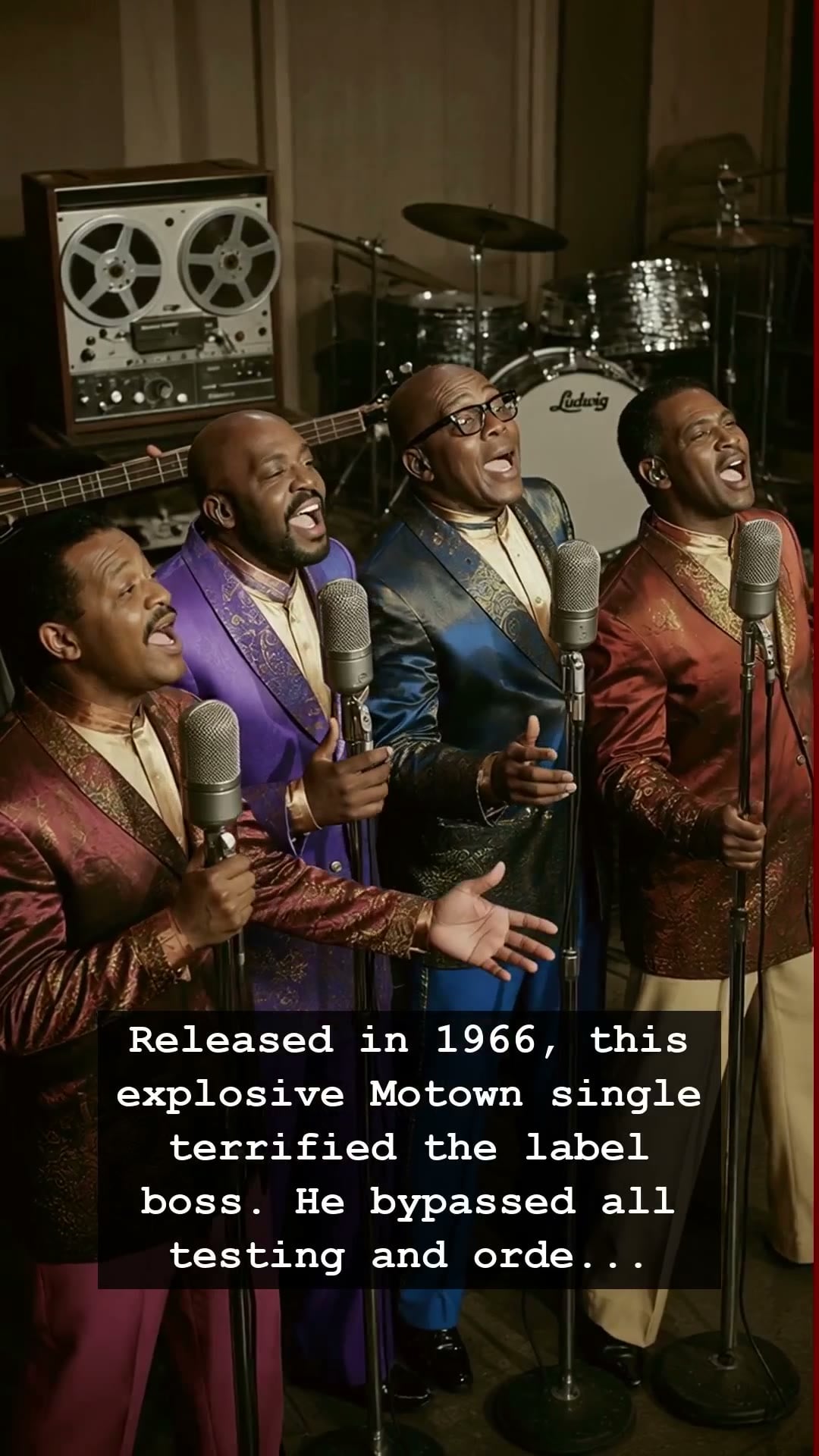
It was 1966, the air in Detroit was thick with the scent of industrial ambition and the rhythmic pulse of the Motown machine. Inside the legendary Hitsville U.S.A. studio, four men stood around a microphone, unaware that the song they were about to record would defy every rule in the industry handbook. The Four Tops had been working with the formidable songwriting trio Holland-Dozier-Holland, chasing that elusive lightning in a bottle that defined the era. When they laid down the final take of Reach Out I’ll Be There, the atmosphere in the room shifted. It wasn’t just another soul track; it was an operatic, heart-wrenching explosion of sound that defied the radio-friendly constraints of the time.
Berry Gordy, the architect of the Motown empire, was a man known for his calculated precision. He famously subjected every single to rigorous testing, playing them for local teenagers to gauge their commercial viability before ever pressing a vinyl record. Yet, when the Four Tops delivered this masterpiece, the rules vanished. Gordy heard the desperate, pleading power in Levi Stubbs’ voice and realized he had something that transcended charts and focus groups. He bypassed the standard testing phase, a move that bordered on professional insanity in 1966. He didn’t just approve the release; he ordered 500,000 copies to be pressed immediately, gambling his label’s reputation on a song that broke the sonic mold of the mid-sixties.
This wasn’t merely music; it was a cultural shift. The production, heavy with French horn swells and a driving, percussive bassline, stood in stark contrast to the lighthearted pop melodies of the day. The Four Tops managed to capture the raw, gritty vulnerability of a man begging for a connection, turning an anthem of devotion into a cinematic experience. It was the soundtrack for those dancing in dimly lit clubs under the neon flicker of the mid-sixties, a period when the jukebox was the heartbeat of every American diner and the radio was a lifeline to the outside world.
Today, the legacy of the Four Tops remains unshakable because their work speaks to the universal human condition—the need to be heard and the fear of being left behind. That 1966 gamble paid off, cementing the group’s place as pillars of soul music who dared to push the boundaries of what a pop song could achieve. The drama of the studio, the midnight sessions, and the sheer tension of whether the public would accept such a bold departure are the elements that give these classic Motown tracks their enduring, almost mythical quality.
When you listen to the Four Tops today, you aren’t just hearing a relic of the sixties; you are hearing the echo of an era where art and commerce collided in the most beautiful way possible. It is a reminder of a time when music was pressed into vinyl, held in the hands like a treasure, and played until the grooves wore thin. Do you remember the first time those opening notes pulled you into the story? It is a melody that continues to reach out, long after the record stops spinning.