
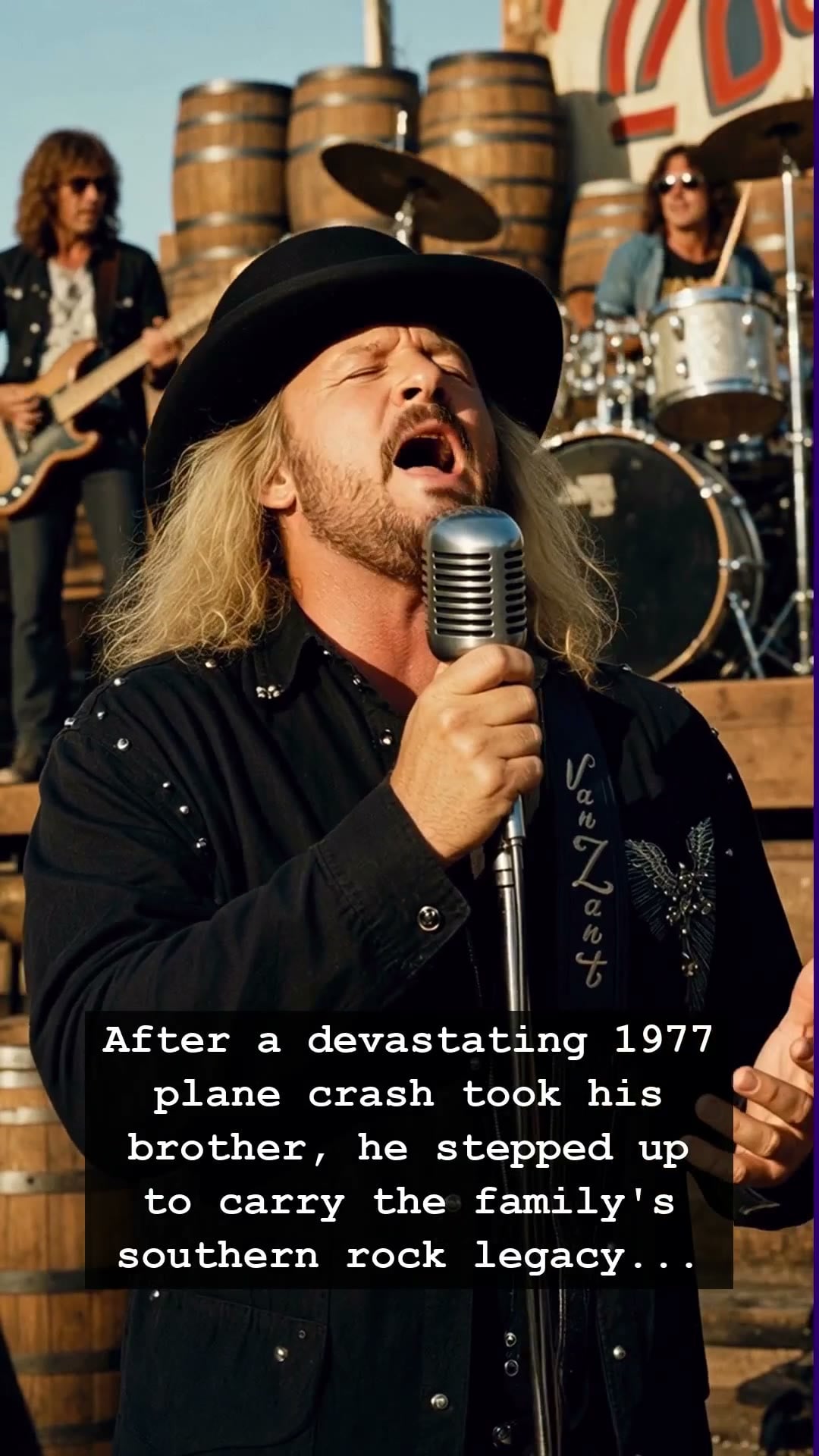
The year was 1977, a period etched into the collective memory of music lovers as the moment the sun set on the golden age of Southern rock. When a chartered plane carrying the legendary Lynyrd Skynyrd plummeted into a Mississippi swamp, it didn’t just claim the life of Ronnie Van Zant; it left a gaping, blood-stained hole in the heart of American music. Amidst the deafening silence and national mourning, the spotlight turned toward a younger brother left behind to navigate the debris of a broken dynasty. Donnie Van Zant, then the frontman of his own group, 38 Special, faced an impossible choice: let the family name fade into the murky waters of history or carry the torch through the searing heat of his own grief.
Most bands would have folded under the crushing weight of such a legacy, especially when the press constantly compared them to the fallen titans of the genre. Yet, Donnie Van Zant possessed a grit that was forged in the same Jacksonville steel as his brother. Instead of clinging to the ghost of the past, he pivoted. 38 Special began to sharpen their sound, moving away from the blues-heavy jams of their predecessors and embracing the slick, high-octane polish that would eventually define the arena rock explosion of the early eighties. It was a calculated gamble, trading the sweaty, intimate bars for the sprawling stadiums where the sound of the era was being rewritten.
As the seventies bled into the eighties, the airwaves were dominated by the glow of the new MTV revolution, and 38 Special found themselves in the eye of the storm. Hits like Hold On Loosely and Caught Up in You became the anthems of a generation that grew up listening to the hum of a cassette Walkman. Donnie Van Zant proved that Southern rock could evolve, bridging the gap between gritty guitar riffs and the radio-friendly hooks that defined the arena rock landscape. He transformed his personal tragedy into a kinetic, driving energy that filled thousands of seats every single night.
Walking through those crowded venues, one could feel the transition. The raw, unfiltered soul of the seventies had been polished into a professional juggernaut. Donnie Van Zant did not just step out of his brother’s shadow; he built a brand new empire of sound that stood firmly on its own merit. The emotional scars were always there, hidden beneath the bravado of the stage performance, but they fueled a persistence that kept the band relevant long after their contemporaries had vanished into obscurity.
Looking back, the story of 38 Special is more than just a footnote in rock history. It is a testament to the resilience of the human spirit when faced with the ultimate loss. Donnie Van Zant taught us that legacies are not meant to be frozen in time like an old Jukebox record; they are meant to be carried forward, transformed, and shared. Even today, when the opening chords of those arena hits ripple through the speakers, we aren’t just hearing a song—we are hearing a survivor’s defiant shout against the darkness of the past.