
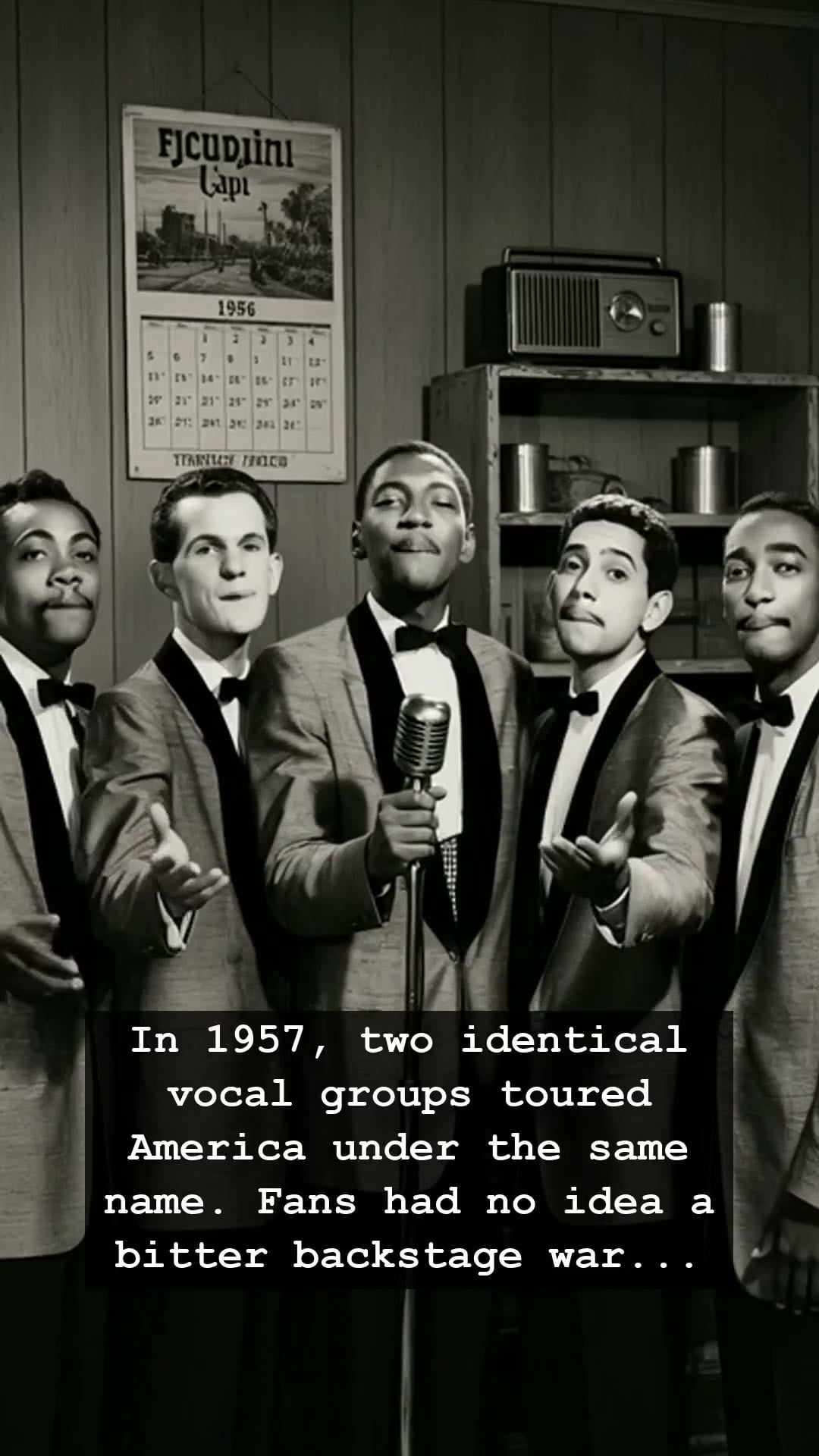
It was 1957, and the airwaves were humming with the doo-wop melodies of The Del-Vikings. As the song Come Go With Me climbed the charts, American teenagers were glued to their radios and jukeboxes, dreaming of high school hops and romance. But behind the polished harmonies and the soaring vocals, a dark, chaotic reality was unfolding that would go down as one of the most bizarre feuds in music history. The group that fans adored was, quite literally, being torn in two, leaving concertgoers across the nation in a state of utter confusion.
Imagine the scene: you purchase a ticket to see your favorite stars, only to find a lineup on stage that looks familiar but feels entirely wrong. Simultaneously, in a different city, another group of men claimed the exact same name, singing the exact same hits. This was not a tribute act or a cheap imitation; this was a high-stakes, bitter contract dispute that split The Del-Vikings right down the middle. For a brief, dizzying moment in time, two identical versions of the band were crisscrossing America, both legally fighting for the soul and the legacy of the name that had made them household sensations.
The tension began in the shadows of the military barracks where the group first formed. The Del-Vikings were unique—a racially integrated group that dared to challenge the social norms of the era. However, the intersection of fame and rigid record contracts proved to be a toxic cocktail. When management clashed with the artists, the band splintered. The resulting legal warfare didn’t just break hearts; it turned the music industry into a battlefield. It was a cold reminder that the golden age of doo-wop was just as much about ruthless business dealings as it was about the soulful ballads echoing through the night.
Today, we look back at the 1950s with a romanticized lens, often ignoring the grit and the turmoil that fueled those classic records. The story of The Del-Vikings serves as a haunting reminder of how fragile success truly is. Their struggle highlights a recurring theme in the history of music: the battle between the artist’s creative freedom and the cold, unyielding iron grip of record labels. Even as the melodies faded into the archives of time, the tale of their split remains a vivid, somewhat sensational piece of the American musical tapestry.
While the industry has evolved since those days of analog studio sessions and touring station wagons, the spirit of The Del-Vikings lingers in the grooves of their original vinyl records. Their music remains an essential part of the mid-century sound, a testament to raw talent caught in the gears of a machine that cared little for the individuals behind the mic. The next time you drop the needle on a classic track, listen closely; beyond the harmony, you might just hear the echoes of a war that once threatened to silence a legend forever.