
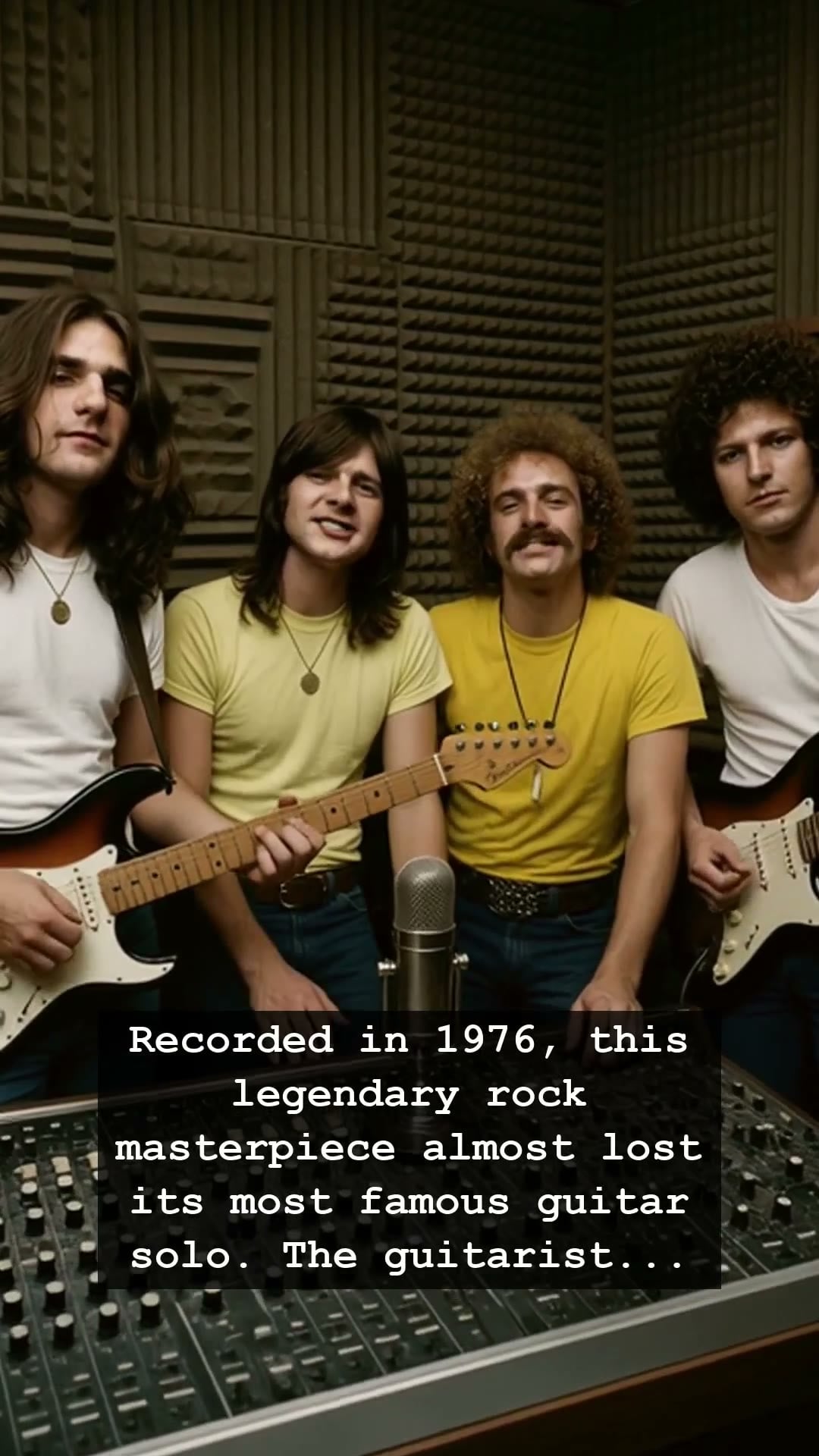
It was 1976, a time when the world was changing, disco was beginning its neon-soaked infiltration of the airwaves, and the Eagles were locked away in a studio crafting what would become the definitive anthem of a generation. The air was thick with the scent of cigarettes and the pressure of creative genius. Everyone knows the haunting, melodic perfection of the guitar solo that defines Hotel California. Yet, beneath the veneer of iconic rock stardom, the band was teetering on the edge of a creative catastrophe that almost silenced one of the greatest melodies in music history. It was a moment of sheer panic that could have left the song unfinished forever.
As the story goes, Don Felder, the man behind the legendary riff, found himself in a state of absolute dread. The intricate, interlocking guitar lines—the very soul of the track—had vanished from the band’s memory. In the pre-digital era of heavy-duty tape machines and analog chaos, the original demo had been misplaced. With the recording session scheduled and the band’s high standards looming over them like a thundercloud, Felder faced a nightmare scenario. He did the only thing he could think of: he made a desperate phone call to his Malibu housekeeper, hoping against hope that she could find the cassette tape gathering dust in his home.
When she picked up the receiver, Felder asked her to play the tape over the telephone line. He held the receiver to his ear, listening to the tinny, distant sound of his own past creation crackling through the wires. As the notes played out, he desperately transcribed the melody in real-time, locking it back into his fingers before it faded away. It is a surreal image: a rock star, standing in the middle of a massive studio session, frantically trying to catch the ghost of a song through a landline phone. This was the raw, unpolished reality of 1970s rock, where the line between brilliance and disaster was often measured by a few feet of magnetic tape.
The Eagles were not just a band; they were architects of the Southern California sound, and this frantic moment is a testament to the sweat and instability required to build a myth. While fans were out buying Walkmans and waiting for the next big thing on MTV, the Eagles were battling their own internal frictions and the crushing weight of their success. The song itself became a dark, cryptic reflection on the American Dream, a theme that resonates deeply even decades later. People don’t just listen to the track; they inhabit it, searching for the meaning behind the shadows and the excess of the era.
Today, when those final, epic guitar notes swell into the grand finale, it is easy to forget how close we came to never hearing them at all. That telephone call remains one of the most relatable, human moments in rock history. It reminds us that behind the shimmering legend of the Eagles, there were human beings struggling to keep their art alive. The next time the opening chords fill the room, take a moment to remember the housekeeper in Malibu, the crackling phone line, and the frantic scramble to save a piece of history. Does this story change the way you hear the song now?