
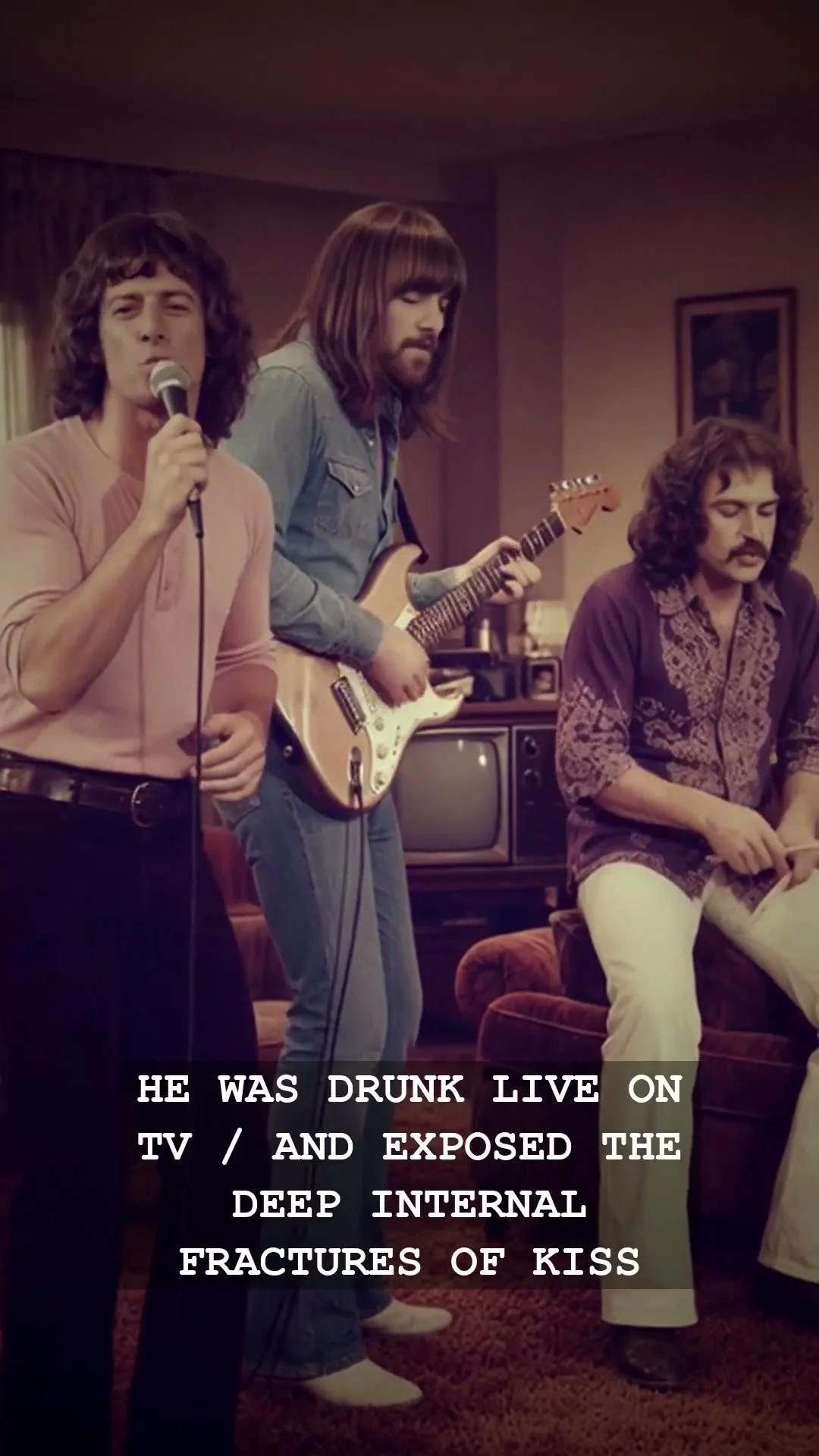
It was 1979, the golden age of arena rock, and the world was staring through their television screens at a spectacle that would haunt the legacy of KISS forever. Millions of viewers tuned in expecting the high-octane, calculated performance they had come to worship, but what they got instead was a raw, uncomfortable, and deeply human moment of decline. Ace Frehley, the iconic Spaceman, stepped onto the set of The Midnight Special appearing visibly intoxicated, his trademark sneer replaced by uncontrollable, jagged laughter. As his bandmates struggled to maintain the polished, untouchable mask that had made them global superstars, Ace Frehley turned the broadcast into a surreal public breakdown, effectively pulling back the curtain on the internal rot that was slowly destroying the band from within.
The era of the late seventies was defined by the excess of the Jukebox generation, where rock stars were elevated to godhood, yet the heavy toll of constant touring and the relentless pressure of the spotlight were taking a dark turn. For the members of KISS, the constant friction between their creative personas and their crumbling personal relationships had reached a breaking point. While the band wanted the public to see a unified front of makeup and leather, Ace Frehley embodied the chaos that the group could no longer contain. This wasn’t just a simple mistake; it was a symptom of a deeper, systemic fracture that spanned across the band’s management, ego, and lifestyle. The audience watched in silence as the polished armor of their idols finally cracked, revealing the hollowed-out exhaustion that lay beneath.
This infamous television moment serves as a haunting reminder of the cost of fame during the pre-MTV era, a time before social media sanitized celebrity disasters into carefully curated damage control campaigns. Ace Frehley was not just a guitarist; he was a symbol of the wild, untethered spirit of seventies rock, and his struggle was emblematic of the excess that defined the decade. By upstaging his bandmates with his erratic behavior, he shattered the illusion of the band’s invincibility. It was the moment that proved even the biggest giants of the stage were subject to the same personal demons that plagued ordinary men, only amplified by the deafening roar of arena speakers.
Looking back, the incident remains a pivotal chapter in the history of hard rock. It wasn’t just about a intoxicated performer; it was about the expiration of a myth. The internal fractures within KISS, which had been simmering behind the scenes of their elaborate stage productions, were suddenly laid bare for everyone to see. Ace Frehley had inadvertently told the truth that the band’s management fought so hard to conceal. Even today, the memory of that broadcast resonates because it feels so startlingly authentic in a world of manufactured fame.
While the band survived and eventually pivoted, the 1979 broadcast remains an essential piece of rock lore, documenting the exact moment when the fantasy of the Spaceman and his cohorts began to fade into reality. History is rarely as clean as we want it to be, and Ace Frehley remains the complicated, electric core of that unforgettable, messy truth. As we look back on the legends of the twentieth century, it is these moments of profound vulnerability that keep the spirit of classic rock alive, reminding us that every icon carries a shadow.