
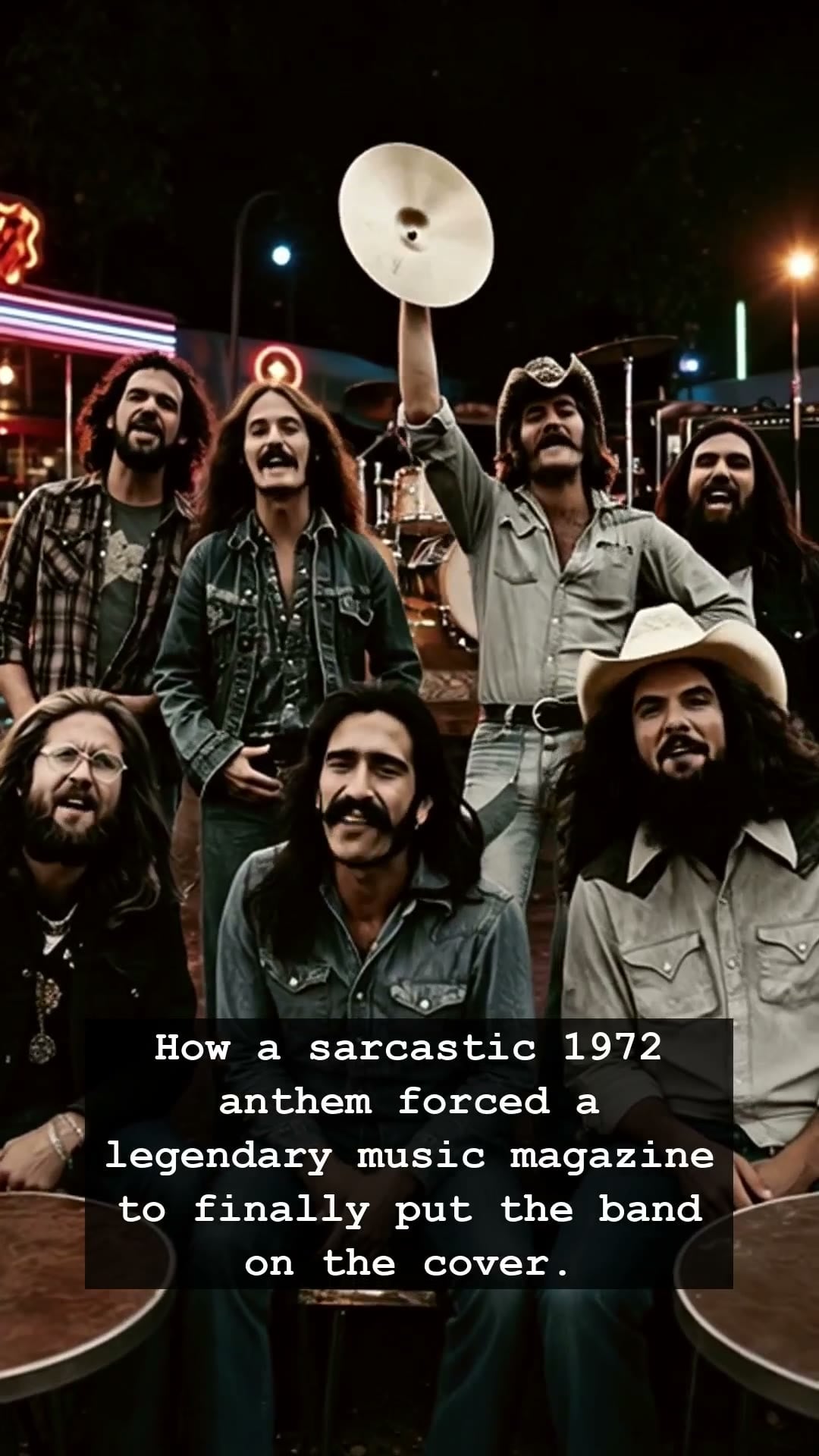
In the golden age of the early seventies, the music industry was a kingdom ruled by high-stakes ego and the formidable gatekeepers of the press. If you were a band trying to break through the noise of the post-Woodstock era, you lived or died by one singular, glossy aspiration: making it onto the cover of Rolling Stone magazine. For most, this meant years of touring, polished interviews, and careful PR management. But for Dr. Hook & the Medicine Show, it meant choosing a different path—one paved with raw, unfiltered, and deeply sarcastic musical defiance.
By 1972, the band was tired of being the industry’s best-kept secret. While the airwaves were dominated by stadium rock and the dying embers of the psychedelic movement, Dr. Hook & the Medicine Show felt largely ignored by the music elite. Frustrated by the lack of recognition, they teamed up with the legendary songwriter Shel Silverstein to create a masterpiece of irony. The result was the satirical anthem The Cover of the Rolling Stone. It was a song that didn’t just ask for fame; it laughed at the very concept of the rock-star status symbol while simultaneously craving the validation it provided.
The lyrics were biting, poking fun at the magazine’s cultural authority while listing all the clichés required to become a rock star. Listeners at the time heard the track pouring out of jukeboxes in dim dive bars and felt an immediate connection to the band’s cheeky rebellion. The song became a massive hit, defying the gatekeepers who had refused to acknowledge them. It was a rare moment where a band hijacked the cultural narrative, turning a critique of the media into the very engine that propelled them to the summit of the charts.
As the song climbed higher, the tension in the offices of Rolling Stone must have been palpable. The magazine was caught in a paradox: could they ignore a band that was literally singing about the necessity of being on their cover to prove one’s worth? Eventually, the cultural pressure became impossible to resist. In a historic display of self-awareness—or perhaps just shrewd marketing—the magazine finally placed the members of Dr. Hook & the Medicine Show on the cover in 1973. It was a triumph of audacity, a moment where the outsiders finally forced their way into the inner circle.
Looking back, this episode feels like a relic from a time when rock music felt dangerous and unpredictable. It captures the spirit of an era defined by the rise of the FM radio, the legendary grit of 1970s journalism, and a band that refused to take ‘no’ for an answer. The story of Dr. Hook & the Medicine Show remains a testament to the power of a good hook and an even better sense of humor. Even today, the song serves as a reminder that sometimes the only way to beat the system is to laugh right in its face. If you remember the days when a song could truly shake the foundations of the establishment, then you know exactly why this track still matters.