
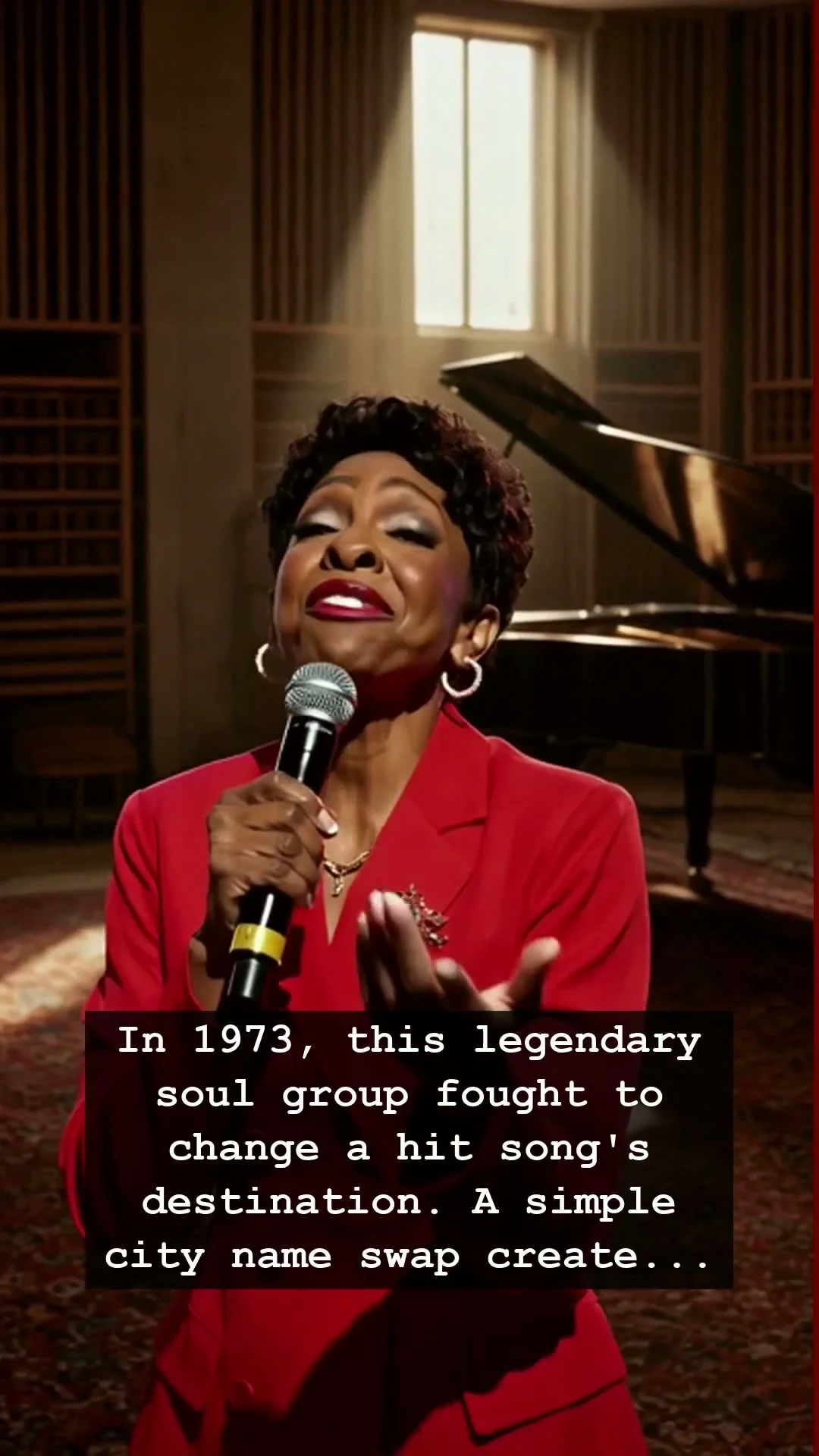
The year was 1973. The air was thick with the scent of hairspray, vinyl records, and the restless energy of a changing America. As the golden era of Motown began to shift, a legendary soul group stood in a recording studio, locked in a quiet, high-stakes battle that would change the trajectory of rhythm and blues forever. Gladys Knight and the Pips were musical royalty, but even royalty faces internal struggles when the magic of a song hangs in the balance. The track in question was supposed to be a journey to a different destination entirely, and for a moment, it seemed like the song might never see the light of day at all.
The original composition was titled Midnight Plane to Houston. As Gladys Knight and the Pips reviewed the lyrics, something felt fundamentally off. While the melody possessed that unmistakable, soaring soulfulness that defined their career, the geography felt disconnected from the heart of the narrative. The group, known for their impeccable intuition and emotional resonance, realized that the song needed a soul-deep pivot to ground its weary traveler. They argued that Houston lacked the specific, wistful romanticism required to make the story stick. It was a bold move to challenge a songwriter’s vision, yet they insisted on a change that would redefine the hit: Midnight Train to Georgia.
This simple city swap transformed the song into a cultural touchstone. It tapped into a uniquely American longing, a sense of returning to one’s roots, and the bittersweet sacrifice that comes with chasing dreams. When the single finally hit the airwaves, it didn’t just climb the charts; it dominated the collective consciousness of a nation currently captivated by the rise of the Walkman and the evolving sound of 70s soul. Gladys Knight and the Pips delivered a vocal performance so authentic that listeners could almost hear the whistle of the train and the damp heat of the Georgian night.
The success of the track highlights the perfectionist nature of Gladys Knight and the Pips. Behind the polished aesthetics of their live performances, they were fierce protectors of their artistic integrity. This wasn’t just a record; it was a testament to their ability to turn a simple lyric into a narrative masterpiece that remains a karaoke staple and a radio favorite five decades later. In an era where corporate labels often dictated the direction of an artist’s career, this group stood their ground and preserved the emotional core of their music.
Looking back from our modern vantage point, it is easy to see why this song continues to resonate. It captures a fleeting moment of nostalgia, a yearning for home that is universal. As we look back on the mid-1970s, a time of disco fever and shifting social landscapes, Gladys Knight and the Pips remind us that true classics are born from collaboration, conviction, and a willingness to follow one’s gut. The next time you hear that iconic opening piano riff, remember that you are hearing more than just a song; you are hearing the sound of a history-changing decision that put a legendary train on a permanent, triumphant track.