
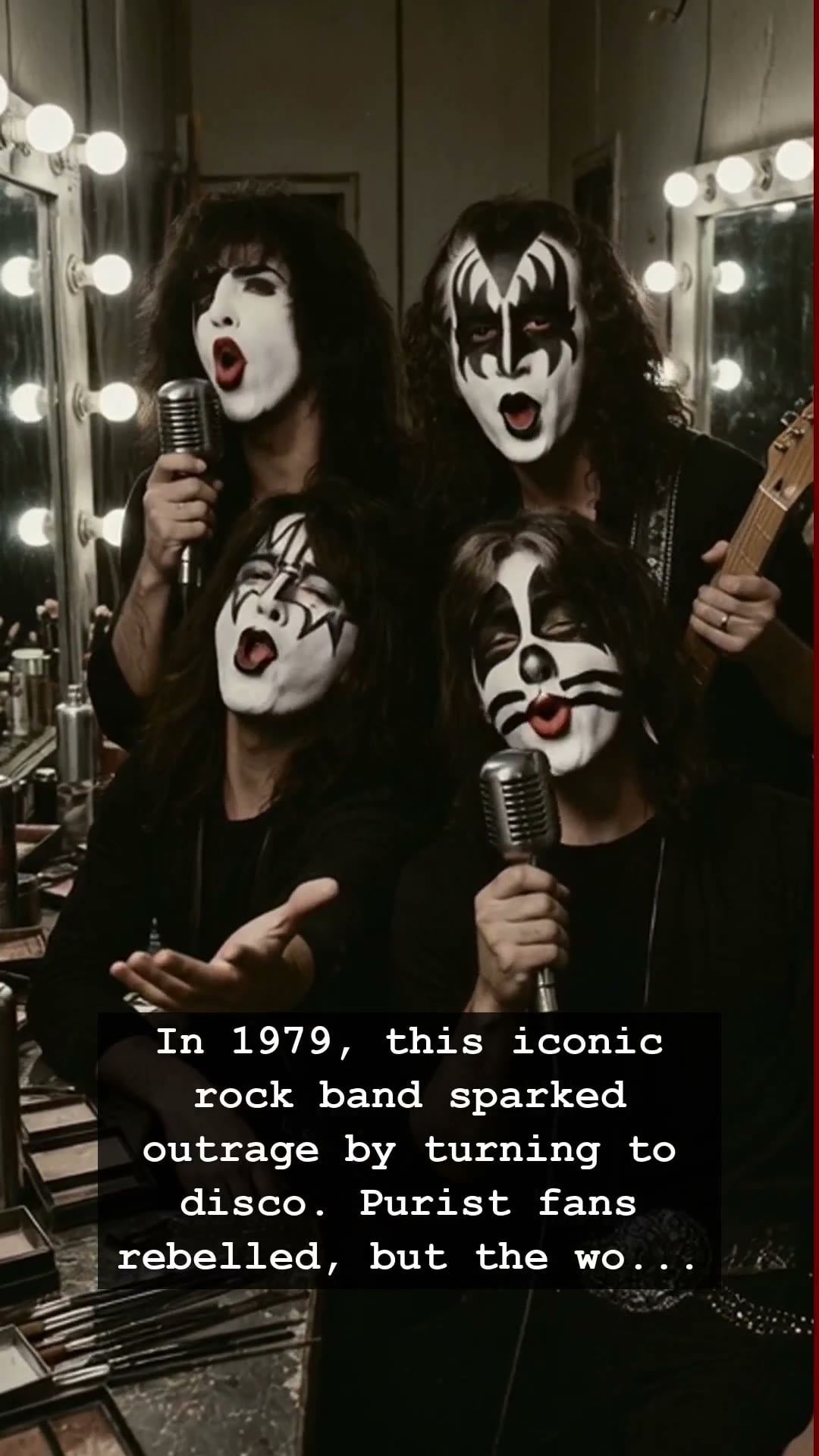
The year was 1979, a time when the world seemed to be dancing on a powder keg of cultural identity. The gritty, leather-clad streets of the hard rock scene were facing an existential threat: the shimmering, neon-lit invasion of the disco era. In the middle of this sonic battlefield stood the grease-painted titans of rock, KISS. Known for their blood-spitting, pyrotechnic-heavy spectacles that defined the arena rock experience, the band took a step that felt like a betrayal to their purist followers. They traded their heavy riffs for the rhythmic pulse of the dance floor, sparking an outrage that still echoes in the archives of rock history.
At the time, the airwaves were dominated by the fever of Studio 54 and the hypnotic beats of the Bee Gees. The music industry was shifting, and the pressure on iconic rock bands to adapt was immense. When KISS unleashed I Was Made for Lovin’ You, the collective gasp from the hard rock community was audible. Fans who cherished the raw, distorted power of earlier anthems felt as if their heroes had traded their souls for a spot on the disco charts. The black leather and studs that were once symbols of rebellion now felt out of place against the backdrop of glittering mirror balls and synth-heavy production.
It was a massive commercial gamble, a gamble that arguably saved their career in the short term while deeply scarring their reputation among the die-hard faithful. Yet, behind the scenes, the internal dynamics of KISS were already fracturing under the weight of their own mythology. The strain of the spotlight, the relentless touring, and the growing ego clashes meant that this pivot to disco was as much about internal survival as it was about musical exploration. Paul Stanley, the driving force behind the track, saw it as a clever evolution, a way to bridge the gap between two worlds that refused to speak the same language.
Looking back, it is easy to view this moment as a bizarre anomaly, but it perfectly captured the identity crisis of the late seventies. The song became an undeniable global anthem, transcending the labels that critics tried to force upon it. Whether you were rocking a Walkman on the streets or spinning records in a darkened basement, you couldn’t escape the infectious, relentless rhythm. It became a bridge, however controversial, between the raw grit of the seventies and the polished, synthesizer-driven soundscape of the upcoming decade.
Today, we look back at this incident not as a failure, but as a fascinating piece of rock folklore. The story of KISS and their foray into disco remains a testament to the unpredictable nature of fame and the fragility of a band’s legacy when it dares to break its own rules. It was a time when the music truly lived in the tension between what was and what could be, proving that even the most formidable rock icons were human enough to stumble—or dance—into the unknown.