
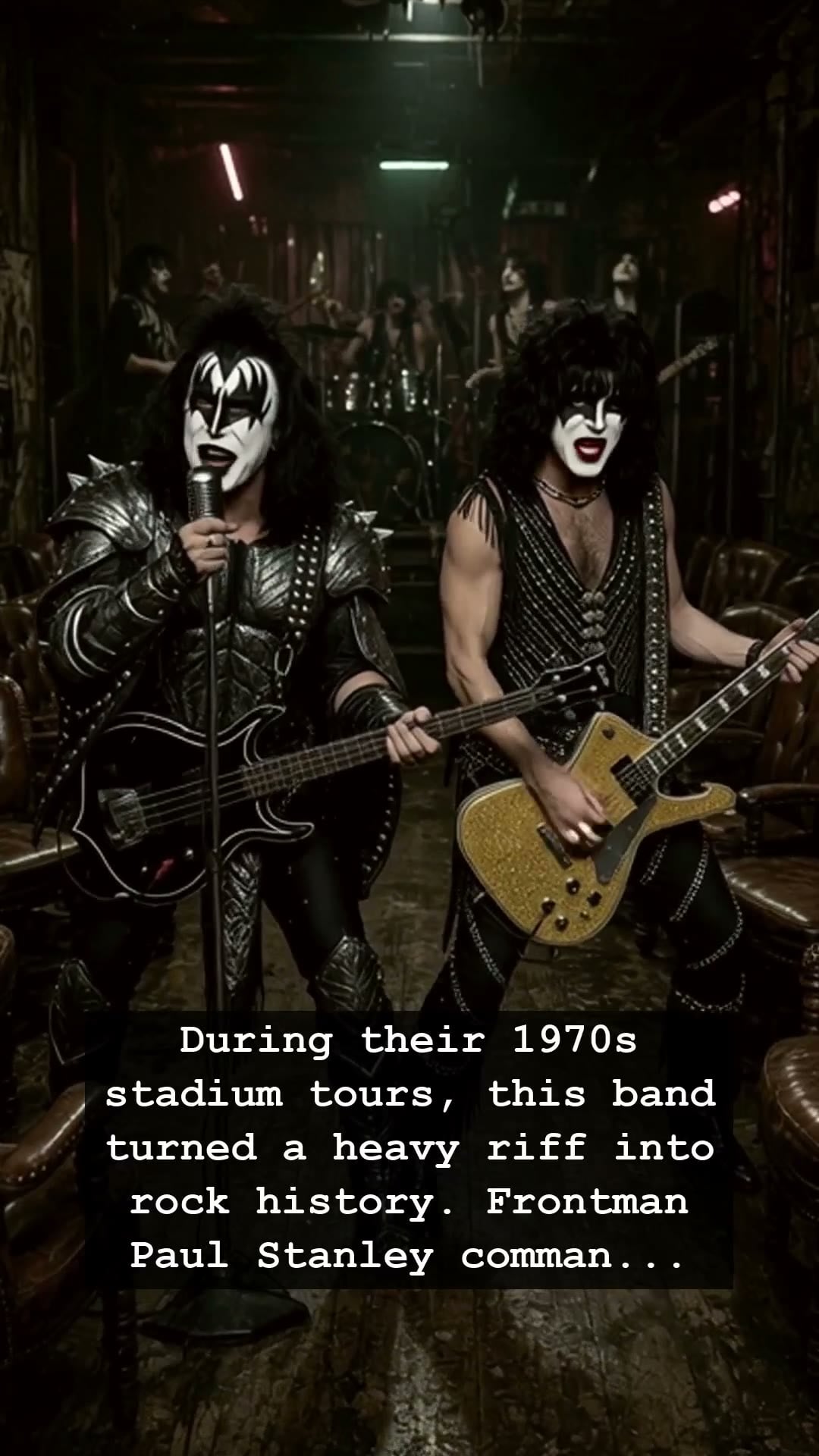
It was the mid-1970s, a time when the Jukebox was fading and the colossal arena rock spectacle was ascending to its throne. Amidst the pyrotechnics, the towering platform boots, and the greasepaint masks that hid the faces of four men destined for immortality, one figure emerged as the undisputed ringmaster of chaos. Paul Stanley, the Starchild of Kiss, didn’t just sing to the crowd; he orchestrated them. There was an electricity in the air that you could only feel if you were standing in a sold-out stadium, waiting for the massive curtain to drop and the first heavy, distorted power chord to shatter the silence.
During those legendary tours, the band transformed heavy riffs into a religious experience for a generation hungry for escapism. While the industry was busy debating the rise of Disco at Studio 54, Kiss was busy perfecting the art of the rock spectacle. Paul Stanley possessed a rare, magnetic command over the audience. He turned the act of performing into a high-stakes call-and-response ritual, challenging thousands of fans to scream back at him until the rafters shook. This wasn’t just a concert; it was a sensory assault designed to etch the identity of Kiss into the history books forever.
Behind the flashing lights and the theatrical personas, however, lay a grueling reality of life on the road. The pressure to maintain the image of larger-than-life comic book superheroes took an undeniable toll on the members of the band. The late seventies were a period of excess, where the lines between the performer and the persona were often blurred by the exhaustion of constant touring and the temptations of the rock and roll lifestyle. Yet, despite the interpersonal frictions and the internal tug-of-war for creative control, Paul Stanley remained the anchor that kept the Kiss engine running at full throttle.
What made those stadium tours so iconic wasn’t just the makeup or the fire-breathing; it was the raw, primal connection Stanley forged with every person in the nosebleed section. He understood the psychology of the crowd better than anyone else in the business. When he stood at the edge of the stage, sweat dripping down his face paint, and commanded total silence before a breakdown, you could hear a pin drop in a stadium of fifty thousand people. It was a testament to his stage presence and the sheer, unfiltered power of 1970s hard rock.
Even today, looking back through the lens of nostalgia, the impact of those years is undeniable. Kiss defined an era that bridged the gap between the grit of early rock and the over-the-top glam of the coming decade. As we look back at the Walkman era and the eventual transition to MTV, the legend of that specific, explosive time in music remains vibrant. The music of Kiss still carries the heat of those stadium lights, a reminder of when rock and roll was at its most dangerous and its most spectacular. Do you remember the first time you felt the ground shake to their sound?