
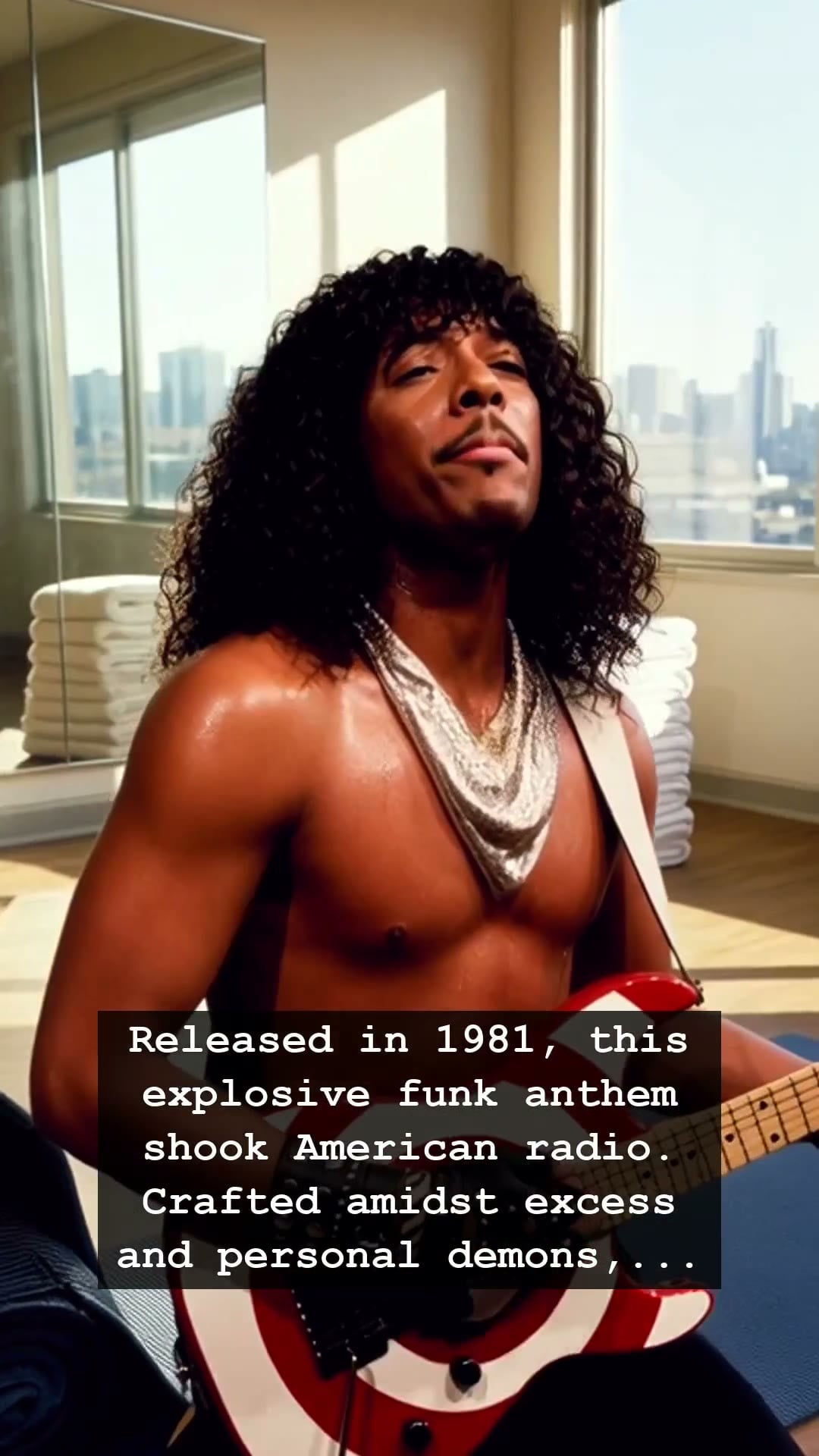
It was 1981, and the airwaves were dominated by the synthesizer-drenched pulse of a new decade. Yet, amidst the sterile sheen of early MTV, one man stood as a supernova of raw, unfiltered rhythm. Rick James, the self-proclaimed King of Punk Funk, unleashed a bassline so infectious it didn’t just climb the charts—it hijacked the American consciousness. While millions of listeners were busy dancing in the neon lights of Studio 54 or cranking the volume on their Walkmans, they remained blissfully unaware of the psychological war being waged behind the recording booth’s glass walls.
To understand the explosive power of his 1981 anthem, one must peel back the curtain on the decadence that fueled the legend of Rick James. He was a force of nature, a man who lived with the volume turned up to eleven at all times. Behind the velvet suits and the iconic braids was a man wrestling with personal demons, substance struggles, and the crushing pressure of sustaining a career that demanded constant reinvention. The studio was his sanctuary and his battlefield, where the heavy, thumping basslines served as a chaotic anchor for a lifestyle that was spiraling toward the edge of glory and self-destruction.
That legendary track was born from a whirlwind of fame and excess. As the record spun on every Jukebox from Harlem to Hollywood, the industry saw a genius, but those in his inner circle saw a man pushed to the brink by his own intensity. The song wasn’t just a dance floor filler; it was a desperate, high-energy declaration of dominance. Rick James poured his jagged edges into every groove, crafting a sound that felt dangerous, sweaty, and undeniably human. It captured the specific tension of the early eighties—a time when the party never stopped because nobody dared to face the silence that came afterward.
What made the music of Rick James so immortal? It was the rare fusion of street-level grit and high-gloss production. He understood the pulse of the American listener better than most, layering complex arrangements that felt as natural as a heartbeat. Yet, the tragedy of the era is how quickly we consumed these legends. We treated their pain as entertainment and their meltdowns as headlines, rarely pausing to appreciate the sheer audacity required to create art while your life is folding in on itself. The song remains a party staple today, but for those who know the history, every beat carries the weight of a man chasing ghosts.
Decades later, the legacy of this funk pioneer continues to resonate, reminding us that the best music often comes from the most turbulent lives. The next time you find yourself nodding along to that familiar, driving bassline, remember the man behind the myth. Rick James wasn’t just chasing a chart position; he was capturing a moment of raw, human vulnerability and turning it into a timeless anthem that refused to be forgotten. Turn it up loud and listen closely; the echo of the eighties is still haunting the speakers.