
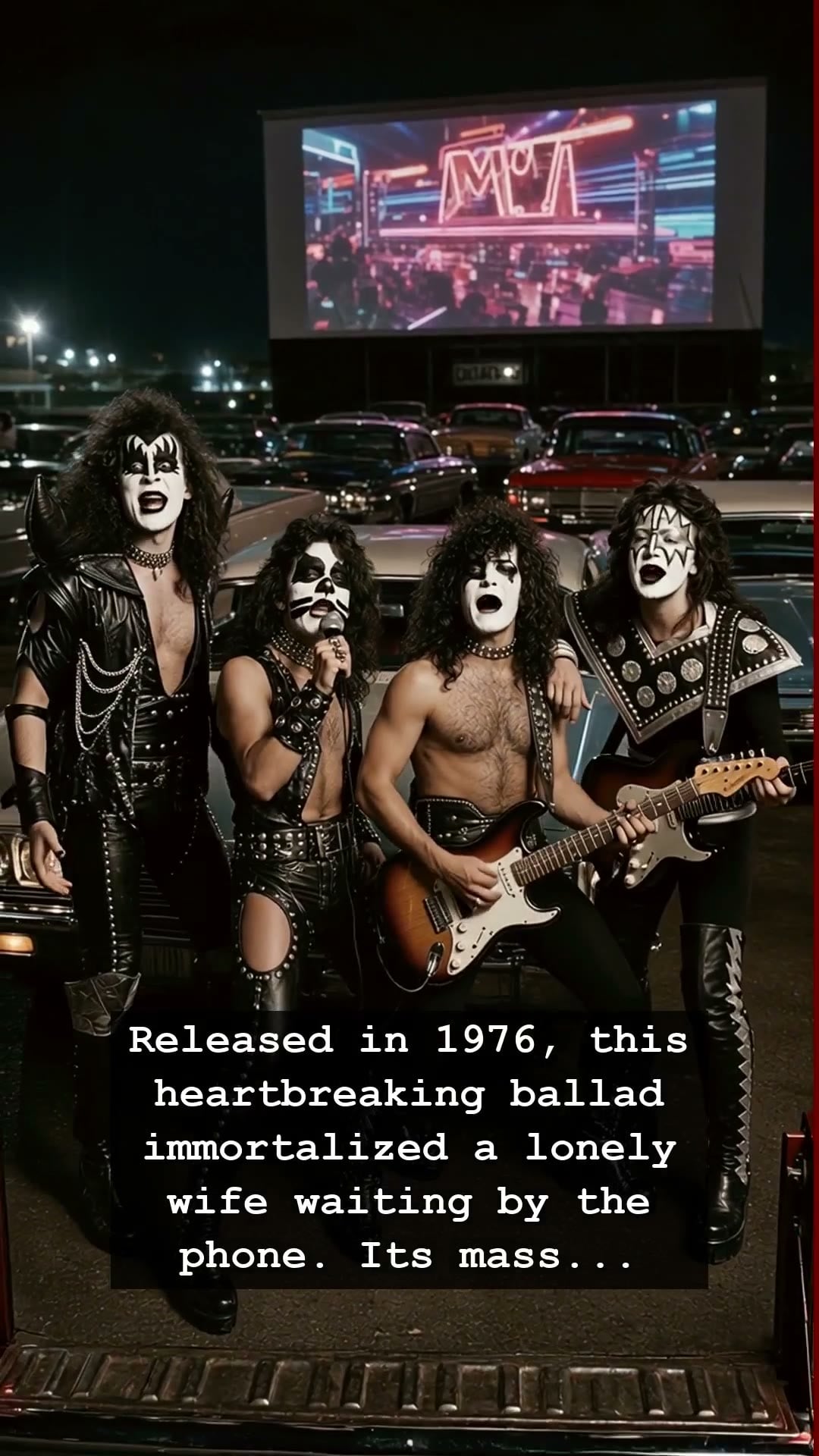
It was 1976, a time when the Jukebox in every corner bar was dominated by the raw, theatrical power of KISS. Amidst the pyrotechnics and the greasepaint masks, a quiet, acoustic melody emerged that changed the trajectory of the band forever. That song was Beth. To the millions of fans who bought the record, it was a beautiful, melancholic tribute to a wife waiting patiently at home, anchored to the telephone. But behind the melody lay a tragic irony that few listeners realized at the time: the very song that immortalized the bond between Peter Criss and his wife Lydia would eventually serve as the final nail in the coffin of their marriage.
Peter Criss, the man behind the cat makeup, poured his soul into this ballad. While his bandmates were busy crafting hard-hitting arena rock anthems, Peter Criss found himself struggling with the isolation of life on the road. The lyrics were born from a place of genuine exhaustion and guilt, capturing the repetitive, agonizing wait of a partner left behind while stardom beckoned. When the track was finally released, it became an unexpected monster hit, climbing the charts and proving that the heavy metal titans of the seventies had a tender, vulnerable core. It became the anthem of the lonely, a staple of every high school dance, and the highest-charting song KISS would ever produce.
Yet, the success of the song created a chasm that fame could not bridge. As Beth soared on the radio, Peter Criss found his personal life rapidly unraveling. The constant touring, the pressures of being an international icon, and the ego-driven environment of the music industry created a whirlwind that threatened to swallow him whole. The song, which was meant to be a love letter, became a painful reminder of the life he was neglecting. The constant presence of fans, the studio sessions that ran into the early hours, and the intoxication of the arena rock lifestyle turned the intimacy of his home life into a fading memory.
For those of us who grew up in the era of the Walkman, listening to these cassette tapes on repeat, Beth feels like a time capsule. It carries the weight of a decade defined by excess, glitter, and the desperate search for human connection amidst the noise. Peter Criss was not just a drummer hiding behind a mask; he was a man struggling to reconcile the performer on stage with the human being who just wanted to be home. The song remains a masterclass in emotional storytelling, proving that even the most bombastic acts of the seventies were capable of profound, quiet sorrow.
Decades later, the tragedy of the song remains as resonant as ever. It stands as a haunting testament to the cost of the spotlight and the fragility of relationships under the heavy glare of superstardom. When you hear that familiar piano intro today, remember that for Peter Criss, it wasn’t just a record-breaking hit—it was a final, echoing goodbye to a chapter of his life he could never reclaim. Some songs are lucky enough to outlive their creators, but few carry the weight of a broken heart quite like this one.