
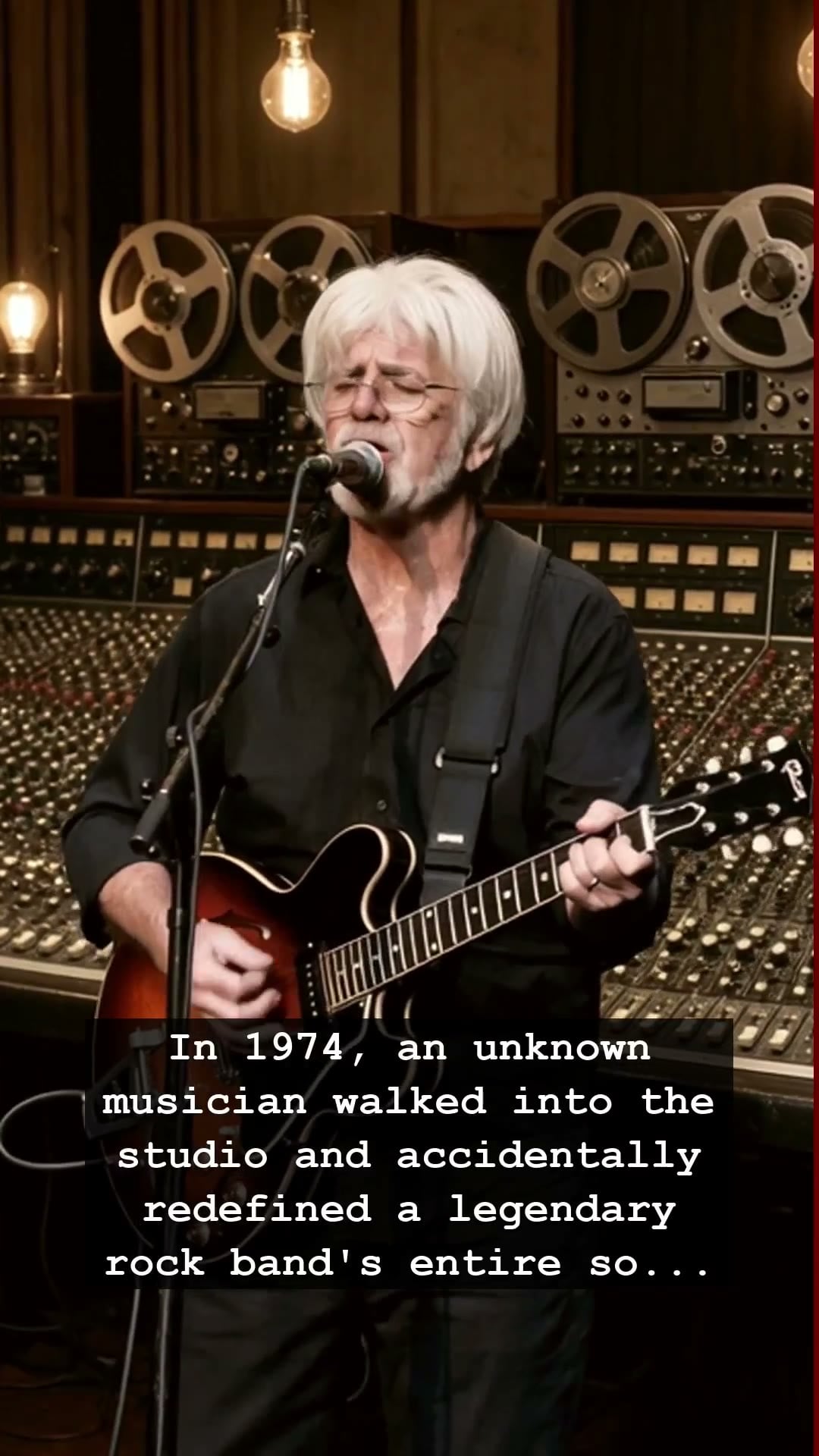
The year was 1974. Inside the sterile, pressurized environment of a recording studio, the jazz-rock perfectionists Steely Dan were struggling with a track that felt just a little too cold. Donald Fagen and Walter Becker were known for their uncompromising precision, often cycling through session players like disposable components. Then, a lanky, unassuming keyboardist named Michael McDonald walked into the room. He was a relative unknown at the time, a hired gun meant to fill a sonic gap. Nobody in that studio realized that this casual collaboration was about to trigger a seismic shift in the sound of American pop music, accidentally stitching a touch of blue-eyed soul into the band’s cynical, razor-sharp aesthetic.
As the tape rolled, Michael McDonald leaned into the microphone. His voice was an anomaly—a thick, buttery baritone that dripped with the humidity of the deep South, clashing beautifully against the brittle, cerebral arrangements that were the Steely Dan trademark. It was a haunting backing harmony that seemed to defy the music’s intellectual barriers. That momentary magic captured on the master reel did more than just finish a song; it defined a new sonic landscape for the era. The session was transformative, proving that even the most calculated geniuses in rock history needed a touch of organic, soulful spontaneity to find their true identity.
Following that pivotal 1974 encounter, the trajectory of Michael McDonald shifted into the stratosphere. His presence became the secret sauce for a generation of hits. Before long, his signature gospel-tinged phrasing moved from the background of obscure studio sessions to the front of the Doobie Brothers, effectively dragging the band’s sound away from biker-rock toward the sophisticated yacht rock that would dominate the late seventies. It is a classic Hollywood music story: the reluctant architect who builds the house without ever intending to own the deed, forever changing the DNA of the radio waves.
Steely Dan and Michael McDonald represent a perfect marriage of opposites—the intellectual, cigarette-smoking cynics and the warm, soulful journeyman. Their brief collision remains one of the most significant ‘what if’ moments of the decade. Without that accidental intersection, the transition from the gritty remnants of the late sixties to the polished, synth-infused excess of the eighties might have sounded drastically different. It was an era defined by the crackle of the needle on vinyl and the warm hum of the recording console, where a single accidental take could echo for decades.
Today, when you drop the needle on a vintage pressing, you can still feel the weight of that studio air. It resonates with a nostalgia that is both specific to 1974 and strangely timeless. Michael McDonald continues to be the ghost in the machine of classic rock, the voice that reminds us how a simple, unplanned creative choice can redefine an entire legacy. Whether you are listening on an old turntable or via a streaming service, that harmony remains a masterclass in how accidental perfection sounds. It serves as a gentle, soulful reminder that history is rarely written by those who plan it, but rather by those who simply show up and sing.