
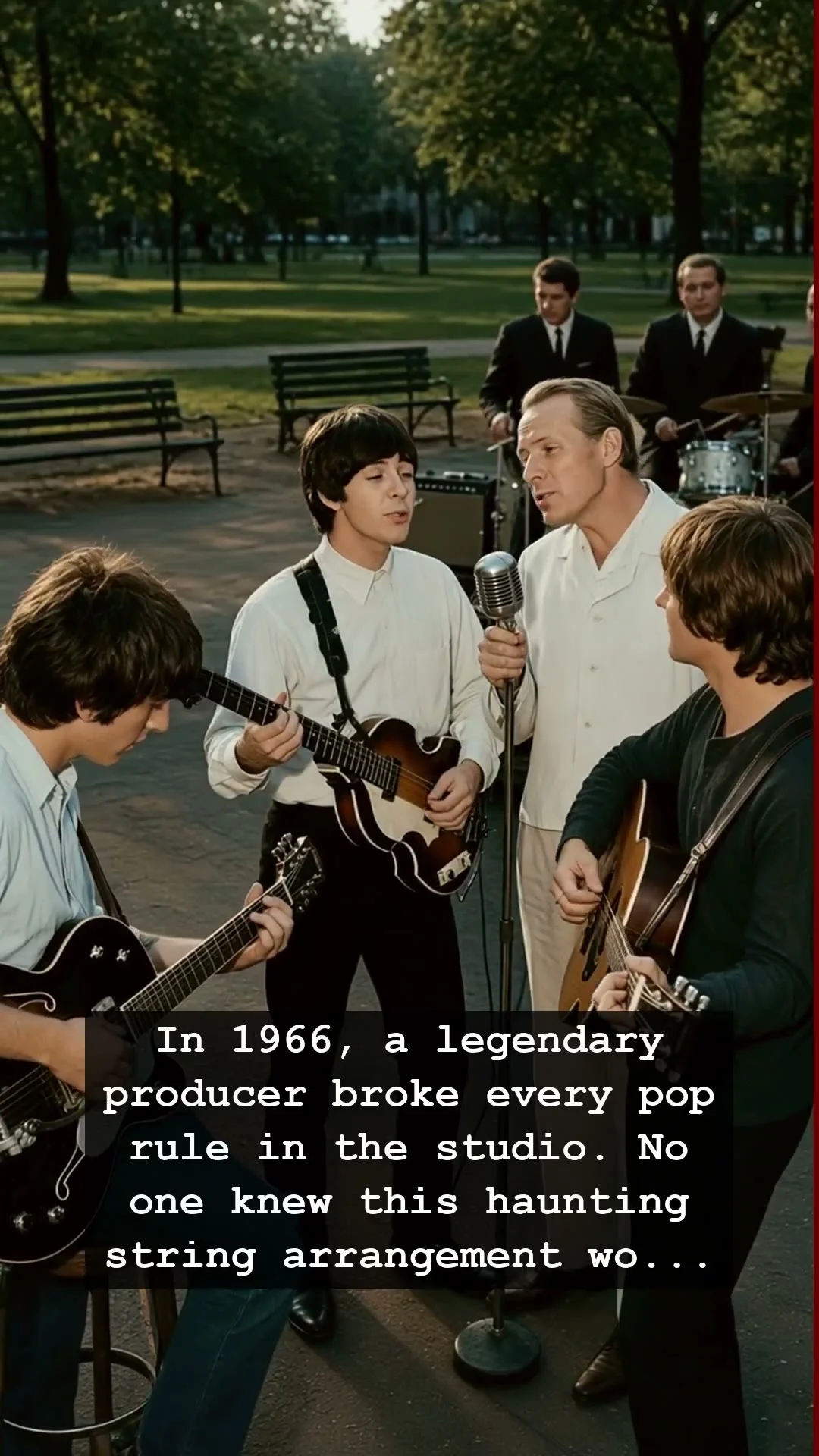
In 1966, the air inside Abbey Road Studios was thick with the scent of stale cigarette smoke and the restless energy of four young men from Liverpool who were tired of being mere pop idols. The Beatles were ready to pivot, but the real revolution happening behind the control desk was orchestrated by a man of cool intellect and classical precision: George Martin. While the world outside was transitioning from the simple charm of jukebox melodies to the complex, shifting landscape of the mid-sixties, George Martin was busy shattering the invisible fences that guarded pop music. He took a song about lonely people and turned it into an avant-garde masterpiece that still haunts our collective memory.
The song, of course, was Eleanor Rigby. At the time, the idea of removing the standard rock instrumentation—the guitars, the drums, the bass—was considered commercial suicide. Pop music was supposed to be rhythmic, infectious, and guitar-driven. Yet, George Martin had a vision that transcended the radio charts. He looked at Paul McCartney’s raw, melancholic lyrics and decided that the only way to capture the stark isolation of the characters was through a jarring, piercing string octet. He drew inspiration from the sharp, percussive movements of Bernard Herrmann’s score for Psycho, instructing the players to perform without vibrato, creating a sound so cold and brittle it felt like glass shattering against the listener’s soul.
Watching George Martin work was like observing a master architect at the drafting table. He was the bridge between the old guard of British recording traditions and the wild, experimental ambition of the counterculture. Before that legendary session, pop producers were largely invisible technicians, but George Martin changed the role entirely. He became the fifth Beatle, a mentor who turned the studio into an instrument itself. He didn’t just record the music; he sculpted it, pushing the limits of multi-track recording and forcing the band to reach for sounds that hadn’t been invented yet. It was a risky departure that terrified record executives who feared losing the teen demographic, but the gamble paid off.
The brilliance of that 1966 session remains a cornerstone of music history because it proved that pop music could be high art. It echoed the shifting cultural tides of an era defined by the rise of FM radio and the decline of the traditional four-piece band setup. George Martin understood that the audience was maturing, and by treating the listener as an intellectual participant rather than a passive consumer, he elevated the entire industry. His work on that track remains a haunting reminder of what happens when a visionary refuses to play by the rules.
Even today, listening to the sharp, frantic stabs of those strings, you can feel the tension of that London studio. George Martin didn’t just produce a hit; he validated the creative freedom that would define the psychedelic rock and experimental pop eras that followed. We owe the depth of our modern musical landscape to his daring choice. Next time you drop the needle on that record, listen closely to those strings. You aren’t just hearing a song; you are hearing the exact moment the history of popular music was permanently altered.