
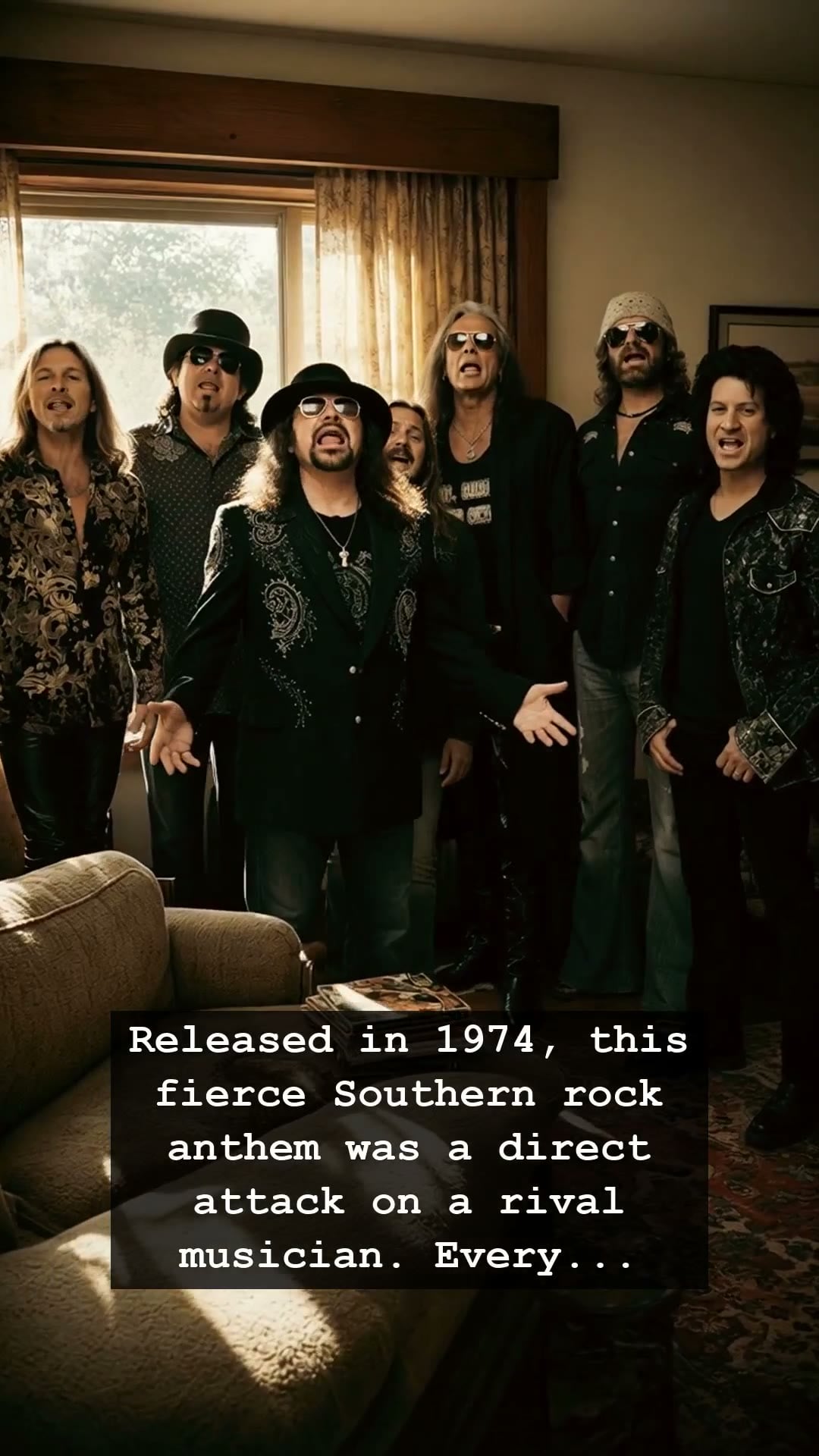
The year was 1974, and the airwaves were dominated by the raw, untamed power of Southern Rock. In a smoke-filled recording studio, Lynyrd Skynyrd was crafting an anthem that would eventually become an indelible part of the American cultural fabric. Sweet Home Alabama wasn’t just a hit; it was a defiant middle finger aimed directly at the Canadian folk-rock icon Neil Young. To the millions of listeners who heard the lyrics calling out Young by name, it felt like a declaration of total war. It was the quintessential clash of values: the gritty, unapologetic South versus the introspective, politically charged sensibilities of an outsider. For years, the public feasted on the drama, believing the tension between these musical titans was a bitter, irreparable divide.
The friction began when Neil Young released Southern Man and Alabama, tracks that critically dissected the racial history and cultural atmosphere of the American South. To the members of Lynyrd Skynyrd, these songs felt like judgmental generalizations from a man who didn’t truly understand their home. Ronnie Van Zant, the band’s formidable frontman, channeled that frustration into the now-legendary verses of Sweet Home Alabama. When the song hit the radio, it wasn’t just a track; it was a cultural lightning rod. It became the soundtrack for a generation driving down sun-drenched highways with their windows rolled down, a symbol of pride that perfectly captured the spirit of the era.
Yet, behind the headlines and the perceived hostility, reality was far more nuanced than the fans ever suspected. While the media painted the rivalry as a feud of epic proportions, there was a quiet, complex layer of mutual respect hiding backstage. Neil Young himself later admitted that he deserved the jab, acknowledging that his earlier songs were perhaps too patronizing. In turn, Van Zant often wore a Neil Young t-shirt while performing on stage, a subtle nod to the man he supposedly despised. It was a classic case of rock and roll irony, where the public drama served to amplify the art, while the artists themselves shared a common language that transcended the surface-level insults.
This story is a haunting reminder of the golden age of music, where every lyric was analyzed, every interview was scrutinized, and the line between personal beef and artistic expression was constantly blurred. It reminds us of a time before the instant gratification of the internet, when music lived in the hearts of the fans and the tension between legends felt like a genuine human conflict. That era of Arena Rock and wild, unpredictable personalities created a unique mythology that still holds us captive today. It wasn’t just about the music; it was about the raw, unfiltered passion that defined the seventies.
Today, Sweet Home Alabama remains a staple in every jukebox from coast to coast, standing as a testament to that turbulent yet creative time. Looking back, the saga of Lynyrd Skynyrd and Neil Young teaches us that even the deepest rivalries can hold a spark of admiration. It was never truly about war; it was about the conversation, the confrontation, and the music that emerged from the heat of the moment. We still listen today, catching those familiar chords and wondering about the stories that never quite made it to the history books.