
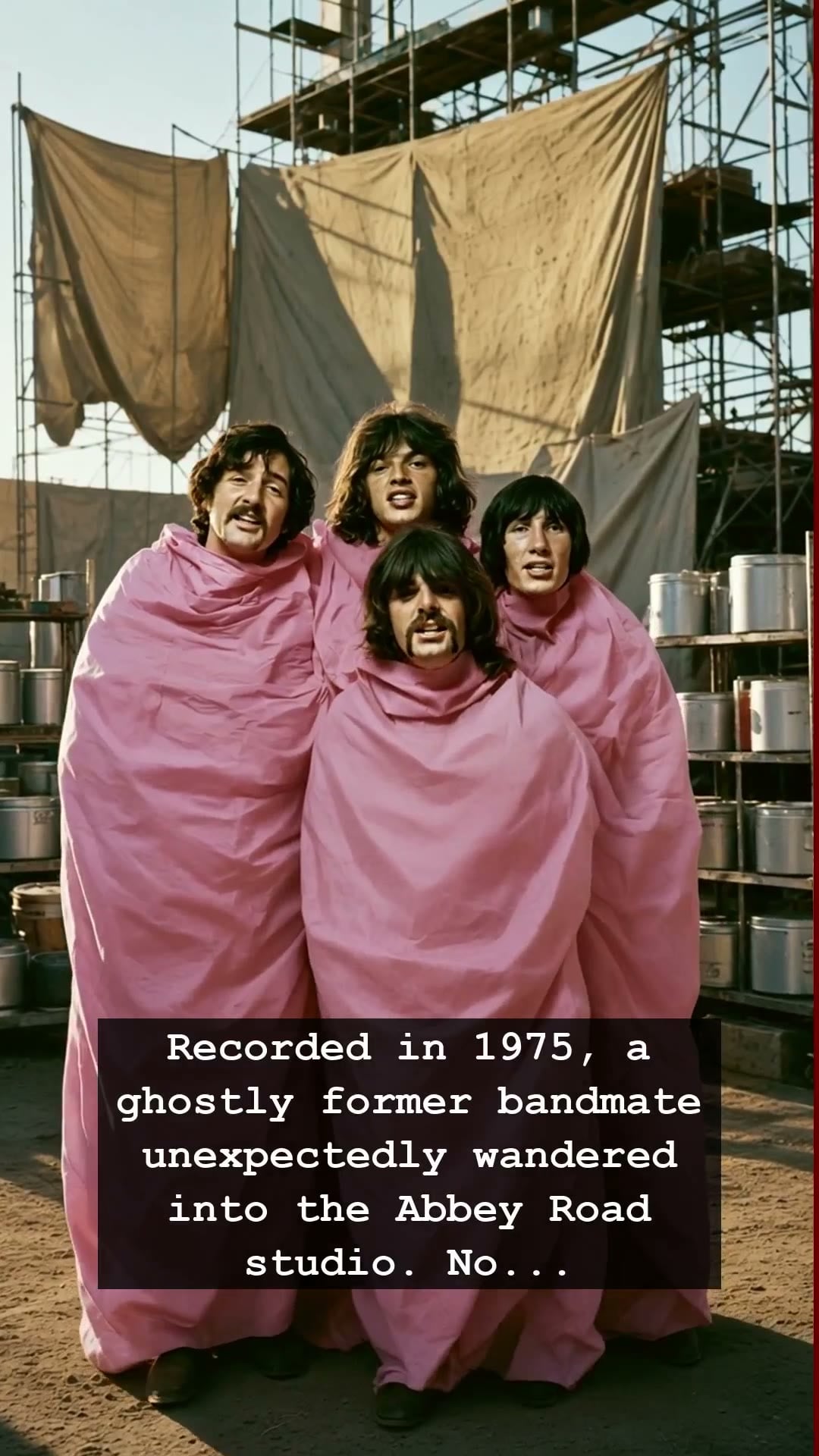
The year was 1975, and the hallowed halls of Abbey Road Studios were thick with the smell of cigarette smoke and the heavy weight of creative exhaustion. Pink Floyd was deep into the recording sessions for Wish You Were Here, a project that felt less like a rock album and more like an exorcism. As the band wrestled with the sonic landscape of their mourning, a strange, hulking figure wandered into the control room. He was bald, his eyebrows completely shaved off, and his eyes carried the vacant, hollowed-out stare of a man living in a different dimension. For several agonizing minutes, no one realized that the man standing in their midst was Syd Barrett, the brilliant, troubled founder who had been cast out of the band seven years earlier.
To understand the gravity of that moment, you have to look back to the late sixties. Syd Barrett was the colorful, chaotic heart of early Pink Floyd, the visionary who pioneered the psychedelic sound that defined a generation. But as the band climbed toward global stardom, Syd descended into the dark, tangled web of mental instability and heavy psychedelic abuse. By 1968, the friction had become unbearable; the man who had written the lyrics and melodies for their debut album was suddenly unable to function in a professional studio. The band made the cold, pragmatic choice to replace him with David Gilmour, essentially casting their leader into the wilderness of his own fracturing psyche.
When the uninvited guest finally spoke in that 1975 session, the reality shattered the atmosphere. It was Syd Barrett, physically transformed by time and isolation, a ghost of the vibrant artist who had once stood at the pinnacle of the London underground scene. The irony was suffocating. Pink Floyd was currently recording Shine On You Crazy Diamond, a sweeping, melancholic tribute to the very man who had just stumbled through their door. The band members were visibly shaken, many breaking down into tears as they confronted the wreckage of their past. It was a moment of profound, raw vulnerability that remains one of the most chilling anecdotes in rock history.
That brief encounter at Abbey Road became a permanent scar on the album’s legacy. It served as a grim reminder that the glittering heights of fame often came at the cost of one’s humanity. While the music industry continued to churn out hits and the world moved toward the era of the Walkman and the neon flash of the eighties, the story of Syd Barrett remained a somber cautionary tale about the fragility of the creative mind. His accidental visitation wasn’t just a coincidence; it was a cosmic bookend to his tenure with the band.
Decades later, the legend of Syd Barrett continues to haunt the vinyl grooves of Pink Floyd’s discography. He represents the lost soul of the sixties, a talent that burned too bright and burned out too fast. When you listen to the soaring guitar solos and the aching vocal harmonies of that era, remember the ghost in the studio who wandered in just to say goodbye. It is a story of regret, of artistic brotherhood, and of the enduring, mournful beauty of a song that refused to let its creator fade away completely into the shadows.