
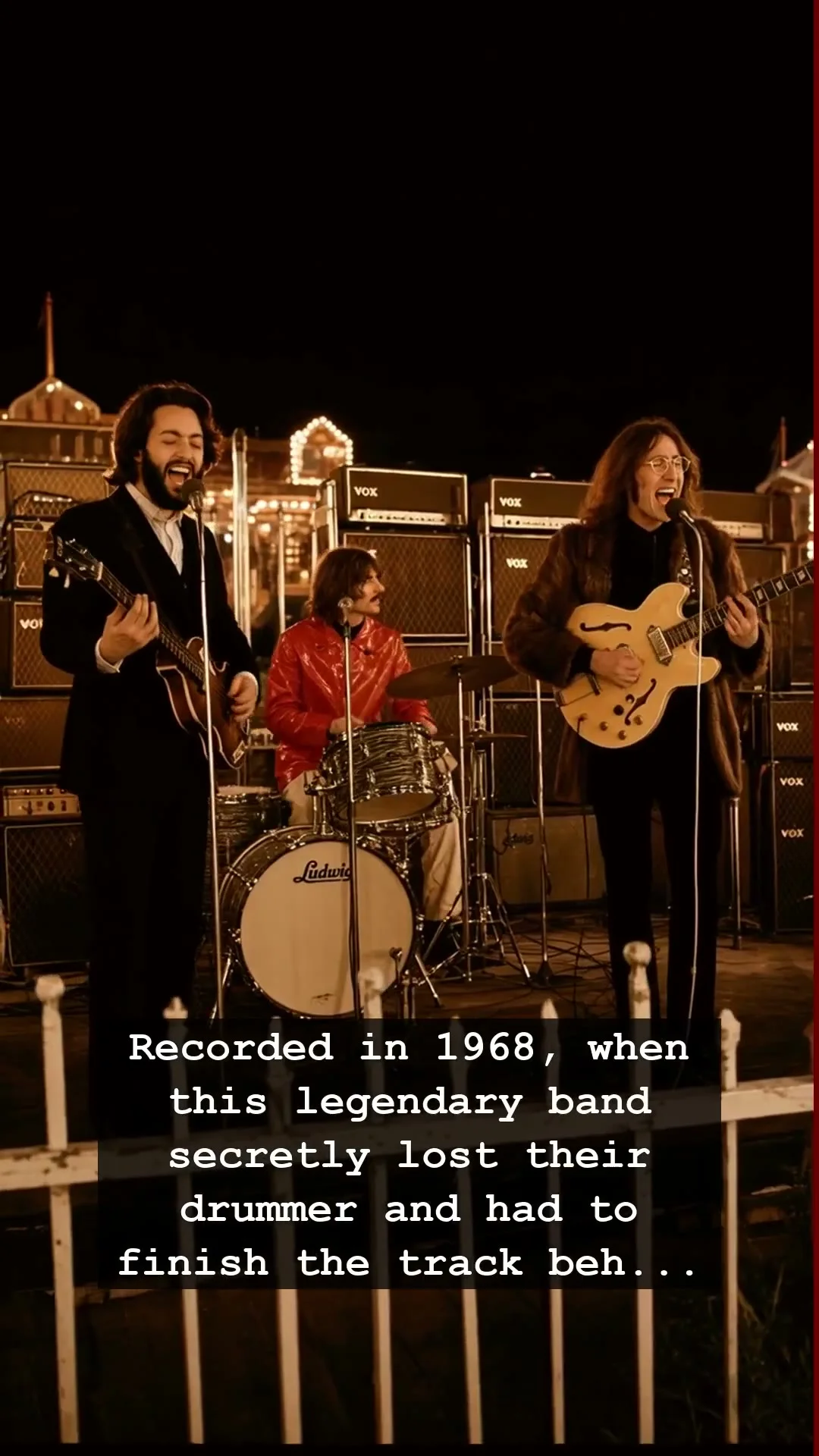
The year was 1968. The air in the Abbey Road studios was thick with tension, cigarette smoke, and the palpable decay of a brotherhood that had once conquered the world. To the outside listener, The Beatles were the undisputed kings of pop, riding the wave of global Beatlemania that had started years earlier. But inside the soundproof walls, the group was fracturing under the weight of their own legend. It was during these volatile sessions for the White Album that a monumental secret was born—a secret hidden within the rhythmic backbone of one of their most iconic recordings.
Everything came to a head when Ringo Starr, the steady heartbeat of the band, abruptly walked out. Exhausted by the incessant bickering, the creative ego clashes, and the suffocating pressure of being the biggest band on the planet, he quit. The remaining members—John Lennon, Paul McCartney, and George Harrison—were left in a state of suspended animation. With the tape machines rolling and a track left unfinished, they faced an impossible choice: scrap the song or break the cardinal rule of their lineup. They chose the latter, opting to record in absolute secrecy behind closed doors, afraid that the press would descend like vultures if they learned the band was crumbling.
It was Paul McCartney who stepped up to the drum kit. He was already a multi-instrumentalist, but occupying Ringo’s seat felt like a betrayal of their fundamental chemistry. As he navigated the kit, he tried to emulate Ringo’s signature swing, though fans today can still spot the subtle, slightly more aggressive nuances that define Paul’s style. They labored over the arrangement with the intensity of men trying to save a sinking ship, aware that the magic of The Beatles relied entirely on their unity. They kept the replacement drummer a dark secret for years, maintaining the public facade of a happy quartet while their personal lives drifted further into isolation.
Looking back from our modern era of digital perfection, it is hard to fathom the raw, analog stakes of 1968. There was no auto-tune to mask the cracks, only the warmth of magnetic tape and the relentless friction between four geniuses who were outgrowing their own creation. The story of this track serves as a poignant reminder that even the most legendary music is often forged in the fires of conflict. It captures that specific moment when the dream of the sixties was beginning to sour, shifting from the wide-eyed optimism of their early years toward the gritty, experimental landscapes of the decade’s end.
Today, when you listen to that classic record, you aren’t just hearing a song; you are hearing the sound of a band desperately trying to hold onto its soul. The resilience they showed during those dark, lonely hours in the studio is exactly why The Beatles continue to resonate with us. Their music survived the ego, the drama, and the near-dissolution of their bond. Perhaps the secret drum track wasn’t just a technical fix, but a testament to how hard they fought to keep the legend alive just a little longer. As the needle hits the groove, remember that behind every great hit lies a human story, often one marked by heartbreak and the quiet, frantic struggle to keep the beat going.