
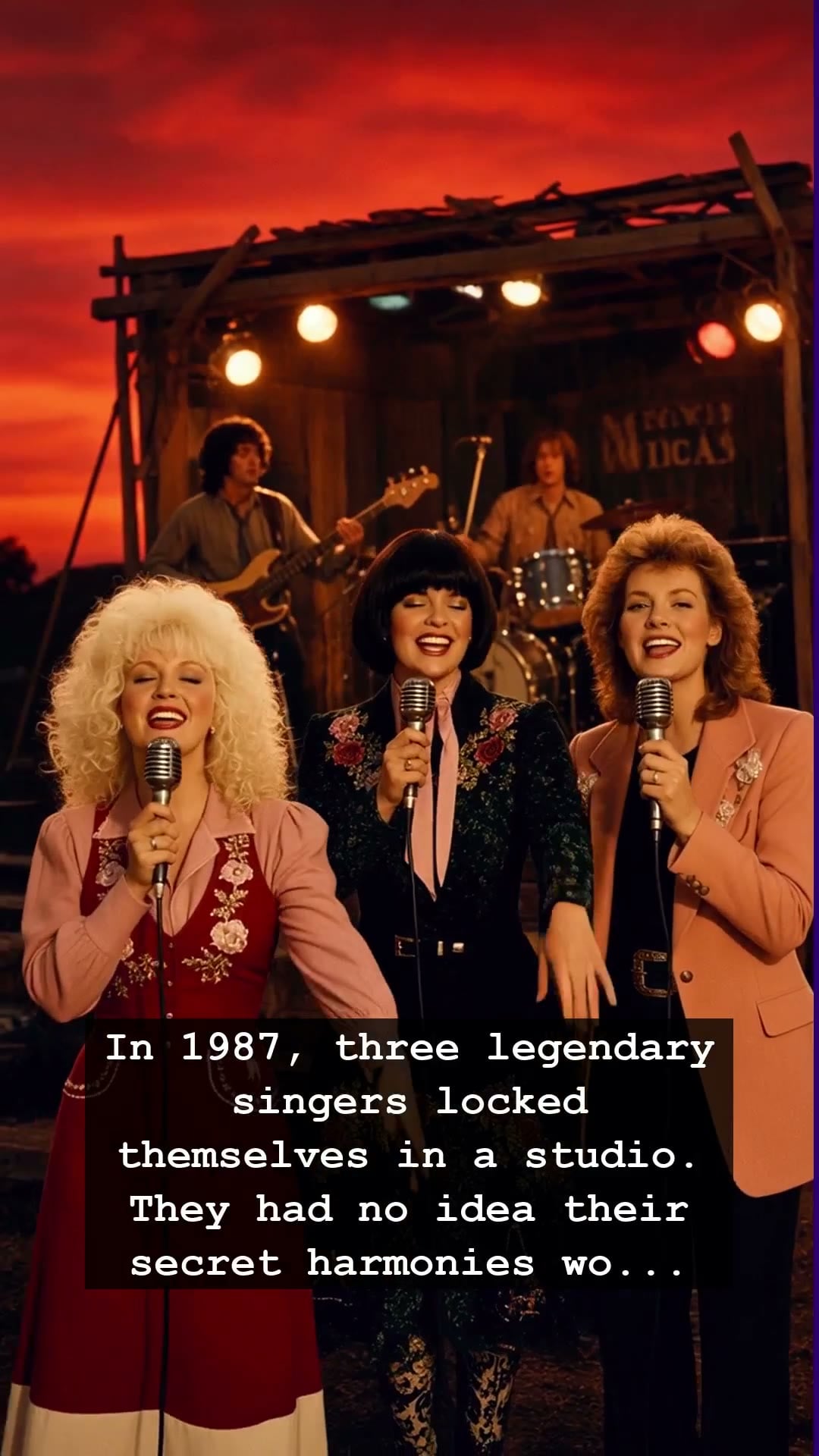
The year was 1987. While the rest of the world was obsessed with the synth-pop gloss of MTV and the emerging grit of the late eighties, three women were hiding in a windowless Los Angeles studio. They were not there to chase chart-topping hits or appease record label executives. Dolly Parton, Emmylou Harris, and Linda Ronstadt were there to do something far more radical: they were there to rediscover the raw, aching soul of American roots music. Outside, the Walkman era was transforming how we listened to music, but inside, they were relying on nothing but the timeless, vibrating purity of their own vocal cords.
It is difficult to overstate the star power that filled that room. By the time they collaborated on the Trio album, these three women were already pillars of the industry. Linda Ronstadt was the queen of rock-country crossover, Emmylou Harris was the ethereal voice of traditional storytelling, and Dolly Parton was a global icon who had already mastered both pop and country spheres. Yet, the air in the studio was thick with a palpable tension of mutual respect. They were not rivals; they were sisters in artistry, setting aside their massive egos to serve the songs. The result was a haunting, ethereal harmony that sounded as if it had been pulled directly from an Appalachian mountaintop decades earlier.
The industry at the time was skeptical. Music executives often viewed side projects as distractions from a solo career, failing to see the transformative power of such a collision. The recording sessions were shrouded in secrecy, fueled by late-night coffee and the profound desire to honor the music that raised them. There were moments of genuine conflict and artistic debate, but the friction only served to polish their performance to a razor-sharp edge. They were capturing a version of country music that felt ancient yet urgent, a stark contrast to the highly produced, polished sounds dominating the radio airwaves of the late eighties.
This project proved that true magic happens when the lights of fame are dimmed. The album eventually went on to achieve immense success, but the real story lies in the atmosphere of those closed-door sessions. It was a time when they shed the armor of their stardom, trading the glare of stadium spotlights for the intimacy of a shared microphone. They proved that even in an era of rapid technological advancement and changing musical landscapes, the human voice remains the most powerful instrument on earth. For fans who grew up with the Jukebox culture and the transition into the high-tech eighties, this collaboration felt like a homecoming.
Decades later, the legacy of this collaboration remains untouchable. It serves as a reminder that the best music is born from genuine connection rather than commercial mandate. Every time a new generation discovers the haunting opening notes of their songs, they are transported back to that room in 1987, where three legends dared to put their differences aside for the sake of a perfect chord. As we look back at the history of American music, it is clear that the union of Dolly Parton, Emmylou Harris, and Linda Ronstadt was not just a side project, but a definitive moment in cultural history. Their voices linger, echoing through time like a beautiful, unfinished melody.