
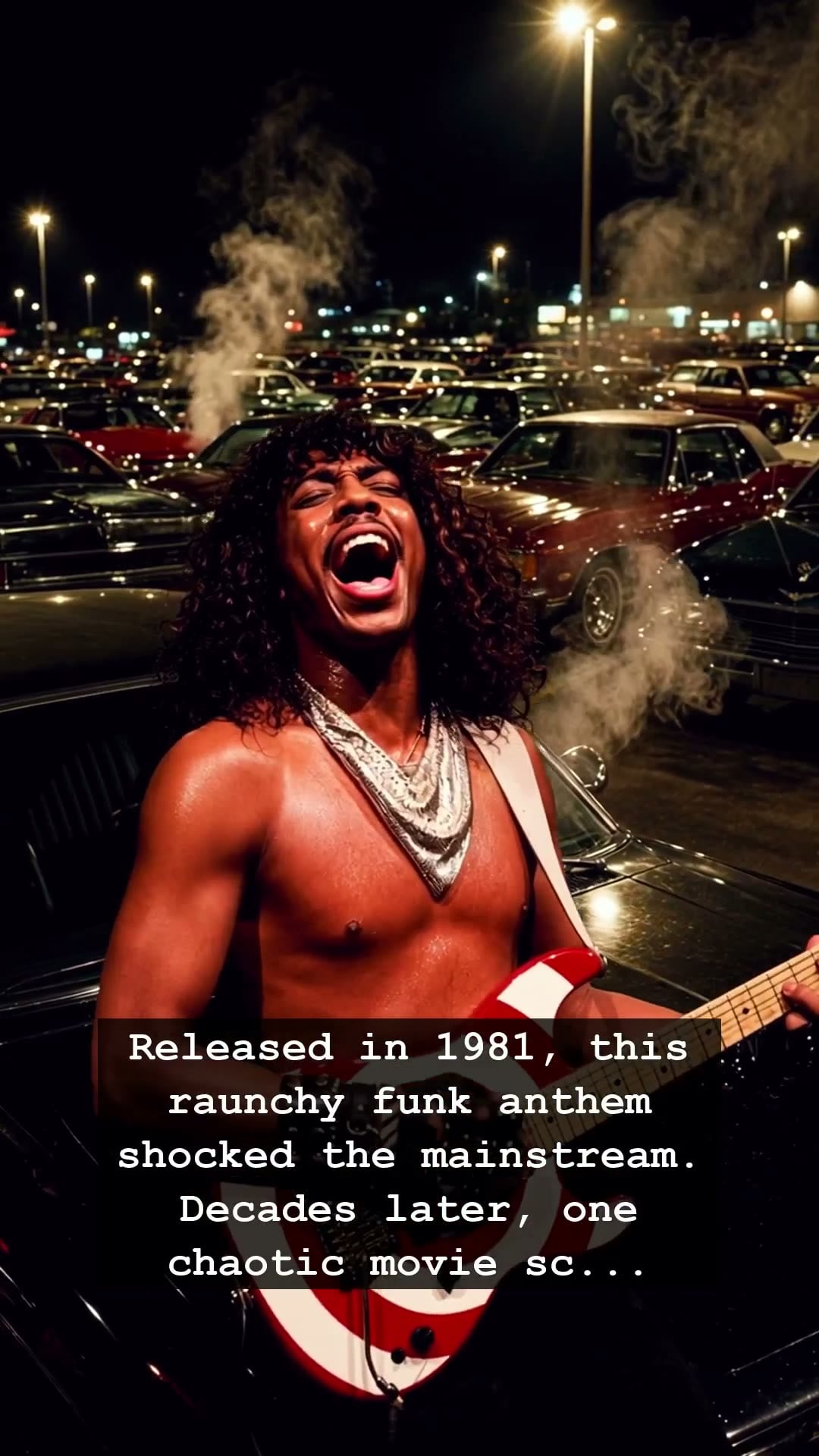
In 1981, the radio waves were dominated by a sound that felt both dangerous and irresistibly infectious. Rick James, the flamboyant architect of punk-funk, unleashed Super Freak onto an unsuspecting public. It was a track that reeked of the sweat, excess, and unapologetic debauchery of the era. With its pulsating bassline and Rick James’s signature gravelly swagger, the song didn’t just climb the charts; it scandalized them. For many listeners raised on traditional R&B, this was a sonic assault. To the rebels of the early eighties, however, it was an anthem of liberation that signaled the transition from the glitz of the dying disco era into something far grittier and more electric.
At the peak of his career, Rick James lived with a chaotic intensity that mirrored his music. He was a force of nature, a man who seemed to inhabit the neon-drenched hallways of Studio 54 as comfortably as he commanded the recording booth. His life was a high-octane blend of genius and self-destruction, often teetering on the edge of tabloid headlines and musical breakthroughs. Super Freak was the ultimate manifestation of this duality. It was catchy enough to be played in suburban living rooms, yet its lyrical content carried a raw, lascivious energy that pushed the boundaries of what was acceptable for mainstream broadcast. Rick James knew exactly what he was doing, crafting a masterpiece that was impossible to ignore.
Yet, the true genius of the song lies in its longevity, defying the typical lifecycle of a pop hit. Decades after the synthesizers had been packed away and the Walkman had been relegated to the junk drawer, Super Freak found a second, more hilarious life. The world was forever changed when a young girl, dressed in a pageant costume, transformed the raunchy funk anthem into the soundtrack for the most chaotic dance routine in cinematic history. That specific moment in film turned a song once synonymous with adult nightlife into a symbol of endearing, family-centric madness. It bridged the generational gap, turning a scandalous relic into a beloved piece of pop-culture kitsch.
When we listen to Rick James today, we aren’t just hearing a bassline; we are hearing the frantic heart of an era that didn’t know how to slow down. The song serves as a portal to a time when music was physical, tactile, and occasionally prone to causing a public stir. There is a strange, nostalgic comfort in knowing that a track designed to shock the prudish mainstream eventually became a universal shorthand for joy and uninhibited expression.
Rick James may have lived a life defined by the highs and lows of fame, but his music remains an untouchable legacy. Super Freak stands as his permanent monument—a song that survived the shifting tides of the eighties, the digital revolution, and the fickle nature of celebrity. It reminds us that no matter how much time passes, a great hook can always find a way to reinvent itself and conquer a new audience, one dance step at a time.