
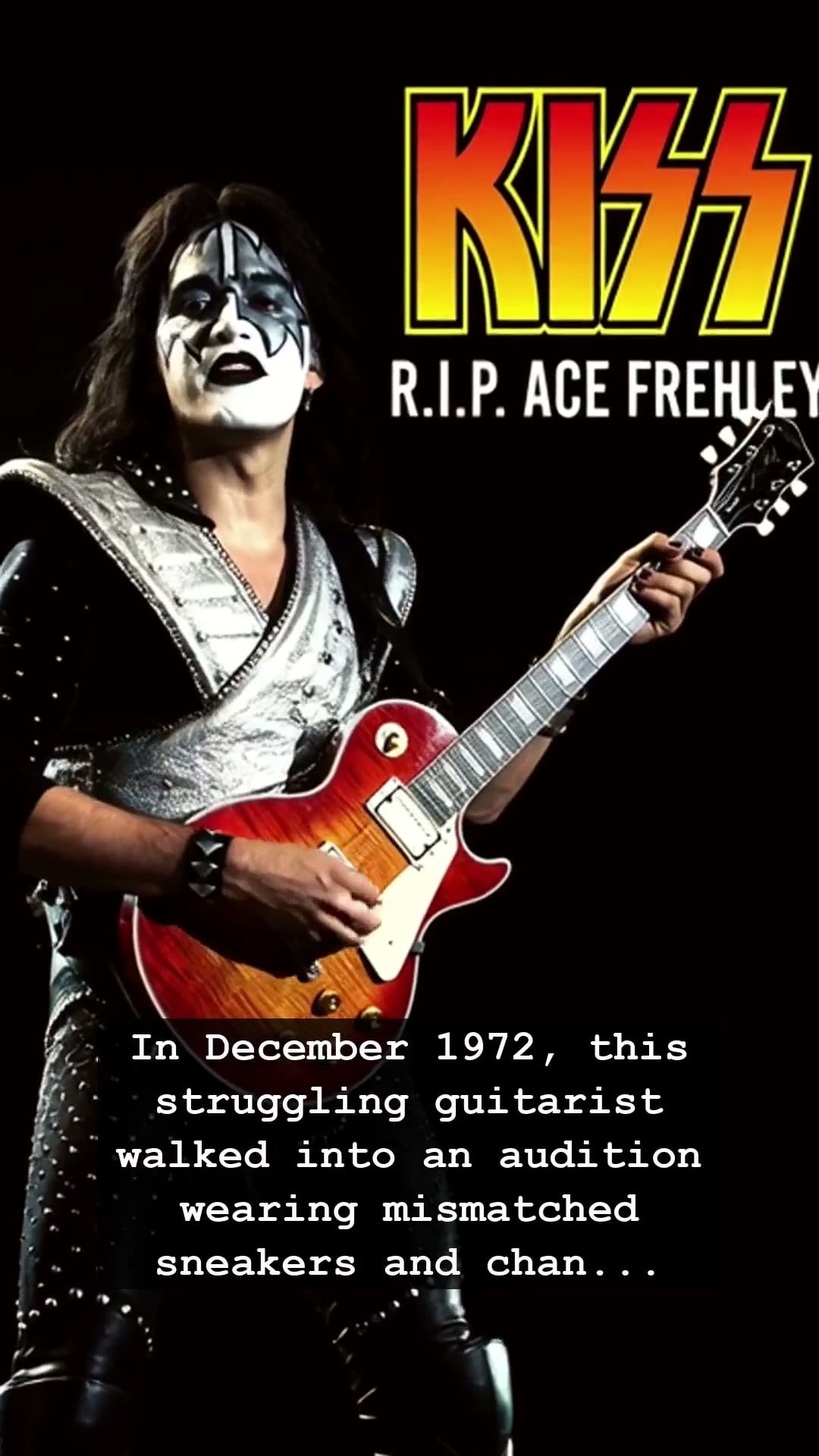
It was December 1972 in a gritty, cold New York City loft, and the sound of silence was being shattered by a struggling guitarist who looked anything but a star. Before the elaborate face paint, the towering platforms, and the pyrotechnics that would eventually define the arena rock spectacle of the seventies, there was just a young man in mismatched sneakers—one red, one orange—walking into a room that would change the trajectory of music forever. This was the moment Ace Frehley auditioned for a fledgling band called Kiss, a band that was hungry, desperate, and searching for the sonic edge that would propel them from dive bars to global superstardom.
At the time, the members of what would become the original Kiss lineup were already exhausted by the revolving door of hopeful musicians. The rock landscape was shifting; the post-Woodstock idealism was fading into the harder, sharper edges of the coming glam era. When Ace Frehley stepped into that rehearsal space, he didn’t look like a savior. He looked like a kid who had wandered in off the street. But the moment he plugged his guitar into an amplifier and tore through the chords of Cold Gin, the room went electric. His playing wasn’t just technical; it was visceral, filled with the kind of street-smart grit that only someone deeply rooted in the New York rock scene could provide.
That legendary audition is a cornerstone of rock mythology because it captures the beautiful chaos of the era. Ace Frehley possessed a unique blend of bluesy phrasing and aggressive distortion that bridged the gap between the psychedelic rock of the late sixties and the polished, high-octane arena rock that the eighties would soon demand. His decision to wear those mismatched sneakers wasn’t a fashion statement; it was a testament to the broke, hungry reality of musicians trying to survive in a city that didn’t care if you were the next big thing or just another face in the crowd. That humility, masked by his soon-to-be-iconic Spaceman persona, is what made his contribution so authentic.
As the band began their ascent, fueled by the rising power of FM radio and the eventual visual revolution of MTV, the chemistry between the four members became both their greatest strength and their most dramatic weakness. The fame that followed was intense, characterized by late-night parties at legendary venues and the crushing pressure of living up to the gargantuan expectations of millions of fans. Behind the mask, Ace Frehley struggled with the dark side of that rapid rise, battling internal demons while simultaneously cementing his status as a guitar hero to a generation of kids who would worship his solos as if they were gospel.
Today, when we hear the opening riffs of those early Kiss hits, we aren’t just hearing music; we are hearing the echo of that 1972 loft. We hear the audacity of a young man who walked in with nothing but his gear and his talent and proceeded to rewrite the rules of rock ‘n’ roll. Ace Frehley remains a symbol of an era where attitude mattered as much as ability, and where a pair of mismatched sneakers could be the starting line for a legacy that refused to fade. It is a reminder that sometimes, the most iconic legends are born from the most unassuming beginnings.