
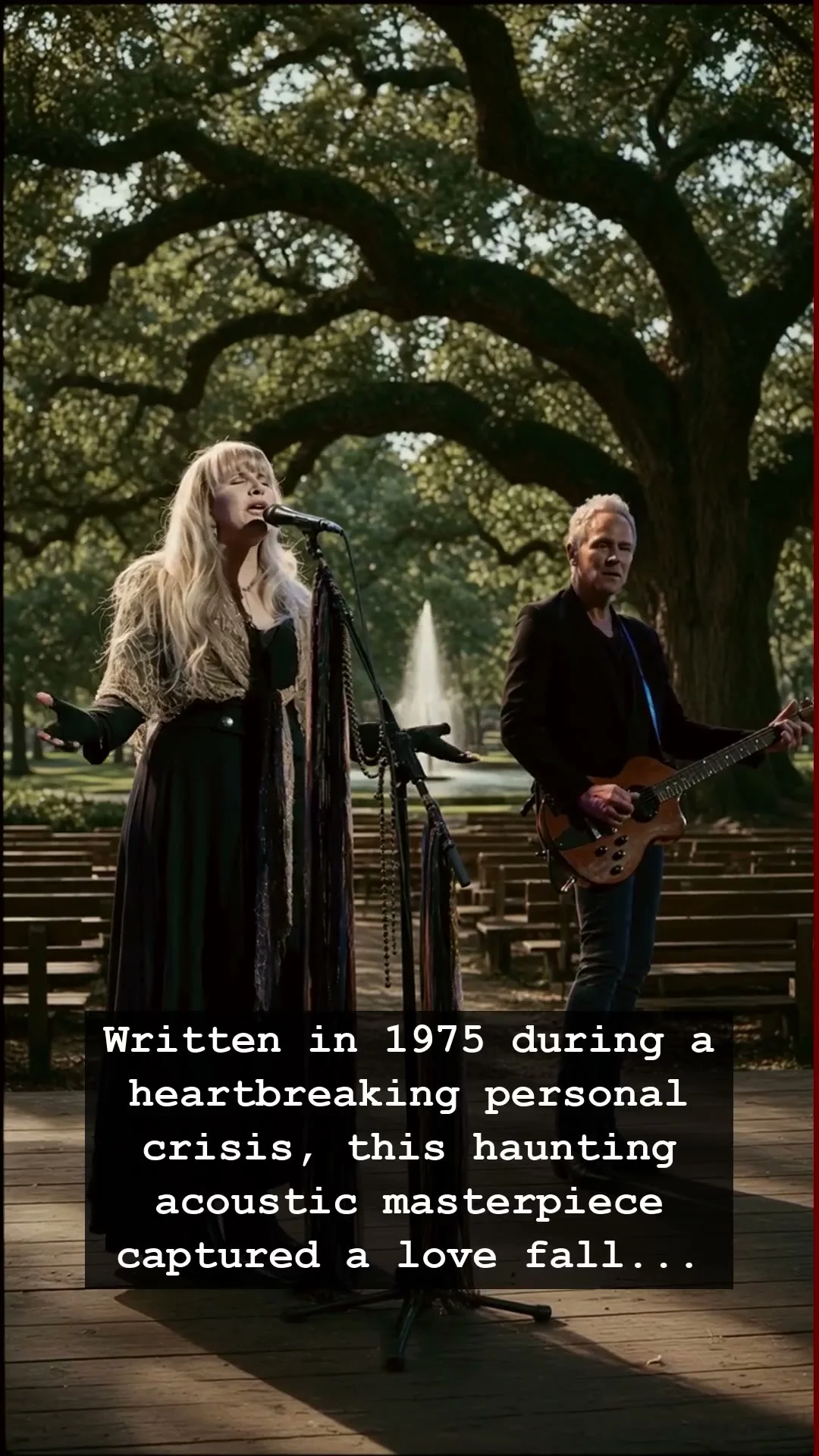
In 1975, while the world was obsessing over the neon-lit promise of the mid-seventies and the rise of the Walkman culture, two musicians were quietly unraveling in the shadows of the recording studio. Stevie Nicks and Lindsey Buckingham had arrived in Los Angeles with nothing but a dream, a dusty guitar, and a relationship that was slowly turning into a war zone. It was during this period of intense emotional friction that the haunting acoustic masterpiece Landslide was born. It was not just a song; it was a raw, unfiltered transcript of a love falling apart in real time, captured forever in the grooves of the iconic Fleetwood Mac self-titled album.
Stevie Nicks wrote the lyrics while gazing at the snow-covered hills of Aspen, Colorado, feeling the weight of an uncertain future and the crushing pressure of her disintegrating bond with Lindsey Buckingham. At the time, they were struggling to make ends meet, living on the edge of poverty while waiting for their big break. As she looked at the mountains, she saw her own life reflected in the landscape—shifting, eroding, and fragile. The tension between them was palpable to everyone in the studio, a sharp contrast to the polished sounds of the era. Every single chord felt like a confession, a quiet plea for understanding amidst the chaos of their shared ambition.
This era was defined by the transition from the psychedelic haze of the late sixties to the sophisticated, high-stakes atmosphere of the mid-seventies music industry. Fleetwood Mac was in the eye of the storm, navigating the pressure of newfound fame and the corrosive nature of the limelight. While the world saw two stars ascending, the reality was a deeply personal tragedy. Lindsey Buckingham provided the intricate, sensitive guitar work that gave the song its melancholic soul, perhaps unaware that he was helping to immortalize the very moment their romantic tether began to snap. It is a rare phenomenon in music history where the art survives, even as the artists themselves are being torn asunder by the very inspiration that birthed it.
Decades later, Landslide remains a cornerstone of the American songbook, resonating with anyone who has ever had to walk away from a version of themselves or a person they once held dear. Its endurance lies in its honesty. Unlike the glitzy, synthesized disco hits that would soon dominate the airwaves, this song chose vulnerability. It captures the exact second when nostalgia meets reality, and the realization that change is the only constant in life. For those who grew up listening to the crackle of a record player, the song is a direct line back to the uncertainty of their own youth.
Even now, watching Stevie Nicks and Lindsey Buckingham perform the song decades after their split offers a haunting glimpse into the ghosts of their past. The pain is no longer sharp, but the echoes of what they lost are woven into every melody. It serves as a somber reminder that the greatest art often requires the greatest sacrifice. As the final notes fade, we are left to wonder about the resilience of the human heart and how two people can change the face of rock and roll while breaking each other’s spirits. Do you still remember the first time this melody stopped your world?