
It is a sound etched into the collective memory of the American workplace, a rhythmic, mechanical cadence that signaled the start of a revolution for millions of employees. In 1980, as the world transitioned into a decade defined by the rise of the Walkman and the neon glow of early MTV, one country legend was busy changing the sound of pop music in a way nobody expected. Dolly Parton, already a titan of the genre, was tasked with creating the title track for the blockbuster film 9 to 5. While most producers in that era were scrambling to incorporate expensive new drum machines, Dolly Parton found her percussion in the most unlikely of places: her own hands.
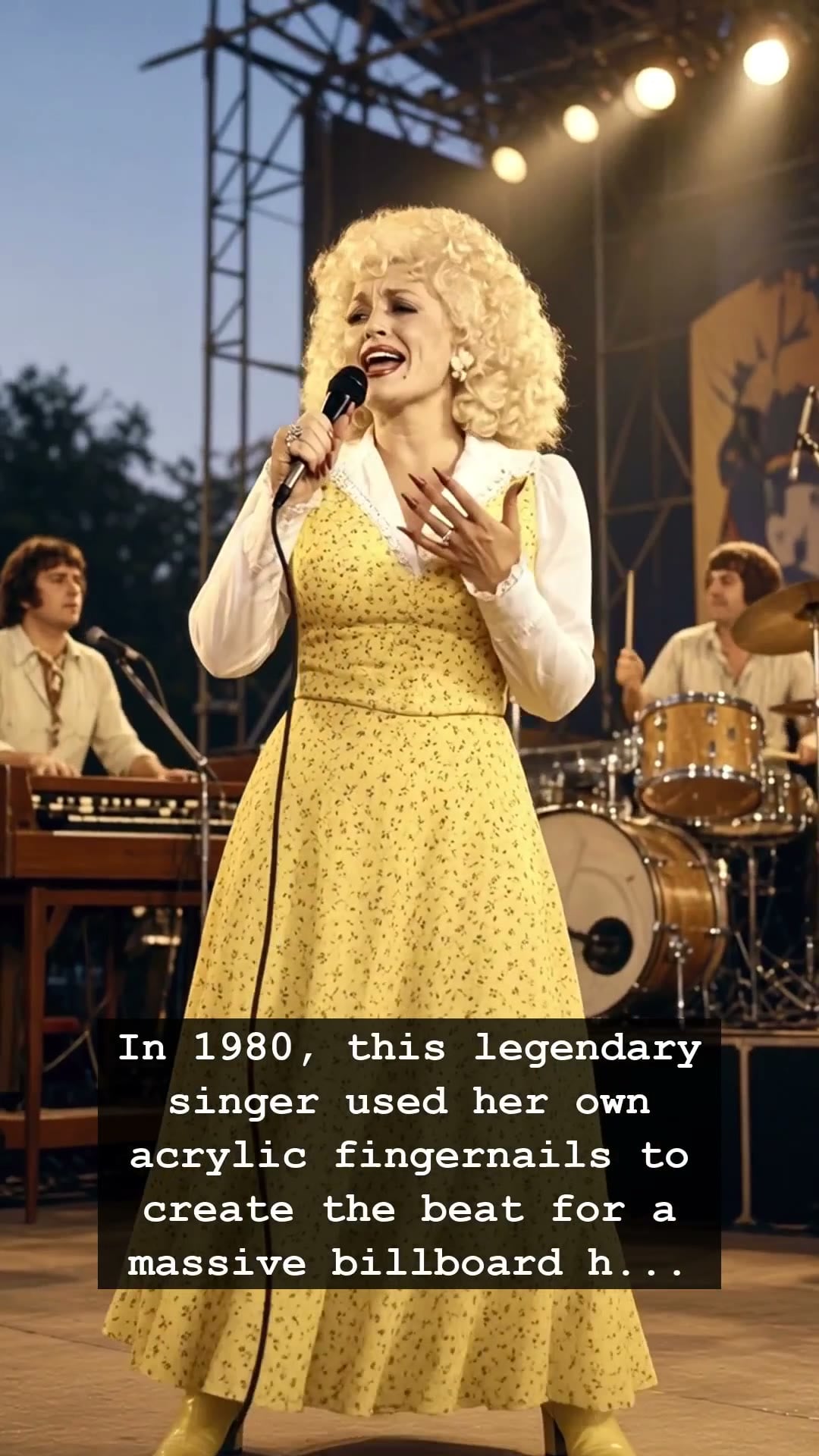
Deep inside the studio, the atmosphere was thick with the scent of hairspray and the creative tension that often precedes a massive hit. The song needed to capture the frantic, soul-crushing yet defiant nature of office life, but the standard studio drums just felt too sterile, too detached from the human struggle of the nine-to-five grind. Dolly Parton, ever the intuitive performer, began tapping her long acrylic fingernails together to simulate the frantic, staccato clacking of a typewriter. It was a rhythmic spark of genius—a tactile, organic beat that turned a simple office tool into a permanent fixture of music history. This was not just a clever studio trick; it was the authentic pulse of a working-class anthem.
The resulting track, 9 to 5, became an instant cultural phenomenon, catapulting Dolly Parton to a level of mainstream superstardom that transcended the boundaries of country radio. For a generation of listeners, that opening click-clack sound was a defiant shout against the monotony of the American industrial era. It captured the drama of the daily struggle, balancing frustration with a catchy, upbeat melody that made the listener feel like they could finally win their battle against the system. It was the perfect bridge between the organic spirit of seventies songwriting and the polished, synthesizer-driven commercialism that would soon dominate the airwaves for the rest of the decade.
Looking back, the success of this song is a testament to the raw, unpolished creativity that defined icons like Dolly Parton. While many of her contemporaries were chasing the sleek trends of disco or the grandiosity of arena rock, she remained grounded in the stories and sounds of everyday life. That specific fingernail beat serves as a metaphor for her entire career: simple, iconic, and undeniably human. She didn’t need high-tech machinery to build a chart-topping masterpiece; she only needed her voice, her wit, and the very tips of her fingers.
Decades later, the song remains a staple of pop culture, proving that timeless music is built on personality rather than production fads. When we listen to those opening notes today, we aren’t just hearing a track; we are hearing a moment of pure, spontaneous genius. It serves as a reminder that even the most massive shifts in music can start with something as small as a click. Does that iconic rhythm still make you want to clock in or walk out of the office?