
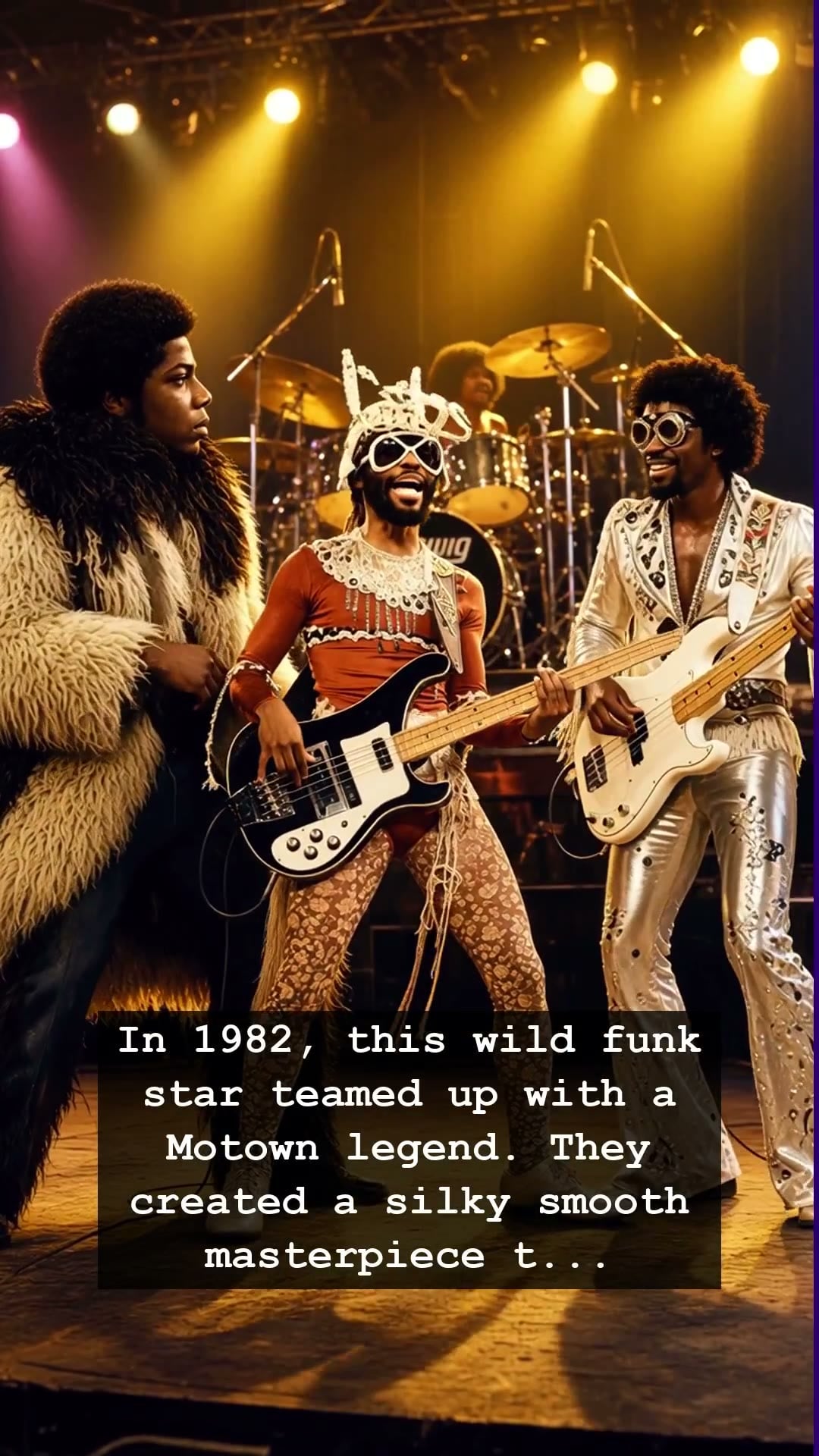
It was 1982, a year defined by the neon glow of MTV and the relentless rhythm of the Jukebox in every corner bar. In the heart of a recording studio, an unlikely collision of musical worlds was unfolding. On one side stood Rick James, the wild, unpredictable punk-funk king whose image was as sharp and dangerous as his bass lines. On the other side stood the velvet-voiced legend Smokey Robinson, a titan of Motown elegance. To the outside observer, they were oil and water—the swaggering provocateur and the sophisticated crooner. Yet, behind closed doors, their creative friction would ignite a masterpiece that defined the soul of that decade.
The tension in the studio was palpable from the first moment they plugged in. Rick James was known for his hedonistic lifestyle and the sheer, unbridled energy he brought to his music, often bordering on the chaotic. Smokey Robinson, by contrast, carried the poised, disciplined history of a label that had polished American pop to a mirror shine. When they sat down to work, the clash of egos was inevitable. Rick James wanted to push the boundaries of grit and groove, while Smokey Robinson sought to maintain the melodic soul that had captivated millions for decades. The air grew thick with artistic disagreement, a battle between the raw urgency of the street and the refined craftsmanship of the studio.
However, it was precisely this volatile chemistry that birthed greatness. As they pushed and pulled against each other, the resulting sound became something entirely new—a silk-smooth soul record electrified by a funk heartbeat. When people speak of the eighties, they often mention the synthesizers and the glitter, but they rarely mention the intense personal wars fought in the dark, soundproof booths of California. This was a time when the boundaries of music were being redrawn by icons who were as much at war with themselves as they were with their partners. For Rick James, this collaboration was a chance to prove his musical depth beyond the party-funk persona he had spent years crafting.
The final product, a fusion of Smokey Robinson’s timeless vocal grace and the sharp, infectious rhythm of Rick James, remains an essential part of the American songbook. It is a testament to the fact that some of the best art emerges from the most fractured circumstances. Even now, listening to those tracks, one can almost feel the cigarette smoke lingering in the air of that 1982 studio, the hum of analog tape machines, and the sheer nervous energy of two geniuses forcing their wills onto a single recording. It reminds us of a time before digital perfection, when a song was a living, breathing struggle between two souls.
Decades later, the legacy of this collaboration persists as a reminder of how the music industry operated at its peak. It wasn’t just about the hit songs; it was about the stories, the scandals, and the profound human connections that happened between the sessions. Whether you recall the era of the Walkman or you are discovering these titans for the first time, the work of Rick James and Smokey Robinson continues to resonate. It invites us to look past the glitz of the era and listen to the raw, unfiltered truth of the music. Do you still remember where you were when that groove first hit the airwaves?