
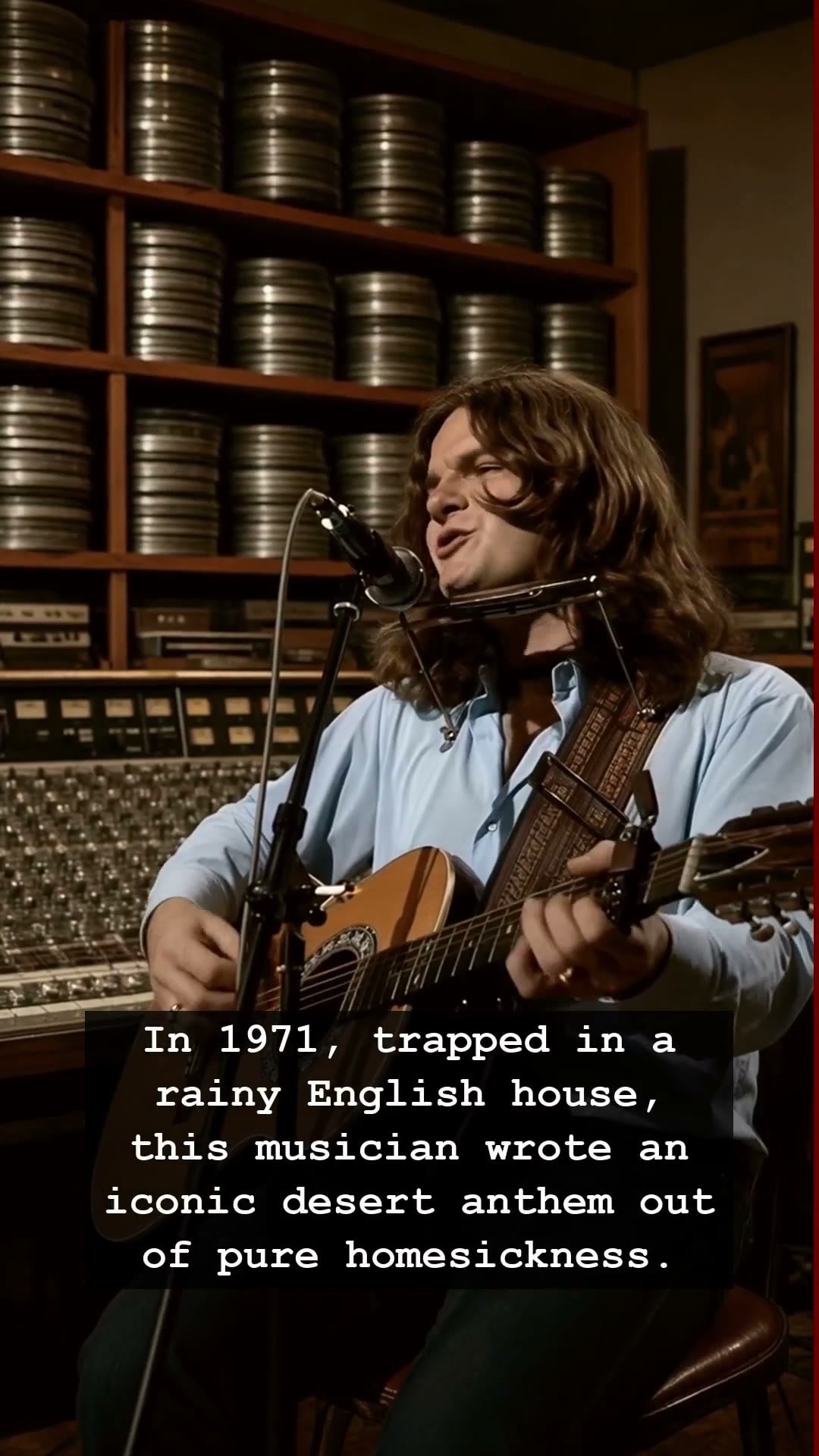
It was 1971, and the gloomy, relentless rain of England felt like a prison for the members of the folk-rock trio known as America. While the world was dancing to the glitzy pulse of the early disco era and the cultural revolution of the Woodstock generation was still echoing in the air, Gerry Beckley, Dewey Bunnell, and Dan Peek were feeling profoundly lost. They were American expats living in a damp, isolated house in the English countryside, nursing a bone-deep ache for the arid, sun-scorched landscapes they had left behind. In that moment of profound isolation, they birthed a song that would define a generation, yet it was born from a place of pure, unfiltered homesickness.
The anthem in question is, of course, A Horse with No Name. While listeners worldwide were transported by its hypnotic, desert-evoking acoustic strumming, the truth behind its creation is far more cinematic and melancholic. Dewey Bunnell, the primary architect of this desert masterpiece, later confessed that the song was his way of escaping the suffocating English climate. He vividly recalled the heat, the expansive skies, and the dry, dusty trails of his youth in the American Southwest. It was a mental voyage, a sonic hallucination conjured up to combat the gray skies of a foreign land. As he picked at his acoustic guitar, the lyrics began to flow—a surreal trek through a desert where the sun and the heat became characters in their own right.
What makes the success of A Horse with No Name so fascinating is the sheer irony of its reception. When the track was released, it was immediately compared to the work of Neil Young, with many listeners assuming it was one of his compositions. This led to a strange, lingering conflict that followed the band for years. Despite the confusion, the song catapulted the band America to the top of the charts, securing their place in the pantheon of classic rock legends. It was a time when the Jukebox was the heartbeat of every roadside diner, and their harmonic, folk-infused sound provided the perfect soundtrack for the long, lonely highways that crisscrossed the vast American landscape.
The drama of the era was not limited to the charts. The music industry in the early seventies was a volatile beast, shifting rapidly from the raw, psychedelic experimentation of the late sixties to the polished, radio-friendly hits that would eventually lead to the rise of MTV. America stood in the middle of this transition, bridging the gap between the introspective folk artists and the burgeoning Arena Rock giants. Their story is a reminder of the fragility of fame and how quickly a group of young men, trapped by rain and yearning, could be launched into the stratosphere of global superstardom.
Looking back, A Horse with No Name remains a staple of classic radio, its melody as haunting today as it was over fifty years ago. It carries the weight of a memory that refuses to fade—a testament to the power of artistic expression when faced with the discomfort of displacement. The next time you hear those iconic, rhythmic chords, think of the three men in that rainy English house, closing their eyes and imagining the desert heat. Perhaps that is why the song still resonates so deeply; it is the sound of home, captured in a bottle and shared with a world that was just as restless as they were.