
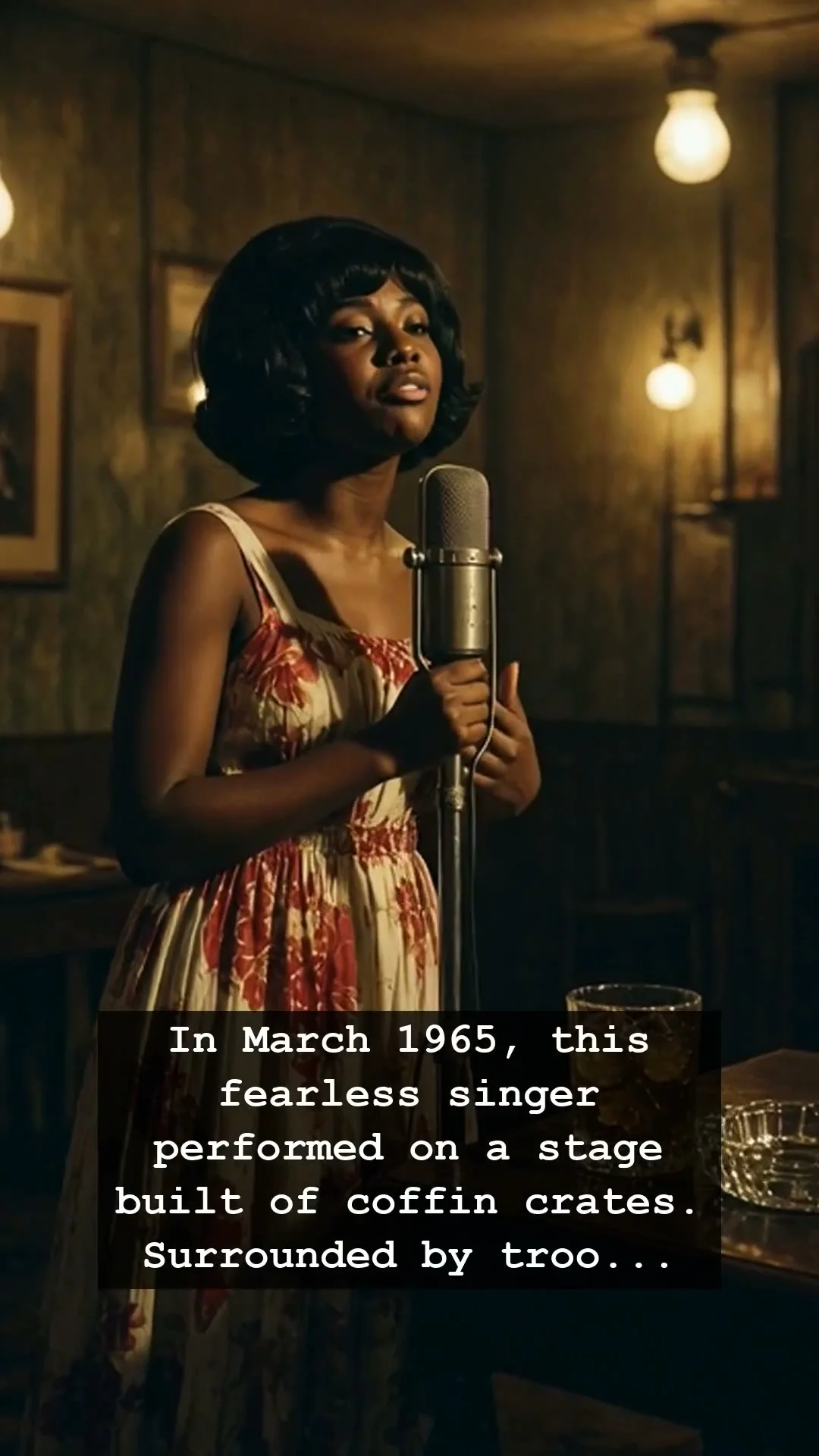
In March 1965, the air in Montgomery, Alabama, tasted like copper and fear. Thousands of weary marchers had arrived at the state capitol, seeking justice and dignity, but they were greeted by something chilling. Standing before them was not a conventional podium, but a makeshift stage constructed from scavenged coffin crates. Atop this grim foundation stood Nina Simone, a woman whose voice carried the weight of generations. As hostile troops circled the perimeter with bayonets fixed, she didn’t tremble. Instead, she leaned into the microphone, and the sound that poured from her soul shook the very foundations of American history.
Nina Simone was never just a singer; she was a storm in human form. By the mid-1960s, the civil rights movement had become the pulsing heart of the American cultural landscape, a stark contrast to the polished, upbeat melodies of the radio charts. While many artists of the era sought comfort in the escapism of the jukebox or the neon glow of pop stardom, Nina Simone chose the front lines. She understood that music was not merely entertainment, but a weapon of truth. When she sang that day on those rough-hewn crates, she was channeling the collective exhaustion and the burning, indomitable hope of a people who refused to be silenced.
The performance that day remains one of the most poignant snapshots of the decade, a haunting reminder of how music can serve as a catalyst for societal change. Nina Simone brought a rare, unfiltered intensity to the struggle, blending the mournful tones of deep-rooted soul with a defiant lyricism that made audiences uncomfortable in the best way possible. She took the trauma of the era and transmuted it into an anthem, a sonic shield that protected the marchers from the palpable hatred surrounding them. It was a moment where the lines between art and revolution vanished entirely.
Looking back at that era—a time defined by the raw energy of Woodstock, the burgeoning independence of soul, and the deep cracks in the American psyche—it is clear that Nina Simone stood in a league of her own. Her life was defined by this internal conflict between the beautiful complexity of her artistry and the harsh, often cruel realities of the world she lived in. She battled personal demons and the crushing pressures of fame, yet every time she stepped onto a stage, she gave everything she had. She was a woman who lived in the tension between agony and triumph, leaving behind a legacy that is as bruised as it is brilliant.
Decades have passed since Nina Simone stood on those coffin crates, yet her voice remains a restless ghost in our culture. We find her echoes in the modern fight for equality and in the way we use music to process our own collective pain. Her story is a testament to the fact that greatness is rarely found in comfort; it is forged in the fires of adversity. When you listen to her records today, try to hear more than just the music. Listen for the sound of a woman who dared to stand on the edge of history and sing the truth when no one else would.