
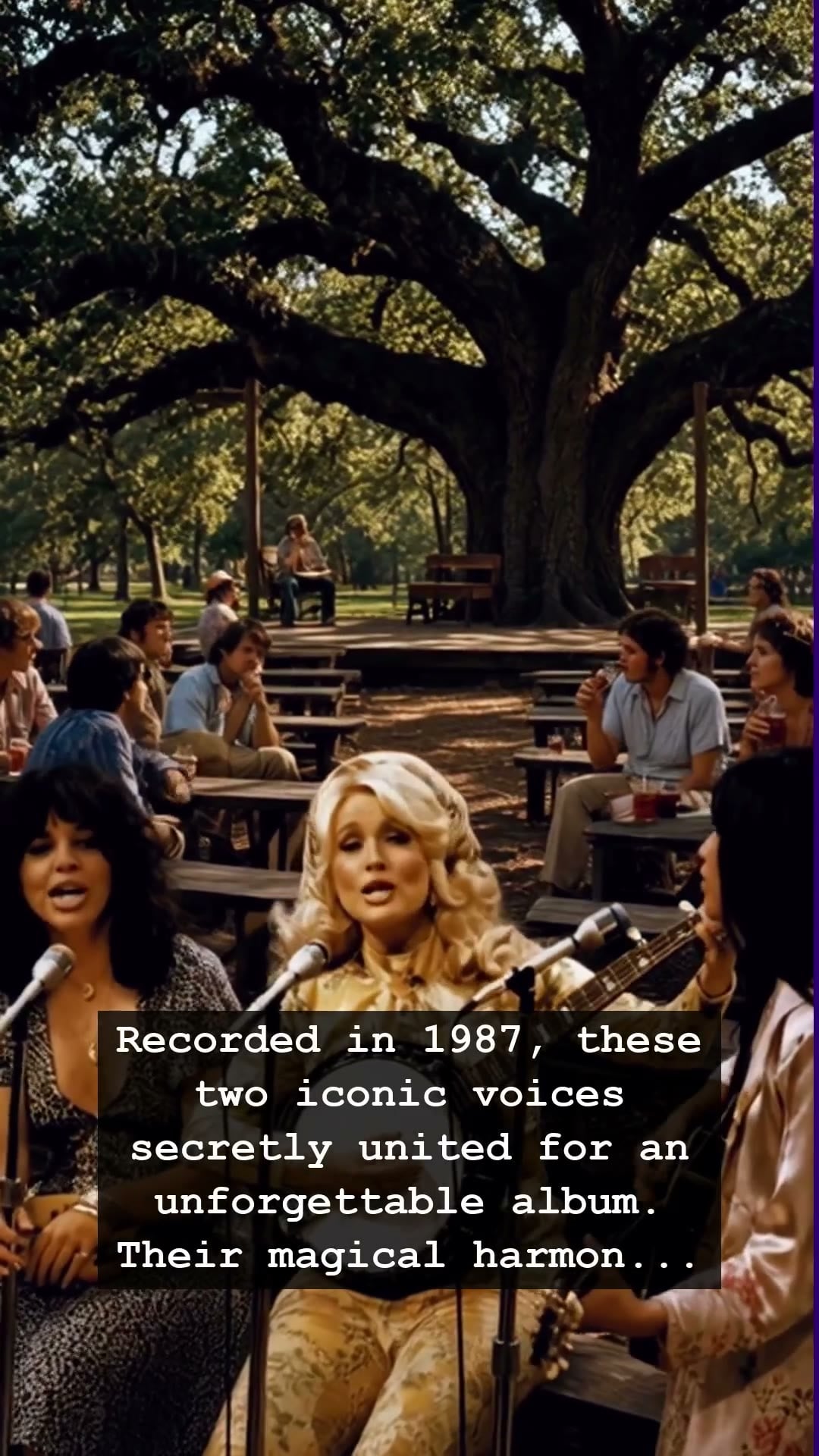
It was 1987, and the airwaves were dominated by the neon synthesizers and bold production of the MTV era. Yet, while the world was distracted by glitter and drum machines, a quiet, monumental seismic shift was brewing in the heart of Nashville. Three of the greatest voices to ever grace a microphone—Dolly Parton, Linda Ronstadt, and Emmylou Harris—had retreated into the shadows of a recording studio. They weren’t there for the fame or the chart-topping pressure that usually defined the industry; they were there to capture something that had been haunting them for nearly a decade: a dream of harmony that almost never saw the light of day.
The story of the album Trio is one of the music industry’s greatest acts of perseverance. For nearly ten years, conflicting schedules, ego clashes within label boardrooms, and the sheer logistical nightmare of coordinating three massive superstars made this project seem like a pipe dream. Dolly Parton was already a titan of American culture, her presence shifting from the Grand Ole Opry to the silver screen. Linda Ronstadt, the quintessential voice of the seventies, was constantly reinventing herself, moving from the rock clubs of Los Angeles to the sophisticated standards of the Great American Songbook. To get these women in a room together felt like aligning the planets.
When they finally stood around the microphones, the atmosphere was thick with the weight of expectation. There were no elaborate studio tricks or layers of processing; it was just three women, their acoustic instruments, and the raw, crystalline power of their blended vocals. Linda Ronstadt later recalled that the process wasn’t just about technical precision, but about finding the space where their distinct identities—the Appalachian fire of Dolly Parton, the rock-n-roll edge of Linda Ronstadt, and the ethereal, haunting purity of Emmylou Harris—could coexist without one overpowering the others.
The resulting record became a masterclass in vocal synergy, a nostalgic bridge back to the roots of American music. At a time when pop music was becoming increasingly artificial, this collaboration served as a visceral reminder of what human connection sounds like when captured on magnetic tape. It wasn’t about drama or tabloid headlines; it was about the sanctity of the song. The record climbed the charts, defying the trends of the late eighties and proving that the soul of country music remained vibrant and necessary, even amidst the rapidly changing landscape of the digital age.
Decades later, the legacy of this union remains etched in the history of American music. It reminds us of a time when icons didn’t need to shout to be heard, when a simple harmony could be more powerful than a stadium-sized production. Whenever you drop the needle on a record player today, the ghost of that 1987 session still resonates, proving that true artistry is not just about the individual, but about the beautiful, fragile magic that happens when legends choose to sing as one.