
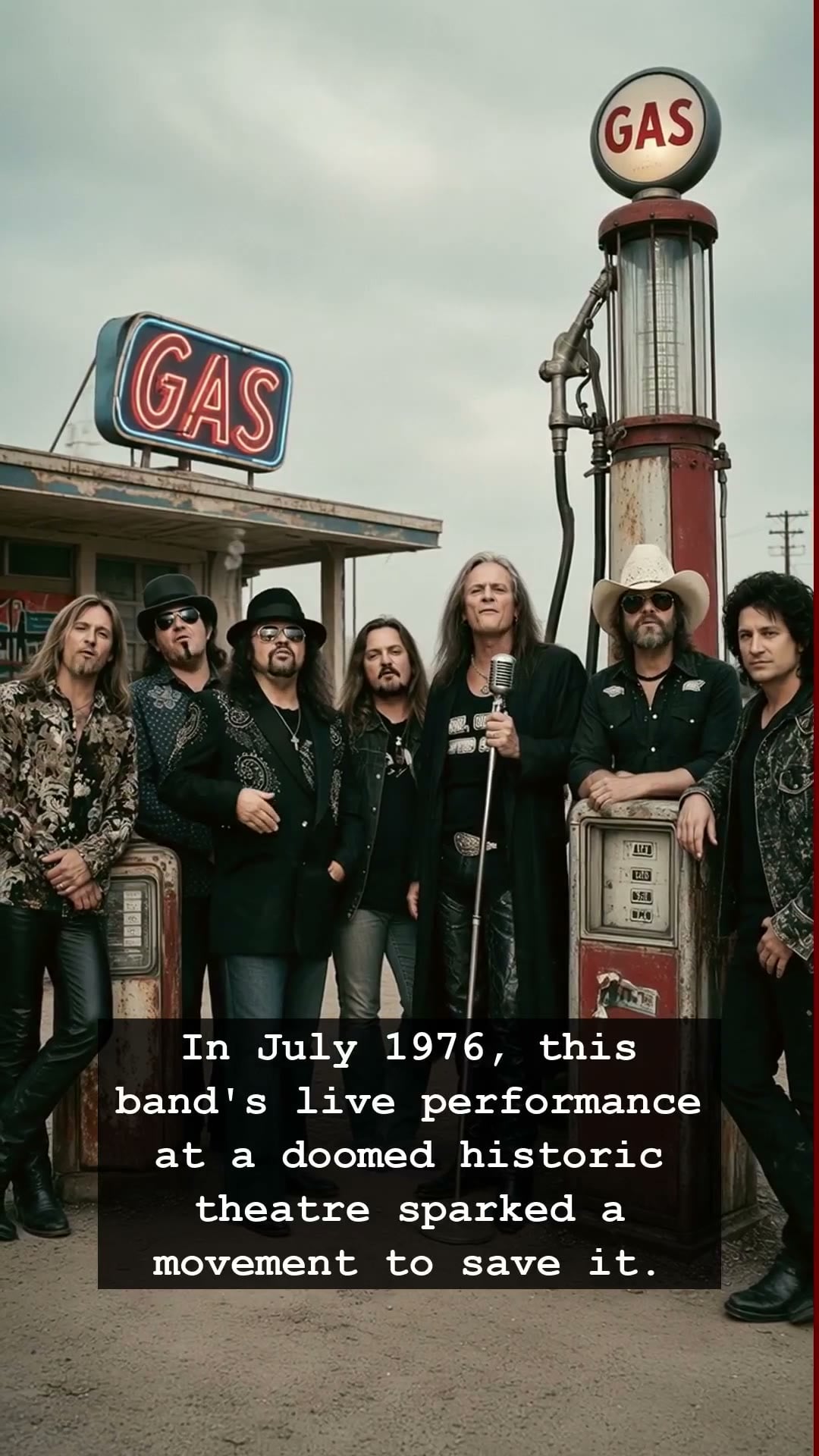
The year was 1976, and the humid air of Atlanta felt heavy with the weight of change. Amidst the rise of disco and the polished sheen of late-seventies pop, a different sound was echoing through the city—the raw, unrefined roar of Southern rock. At the center of this cultural storm was Lynyrd Skynyrd, a band defined by their triple-guitar assault and unapologetic grit. But this wasn’t just another tour stop; it was a desperate gamble to save a piece of history. The Fox Theatre, a stunning architectural masterpiece, was slated for demolition. The wrecking ball was looming, and the city seemed resigned to losing its crown jewel until Ronnie Van Zant and his crew decided to stand their ground.
Walking into the Fox felt like stepping back into a more elegant era, a sharp contrast to the grit of the road that Lynyrd Skynyrd traveled. The band knew that if they could capture the magic of their sound within those crumbling, gilded walls, the world would have to pay attention. They weren’t just playing for their fans; they were playing for the soul of the building. The air was thick with the scent of stale beer, cigarette smoke, and the electric anticipation of a crowd that knew they were witnessing something monumental. When the first chords of their set ripped through the theatre, it was as if the ghosts of the past were waking up to the rhythm of a new, rebellious generation.
This wasn’t merely a concert; it was an act of preservation through pure sonic force. The energy that night was visceral, a testament to the power of rock and roll to mobilize a movement. By recording the performance, the band ensured that their legacy would forever be intertwined with the theatre’s survival. The live album, One More for the Road, became an essential artifact for any fan of the era, capturing the sweat, the tension, and the absolute mastery of Lynyrd Skynyrd at their peak. It was the definitive sound of the South, booming through an auditorium that was never supposed to hear another note.
The irony of their success is not lost on those who remember the stakes. While the band would face unimaginable tragedy only a year later in the infamous 1977 plane crash, that night at the Fox remains a gleaming beacon of their vitality. It serves as a reminder of a time before the digital age, when music was experienced in tangible spaces like the Jukebox bars and grand old theatres that dotted the American landscape. Lynyrd Skynyrd didn’t just play music; they commanded the spirit of the time, proving that even a band labeled as outlaws could be the greatest protectors of heritage.
Today, we look back at that 1976 performance with a mix of awe and melancholy. The Fox Theatre still stands, a vibrant monument to a night when guitar strings and rebel voices fought back against the tide of progress. Every time you drop the needle on that record, you aren’t just listening to Free Bird or Sweet Home Alabama; you are hearing the heartbeat of a building that was saved by the sheer power of rock. It reminds us that our legends are never truly gone as long as the music keeps spinning. Do you remember where you were when the Southern fire first burned this bright?