
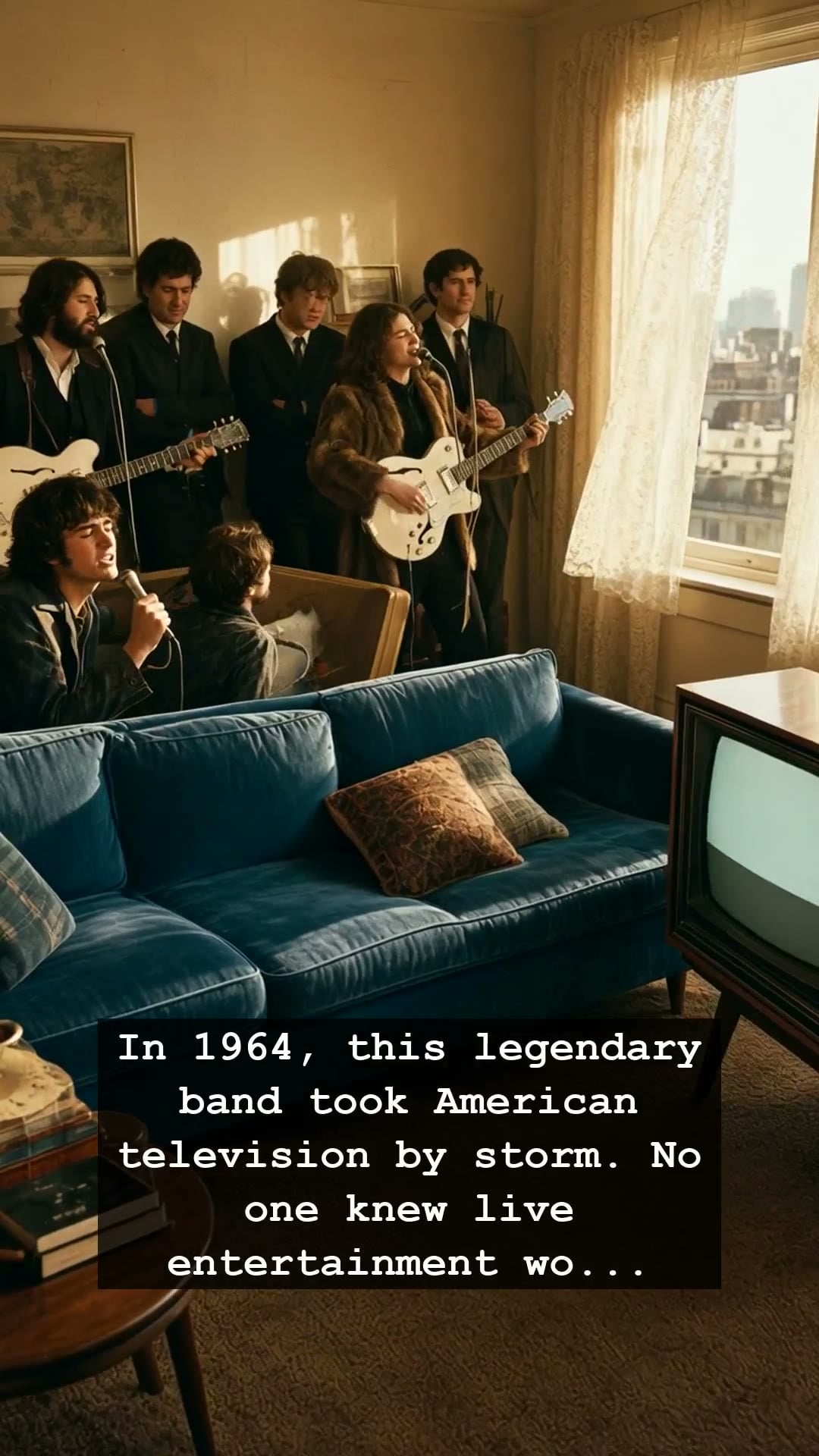
It was February 9, 1964, a cold winter evening when the heartbeat of a nation shifted permanently. Seventy-three million pairs of eyes were glued to their black-and-white television sets, watching as four young men from Liverpool stepped into the bright, blinding studio lights of The Ed Sullivan Show. At that precise moment, the world stopped spinning on its old axis. With a sharp bow and the driving beat of All My Loving, The Beatles didn’t just perform a set; they launched a cultural coup that rendered the era of crooners and big bands instantly obsolete. It was a sensory overload of screaming fans, mop-top haircuts, and the sheer electric joy of a new generation finding its voice.
Behind the scenes of this historic broadcast, the tension was palpable. The Beatles were exhausted, having just arrived on American soil to a level of hysteria that no one in the music industry had truly anticipated. They were strangers in a foreign land, yet the chemistry between John, Paul, George, and Ringo was an unstoppable force of nature. This wasn’t just a band; it was a phenomenon, a collective escape from the grey aftermath of the post-war era. The air crackled with a mix of genuine musical genius and the sharp, piercing screams of teenagers who felt, for the first time, that they were witnessing the birth of their own history.
The impact of that singular television appearance radiated through every living room in the United States. Before that night, music was something you listened to on a Jukebox in a corner diner or played on a static-filled radio. After The Beatles appeared on the screen, music became a lifestyle, a badge of identity, and a rebellious statement. The cultural explosion that followed was unprecedented, paving the way for the counterculture movements that would define the late sixties. The Beatles provided the soundtrack to a decade of transformation, their songwriting evolving from catchy pop anthems to the complex, psyche-shifting arrangements that would eventually lead them to the studio perfection of their later years.
Yet, beneath the glossy sheen of their meteoric rise lay the inevitable shadows of fame. The pressures of being The Beatles, of being the faces of a revolution, began to weigh on them almost as soon as the cameras stopped rolling. The relentless touring, the constant public scrutiny, and the crushing weight of global expectation would eventually push the band to their breaking point. That night in 1964 remains a frozen moment of pure, unadulterated potential, long before the legal battles, the artistic friction, and the eventual breakup that still haunts the hearts of classic rock enthusiasts today.
Decades later, we still reach for our vinyl records to capture a flicker of that magic. The Beatles remain the gold standard, a reminder of a time when the world felt both larger and more intimately connected through the power of a melody. Whether you were there to watch the broadcast live or discovered them through the scratched grooves of an inherited record, their influence is etched into the DNA of modern music. As the final notes of that historic performance echo in our memories, we are reminded that some legends never truly fade; they simply wait for us to turn the volume up once again.