
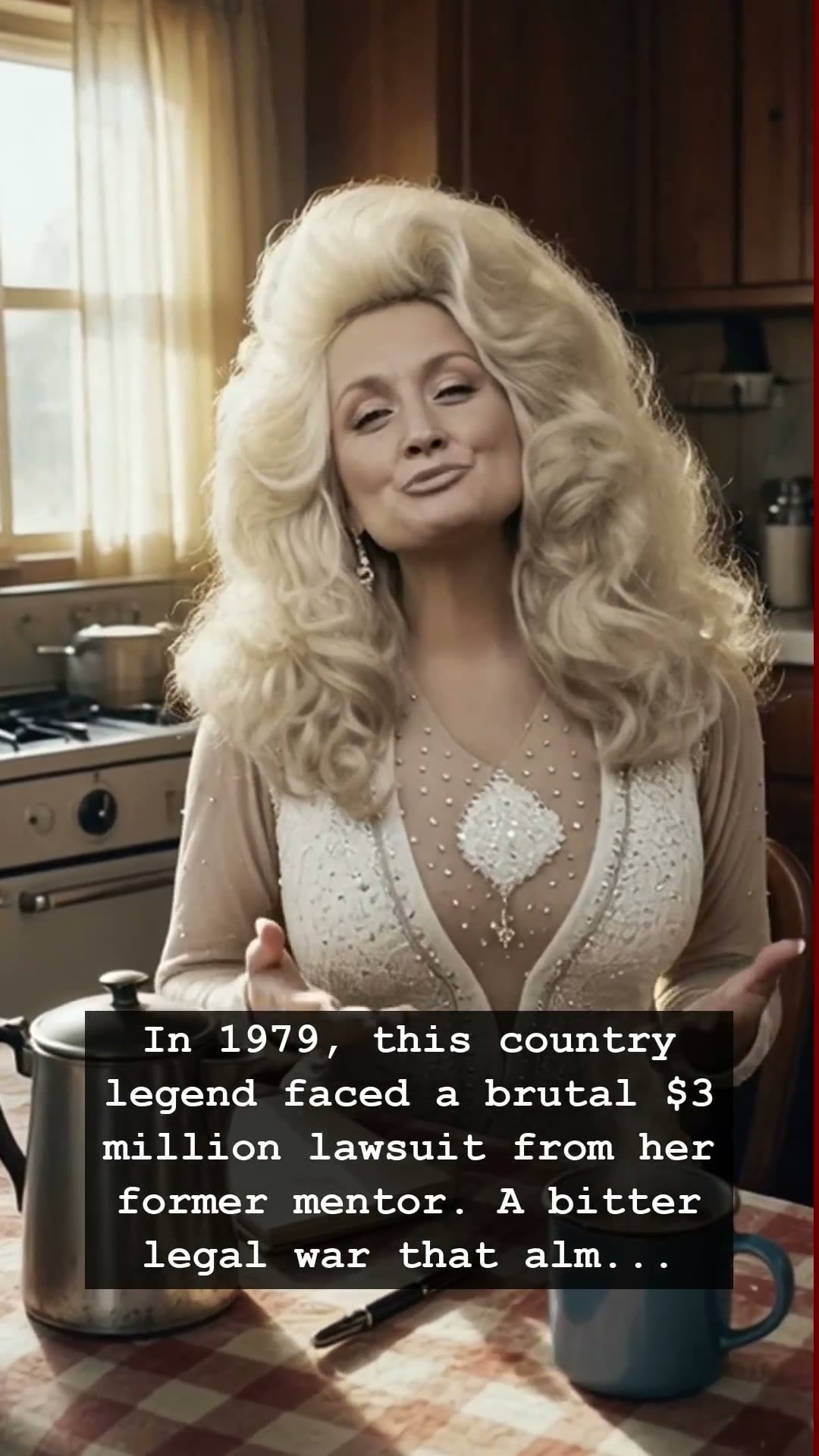
In 1979, the airwaves were dominated by the glittering pulse of the disco era and the neon glare of Studio 54, but deep in the heart of Nashville, a different kind of drama was unfolding. Dolly Parton, the queen of country music, stood at a crossroads that could have ended her career before it truly reached its global zenith. She was entangled in a brutal, cold-blooded three million dollar lawsuit brought by none other than Porter Wagoner, the man who had served as her lifelong mentor and the gatekeeper to her success. To the outside world, they were the perfect, harmonizing duo, but behind the polished performances lay a battlefield of broken trust and artistic stifling.
Dolly Parton had spent years under Wagoner’s wing on The Porter Wagoner Show, but she was a star whose orbit was destined to expand far beyond the constraints of his vision. When she decided to leave, the professional rift turned into a personal crusade. The lawsuit felt like a closing door, an attempt to silence the vibrant, unapologetic spirit that defined her music. It was a suffocating pressure that would have caused most artists to crumble. Yet, in that courtroom, beneath the hum of overhead lights and the weight of legal jargon, Dolly Parton discovered a resilience that would eventually rewrite the rules of country music superstardom.
This era was defined by the transition from the golden age of the jukebox to the burgeoning dominance of the Walkman, where music became a deeply personal experience. Dolly Parton wasn’t just a singer; she was a storyteller navigating a landscape often dominated by men who preferred her to stay silent. During this legal turmoil, the stress was suffocating, yet she channeled that visceral energy into her art. It was during these volatile months that she solidified her identity as an independent power player, proving that her talent was not merely a product of someone else’s production line.
The public rarely saw the tears behind the rhinestones. While the rest of the nation was tuning into MTV’s early broadcasts or dreaming of the Woodstock era’s fading echoes, Dolly was fighting for the rights to her own soul. The lawsuit was more than just currency; it was a fight for artistic agency. She was breaking the chains of a patriarchal industry that demanded subservience, proving that a woman with a guitar and a vision was a force that even a three million dollar threat couldn’t dim.
Looking back, this 1979 confrontation serves as the true origin story of the global icon we know today. It was the moment Dolly Parton stopped being a protege and became an institution. Her journey from that cold courtroom to the heights of international fame remains a masterclass in defiance. Whenever we listen to her classic tracks today, we aren’t just hearing a melody; we are hearing the heartbeat of a woman who refused to let her voice be sold. She taught a generation that even when the world tries to sue you into silence, the best response is to write a song that lasts forever.