
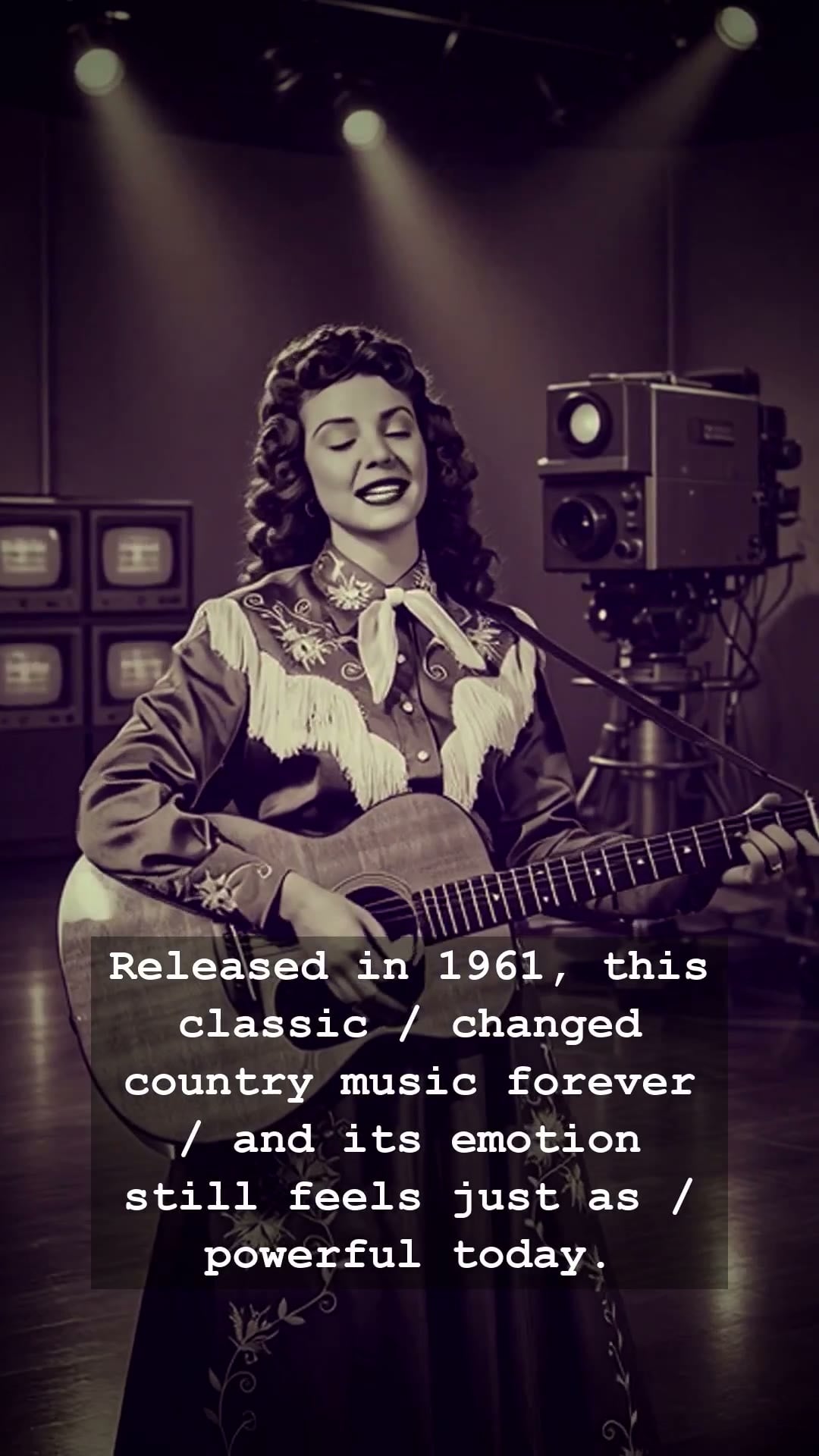
The year was 1961, and the airwaves were dominated by the polished, upbeat sounds of the pop charts. But in a smoky Nashville studio, a woman with a voice that sounded like velvet soaked in tears was about to change the trajectory of country music forever. When Patsy Cline stepped up to the microphone to record Crazy, the world didn’t just get a new hit song; it received a timeless masterclass in heartbreak. Even today, over six decades later, the haunting vibration of that vocal performance remains a visceral experience, capable of stopping a listener dead in their tracks.
To understand the magic of Patsy Cline, one must look back at an era where the Jukebox was the heartbeat of every small-town diner and the radio was a sacred window to the wider world. Before the digital age stripped away the raw edges of production, Patsy Cline mastered the art of the crossover. She possessed a rare, supernatural ability to bridge the gap between rural country roots and the sophisticated pop sensibilities of the early sixties. While other artists of the time were focusing on gimmicks, Patsy Cline focused on the marrow of human pain, turning her inner turmoil into a universal language of longing that still echoes in our modern ears.
Yet, the story of this legendary track is steeped in a shadow of irony. Despite the song eventually becoming her signature, Patsy Cline initially hated the recording. She was recovering from a near-fatal car accident, and her frustration with the high notes required by the bridge led her to believe the performance was far from perfect. It is a classic tale of artistic insecurity meeting historical destiny. Little did she know that her struggle to master the melody would be exactly what gave the song its authentic, trembling vulnerability. It was not a polished machine-made hit; it was a woman pouring her soul into a vacuum, unaware that she was crafting a monument to sorrow.
Her life was tragically short, cut down in a plane crash just two years after the success of that iconic 1961 era, leaving behind a void that no artist has truly been able to fill since. When we listen to those old records today, we are not just hearing a singer; we are eavesdropping on a ghost. The crackle of the vinyl and the warmth of the analog production transport us back to a time when music was an intimate conversation rather than a background noise. It serves as a reminder that true greatness is not about perfection, but about the ability to be brutally, undeniably human.
Every time the first few notes of that steel guitar swell up, the decades melt away. The legend of Patsy Cline persists because she captured the exact frequency of a breaking heart, a feeling that remains just as powerful and painful today as it was in the neon-lit dance halls of the mid-century. Whether you were there when it first hit the charts or you are discovering the depth of her catalog for the first time, take a moment to sit with the silence that follows her final note. What is your favorite memory of this timeless track, and how does it make you feel when the world gets a little too loud?