
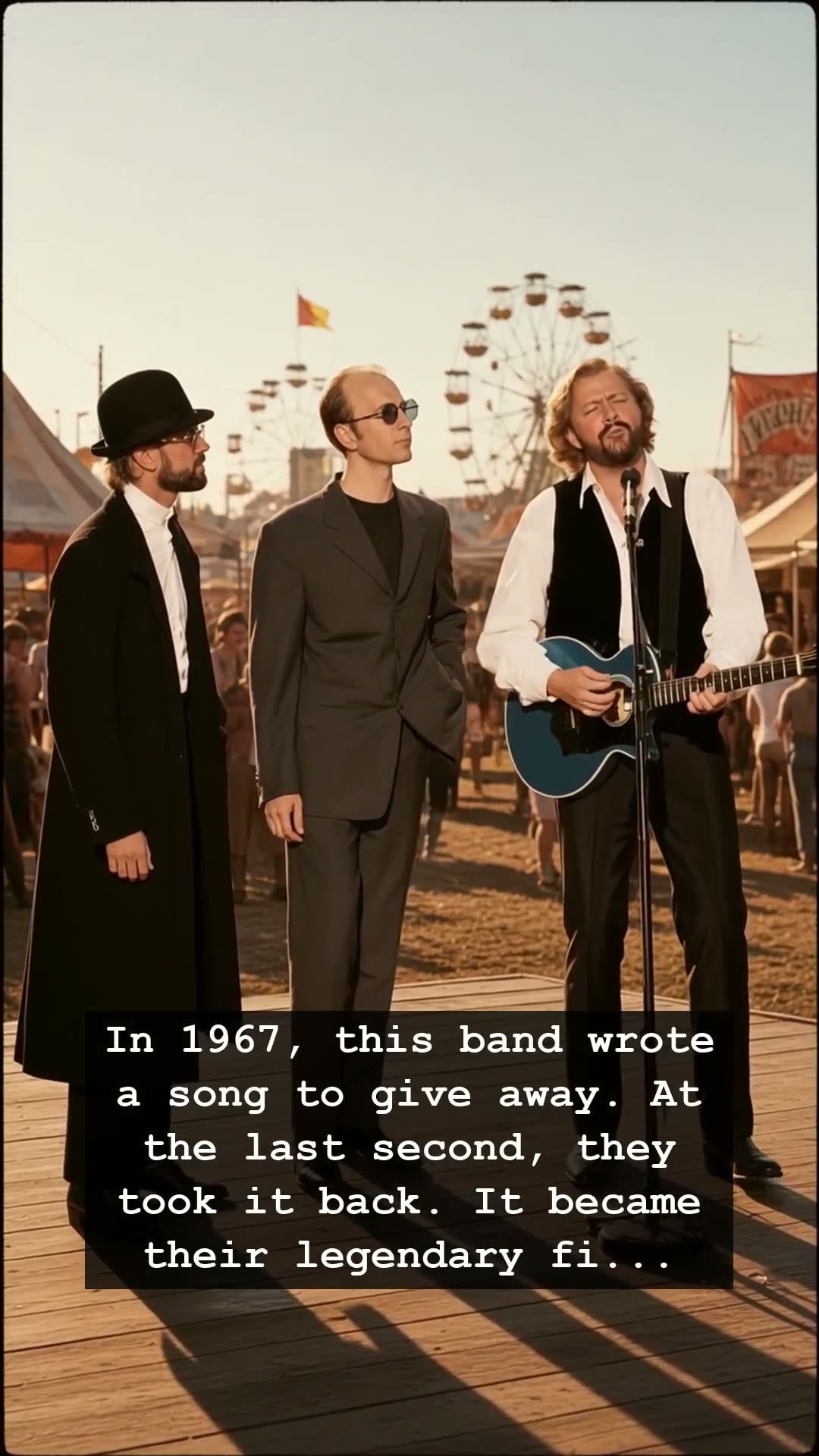
It was 1967, a time when the world was changing as fast as the radio dial. Amidst the swirling psychedelic haze and the burgeoning folk-rock explosion, three brothers from Australia—Barry, Robin, and Maurice Gibb—were trying to plant their feet in the notoriously fickle London music scene. They were talented, hungry, and remarkably desperate. They had written a haunting, melancholic ballad titled New York Mining Disaster 1941, but their initial instinct wasn’t to perform it themselves. They had originally intended to hand the song over to another artist, essentially gifting away what would become their ticket to stardom. But as the demo tape played, something shifted. In a moment of selfish, brilliant intuition, the brothers snatched the song back, realizing they couldn’t possibly part with it.
That last-minute decision changed the trajectory of pop music history. When the song was finally released, it didn’t just climb the charts; it announced the arrival of The Bee Gees as a global force. The track captured a specific, eerie atmosphere—a blend of baroque pop and existential dread that set them apart from the flower-power anthems of the era. It wasn’t just a hit; it was a masterclass in songwriting that proved these young men were far more than just another harmonizing trio. Listening to those delicate, shivering vocals today, you can still hear the raw ambition of a band standing on the precipice of absolute fame.
To understand the magnitude of this moment, you have to picture the mid-sixties. This was the era of the Jukebox and the spinning vinyl record, where a song could become the anthem of a generation overnight. The Bee Gees were navigating a landscape dominated by giants, yet they managed to carve out a sonic identity that was entirely their own. While the public eventually came to associate them with the shimmering white suits and falsettos of the disco craze at Studio 54, this early period represented the raw, poetic soul of the group. It was the era where their songwriting prowess was forged in the fires of uncertainty and late-night studio sessions.
What makes the story of their first chart-topper so captivating is the human element behind the glitz of the industry. It serves as a reminder that behind every legendary hit, there is a flurry of doubt, negotiation, and narrow escapes. The Bee Gees were not always the untouchable titans of pop; they were once struggling musicians making split-second decisions that would define their entire lives. That sense of vulnerability is what keeps their music resonant for fans who remember the crackle of a transistor radio or the feeling of playing their records for the first time.
Even decades later, the magic of that early Bee Gees sound remains untouched by the passage of time. They survived the shifting tides of the music industry—from the rock-n-roll transition to the disco explosion and beyond—by sticking to the core of what made that first song work: undeniable melody and perfect harmony. If you listen closely to the ghost of that 1967 melody, you are hearing the very moment a band decided they were ready to change the world. Do you remember the first time those haunting notes caught your ear?