
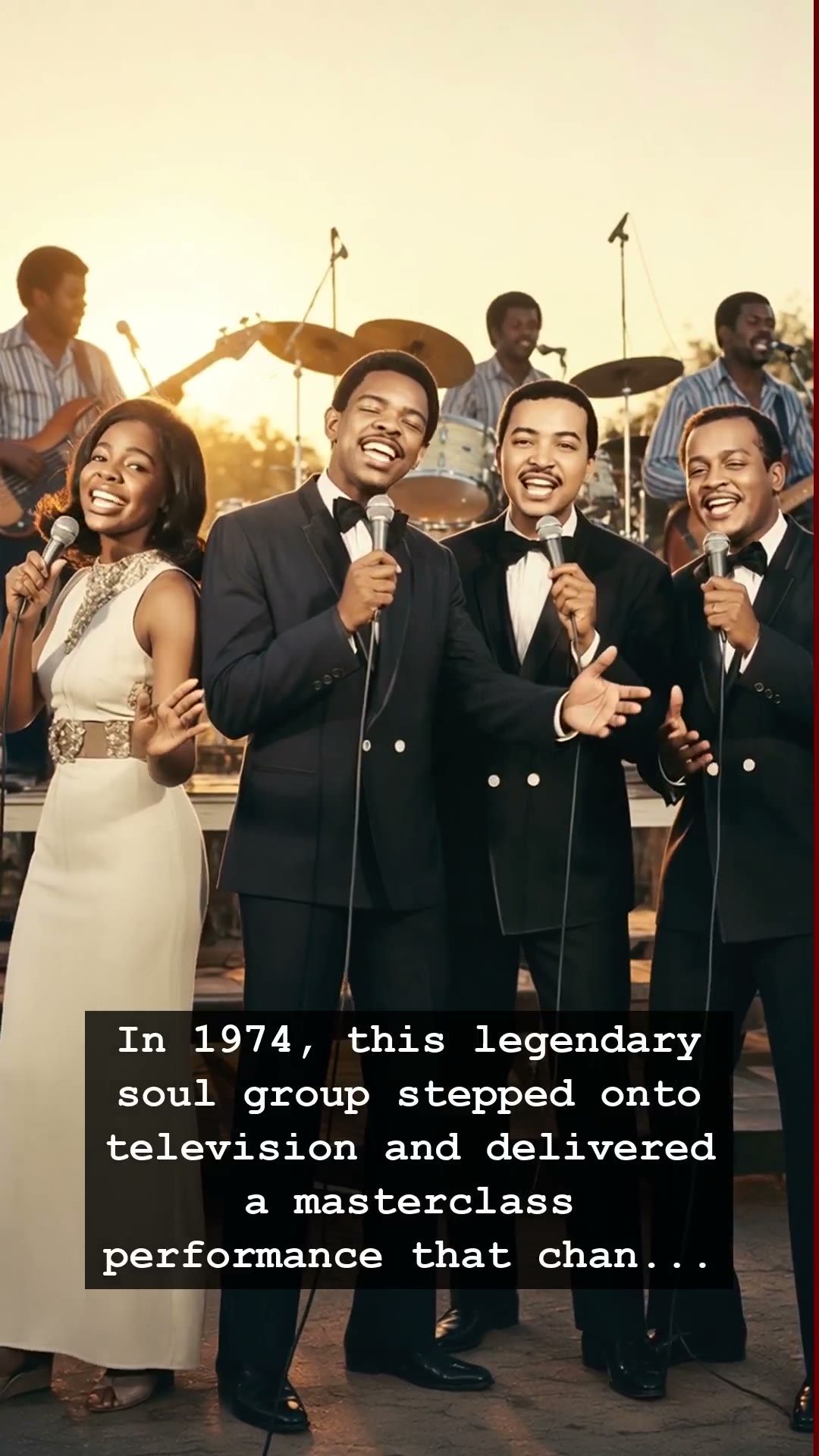
It was 1974, and the air inside the television studio was thick with the scent of hairspray and the electric anticipation of a generation defined by the rhythm of the Jukebox. As the camera panned across the stage, the velvet curtains parted to reveal a group that didn’t just sing; they operated like a single, soulful organism. Gladys Knight and the Pips stepped into the light, and in that singular moment on Soul Train, they delivered a performance so synchronized, so effortlessly precise, that it left the entire nation spellbound. For those who remember that era, it was more than just a song; it was a masterclass in elegance that etched itself into the bedrock of American music history.
While the 70s were often defined by the glitz of Studio 54 or the swirling chaos of disco, Gladys Knight and the Pips offered something different: a grounding, visceral connection to the roots of soul. The drama behind their success was never about manufactured scandals; it was about the grueling grind of the road and the internal discipline required to maintain such high-level harmony. Gladys Knight, often called the Empress of Soul, possessed a voice that could crack a heart open, but it was the seamless interplay with her brother Merald and cousins Edward and William that turned their stage presence into legendary folklore. They were the antidote to the ego-driven rock stars of the time.
This 1974 appearance captured the group at the absolute zenith of their power. They had already survived the transition from the Motown factory floor to the independent spirit of the 70s, proving that their longevity wasn’t just luck, but a testament to their unwavering professional standards. Watching the archival footage today, one is immediately struck by the choreography. It was never frantic or forced. Instead, every pivot and hand gesture served the narrative of the song, pulling the audience into a trance. It was a time when television was the ultimate cultural amplifier, and this single broadcast acted as a beacon of excellence for every young artist watching from their living rooms.
Yet, beneath the polished exterior, the weight of fame was a constant shadow. Life on the road, the relentless touring, and the pressure to replicate their hits created a pressure cooker environment that broke many of their contemporaries. For Gladys Knight and the Pips, the music was their sanctuary. They understood that the audience could feel the difference between a performance and a calling. Their history is not just a list of chart-topping hits; it is a story of resilience, family loyalty, and the pursuit of musical perfection in a decade that felt like it was shifting under their feet.
Today, as we look back through the lens of history, the legacy of Gladys Knight and the Pips remains untarnished. They remind us of an era when soul music was the heartbeat of the nation, bridging divides and providing a soundtrack to our shared memories. If you close your eyes and listen to those early recordings, you can still feel the magic of that 1974 stage, where four voices became one and history was made in the simplest, most profound way possible.