
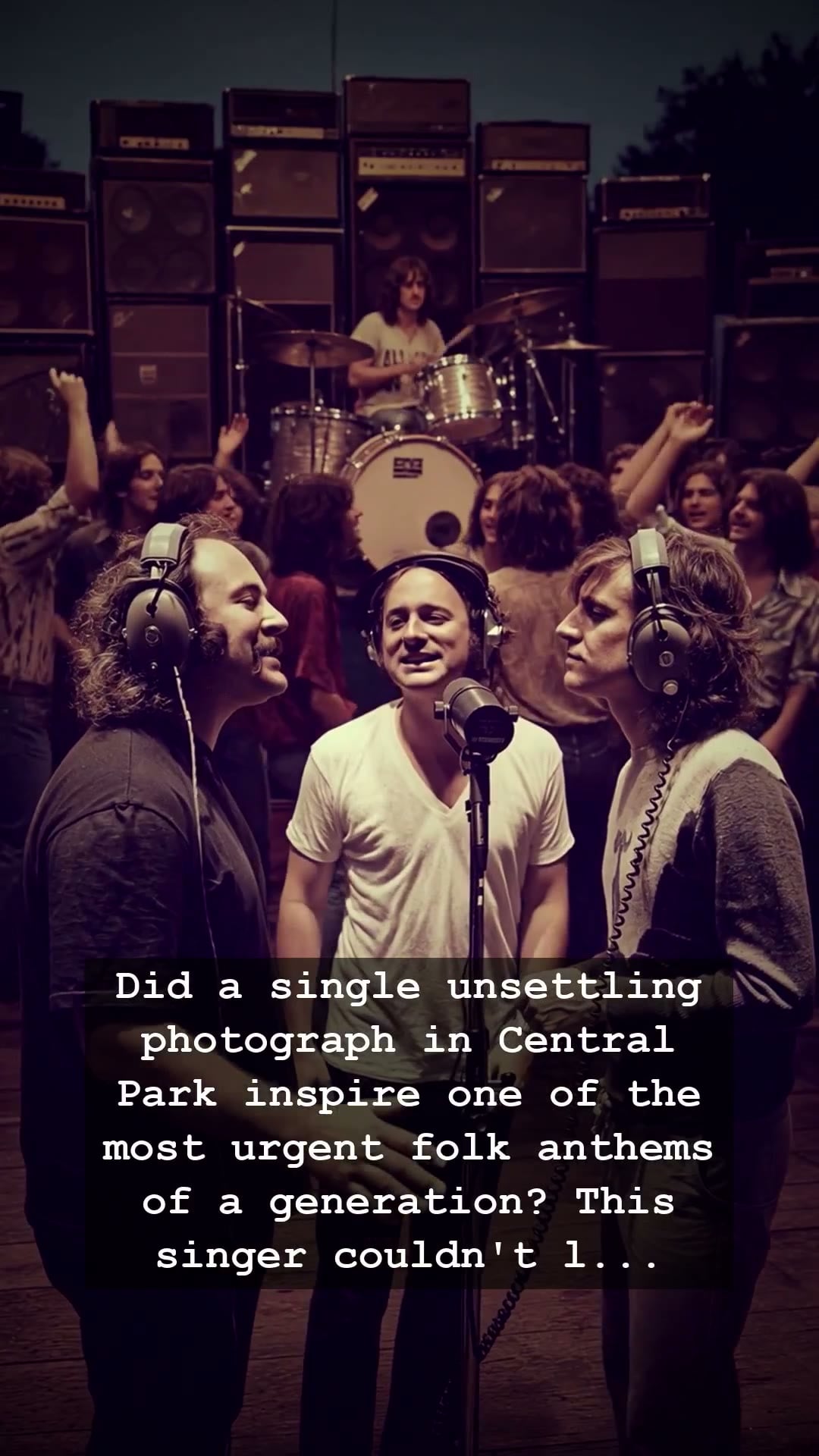
It was 1968, a year when the world felt like it was tearing at the seams. In the shadow of the Democratic National Convention, the streets of Chicago were turning into a battlefield, and the American dream seemed to be dissolving into a haze of tear gas and broken glass. Amidst this backdrop of chaos, Graham Nash found himself staring at a photograph in a Central Park newspaper that would stop him in his tracks. The image was simple, yet deeply unsettling: a young child, innocent and unsuspecting, clutching a toy hand grenade as if it were a harmless action figure. It was a visual metaphor for the violent disconnect between the youth of the era and the fractured state of their nation.
Graham Nash, already a legendary figure with The Hollies and soon to be one-third of the iconic Crosby, Stills and Nash, felt an immediate, visceral reaction to the sight. The image did more than just capture his attention; it triggered a profound sense of urgency regarding the generational anxiety that defined the late sixties. He couldn’t look away from the cold reality of that toy grenade, which served as a grim reminder of how deeply the trauma of war and civil unrest had permeated the lives of children. This wasn’t just a political statement for Graham Nash; it was an emotional plea for a future that seemed to be slipping through everyone’s fingers.
That chilling photograph became the catalyst for the song Chicago, a folk anthem that pulsated with the restless energy of the times. When Graham Nash sat down to write, he channeled the frustrations of a generation tired of watching their peers return from Vietnam in body bags while the establishment turned a blind eye. He sang with a desperate, soaring conviction that mirrored the tumultuous mood of the era. The recording process became a testament to the raw, unfiltered spirit of folk-rock, capturing a moment where music served as the primary vehicle for truth in an age of filtered news and government obfuscation.
Looking back at the golden era of the late 1960s, it is easy to view these artists through a polished, nostalgic lens. However, the brilliance of Graham Nash lay in his ability to translate the grit of the streets into something melodic yet biting. His music acted as a diary for the disaffected youth who carried the spirit of Woodstock in their hearts even as they marched against the establishment. The song remains a masterclass in songwriting, proving that the most powerful art often stems from a single, haunting image that demands to be addressed.
Even decades later, the message within the lyrics composed by Graham Nash rings with a terrifying relevance. We still find ourselves grappling with the same questions about societal safety and the legacy we leave for the next generation. As we scroll through our digital lives, far removed from the analog days of jukeboxes and grainy newspaper photos, the urgency in his voice remains a reminder of our shared responsibility. It is a timeless plea for change, anchored in a moment of profound artistic inspiration that continues to echo through the halls of music history.