
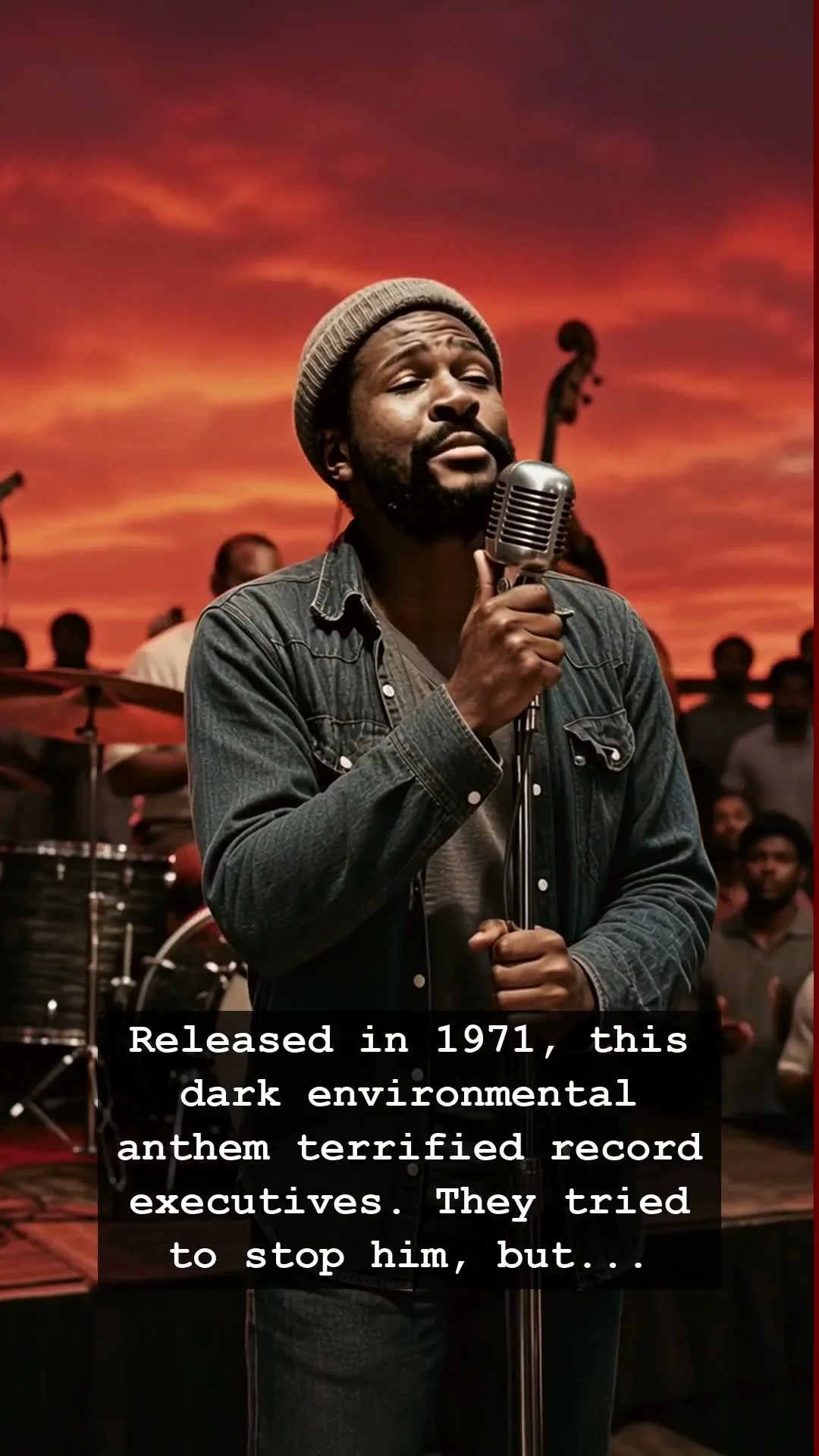
In the gilded halls of Motown Records during the early 1970s, the formula for success was simple: infectious melodies, polished dance moves, and love songs that kept the jukeboxes humming from Detroit to the coast. But behind the glitz of the label, Marvin Gaye was brewing a storm. In 1971, he dared to abandon the pop-star blueprint to record a haunting environmental and social anthem that sent shockwaves through the industry. When the executives first heard the master tapes of What’s Going On, they were reportedly terrified, convinced that its somber tone and political weight would alienate fans and effectively bury his career in the graveyard of failed experiments.
At the time, the world was shifting beneath the feet of every American. The Vietnam War was dragging on, urban unrest was tearing through city streets, and the idealism of the 1960s was curdling into cynical despair. Marvin Gaye had spent years feeling like a prisoner of the Motown machine, forced to churn out hits while his own soul hungered for something more substantial. He didn’t want to just sing about romance; he wanted to document the pain, the confusion, and the fragile beauty of a nation on the brink. When he insisted on recording a conceptual masterpiece about social strife and environmental decay, the label brass blocked him, refusing to promote what they dubbed a protest record.
Marvin Gaye was not a man to be silenced. He retreated into the studio, pouring his anguish into a lush, layered soundscape that felt like a fever dream of jazz, soul, and pure, unfiltered consciousness. By layering his own vocals to create a chorus of ghosts, Marvin Gaye transformed his personal grief into a collective cry. The result was a sonic texture so sophisticated that it felt alien to the radio waves of the era. It was a bold departure from the punchy three-minute hits of the past, capturing the heavy, stagnant air of a world that didn’t know how to save itself.
When the track finally hit the airwaves, the fear of the executives was proven wrong in spectacular fashion. The audience didn’t reject the song; they embraced it as a mirror to their own broken realities. It became an instant timeless masterpiece, forcing the rest of the music industry to reckon with the fact that listeners were hungry for truth, not just escapism. Marvin Gaye had effectively forced the world to grow up, turning a perceived career-ending mistake into a cornerstone of American culture that remains deeply resonant to this day.
Decades later, as we look back through the lens of history, the legacy of Marvin Gaye stands as a testament to the power of artistic conviction. He proved that even when you are standing in the shadow of the corporate machine, one voice can shift the needle of progress. Every time those first, soft saxophone notes drift out of a speaker, we are reminded of a man who risked everything to tell the truth. Do you still remember where you were when you first heard it?