
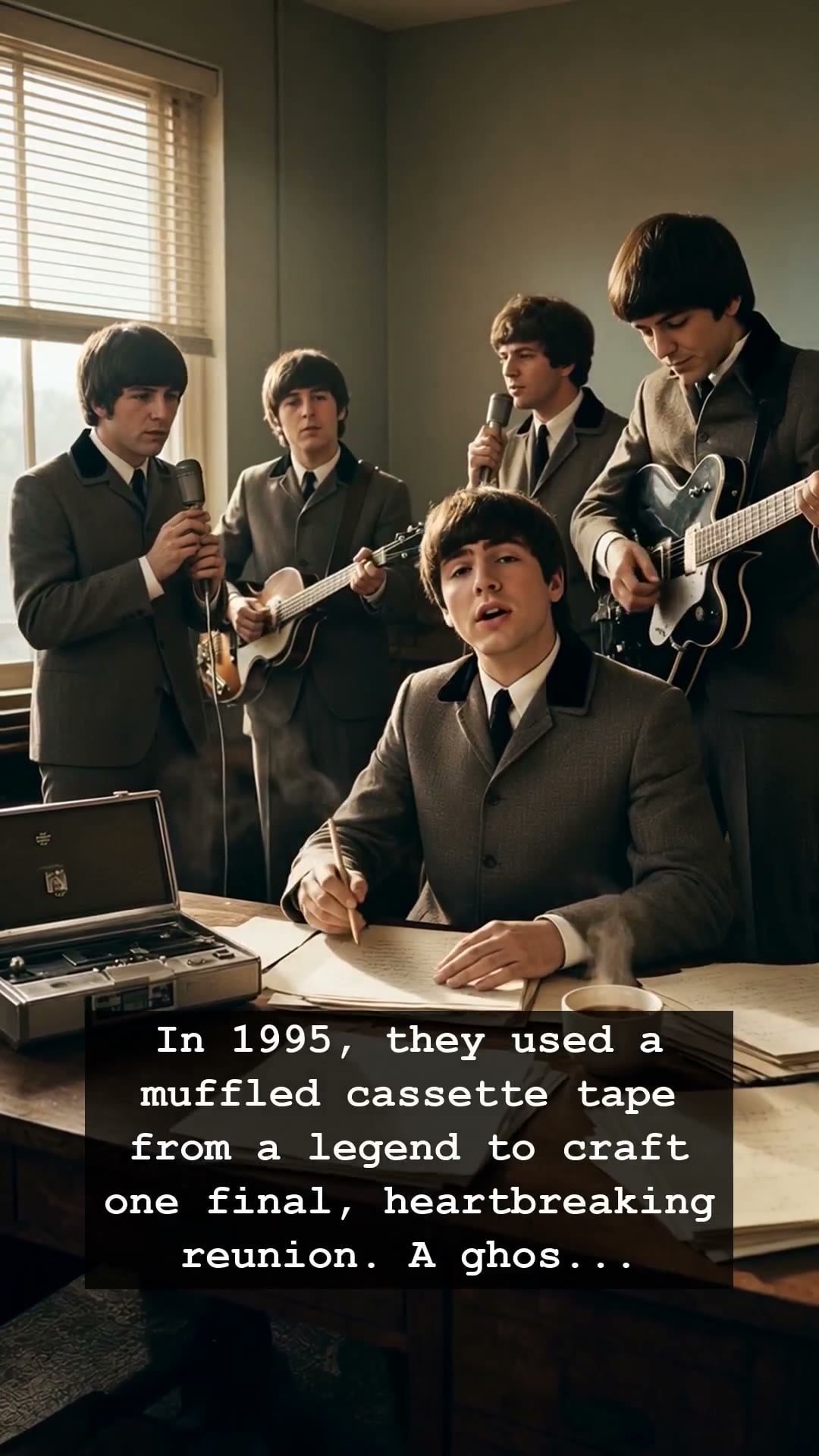
Imagine a cold, quiet afternoon in 1995. The world had long moved on from the era of vinyl records and the buzzing energy of the Jukebox. MTV was the new king of culture, and the sounds of the sixties felt like a fading dream. Yet, inside a secluded recording studio, a miracle was being stitched together from the wreckage of time. The surviving members of The Beatles—Paul McCartney, George Harrison, and Ringo Starr—gathered to do the impossible: to perform one last song with John Lennon, a man who had been taken from them fifteen years earlier. It was a moment of profound vulnerability, a ghostly collaboration that blurred the lines between the living and the departed.
The centerpiece of this haunting reunion was a grainy, muffled cassette tape. It was a home demo of the song Free as a Bird, recorded by Lennon in his New York apartment during his final years of seclusion. The audio quality was abysmal, laden with the hiss of analog magnetic tape and the distant hum of city life. To the untrained ear, it was merely a scrap of history, but to his former bandmates, it was a bridge across the afterlife. They treated the fragile audio with the reverence of archaeologists handling ancient relics, layering their own instruments and harmonies around the ethereal, distant voice of their fallen brother.
Working on this project was an exercise in emotional endurance. The Beatles had endured decades of public scrutiny, legendary rivalries, and the intense pressure of being the faces of a changing generation. But here, the stakes were different. There was no need for commercial dominance or topping the charts. This was a private grief turned into a public testament. As the tracks were woven together, the studio air seemed to grow thick with memory. Paul, George, and Ringo weren’t just musicians anymore; they were old friends trying to say a proper goodbye in a language only they truly understood.
When the track was finally released, it felt like a transmission from another dimension. It wasn’t just another song; it was a sensory time machine. Fans who had grown up in the height of Beatlemania felt the sudden, stinging weight of lost time. The song sounded both nostalgic and startlingly immediate, a blend of that classic Merseybeat warmth and the somber reality of a band that had been fractured by tragedy. It reminded the world that while empires fall and eras end, the creative spark between these four men remained a singular force in human history.
Decades later, the legend of that final session still resonates. It serves as a stark reminder that even in the age of digital perfection, there is something sacred about the imperfect, raw hum of a human voice recorded on tape. The Beatles left us with many gifts, but perhaps none as intimate as this ghostly masterpiece. It remains a beautiful, heartbreaking testament to the fact that, in the world of music, the echoes of the past never truly fade away; they simply wait for us to listen closely enough to hear them again.