
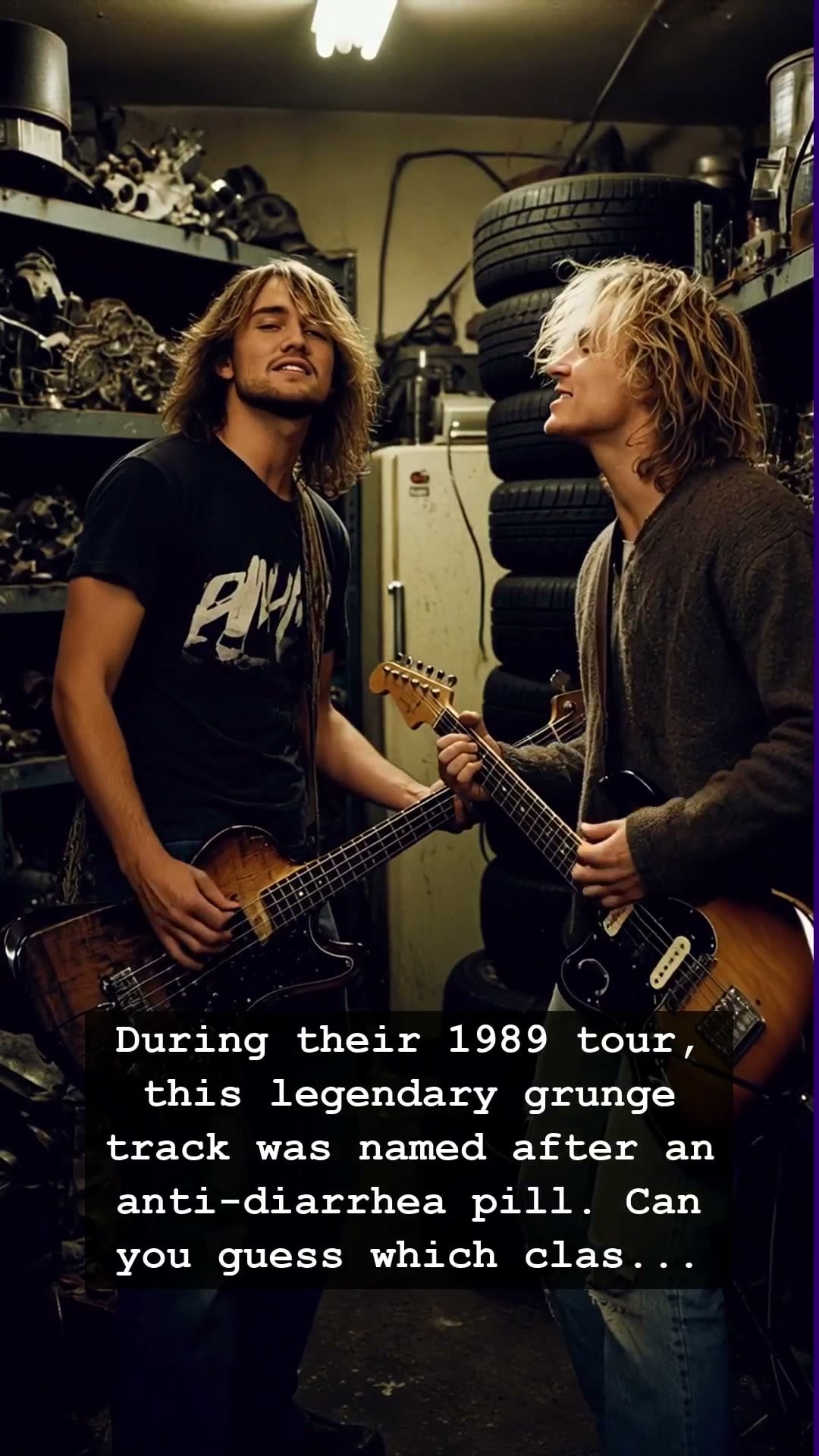
Imagine the claustrophobic air of a cramped van rattling across Europe in 1989. The smell of stale cigarettes, damp wool, and the frantic, unwashed energy of a band on the verge of changing the world. Long before the MTV takeover and the flannel-clad masses descended upon the world, Nirvana was just another scrappy group of outcasts living on caffeine and raw, jagged emotion. Amidst the chaos of their first European tour, a simple, absurd observation would accidentally give birth to one of the most iconic songs in the history of rock and roll.
It is hard to fathom now, but the melody that would eventually define the disillusioned angst of a generation almost shared its name with a humble trip to the pharmacy. During those grueling, sleep-deprived weeks, the band was constantly battling the physical toll of life on the road. Their tourmate was struggling with a persistent stomach ailment, relying heavily on a specific anti-diarrhea medication to make it through the nightly sets. In a moment of dark, juvenile humor, Kurt Cobain latched onto the name of that pill, finding the clinical, sterile sound of the medicine to be a hilarious contrast to the explosive, feedback-drenched riffs he was crafting.
For a short, bizarre period, what we now know as a defining grunge masterpiece was referred to by the band under this medicinal moniker. It was a classic example of the Nirvana ethos: taking the mundane, the grotesque, and the deeply unglamorous, then twisting it into something that felt like a primal scream. The song, which would eventually become the anthem for a disaffected youth culture, was never meant to be a polished pop hit. It was a byproduct of exhaustion, low-budget travel, and the unique, cynical wit that permeated the band’s creative core during their transition from regional club legends to global icons.
When we look back at the landscape of the late 1980s, we often forget the grit beneath the neon. We remember the Walkman cassettes and the grainy home movies, but we rarely hear about the stomach pills and the endless, lonely highways that forged these legends. Nirvana were the antithesis of the hair metal excess that occupied the airwaves at the time. Their story is a reminder that some of the most profound art emerges not from polished studios or high-end production, but from the raw, uncomfortable, and occasionally embarrassing realities of being human and trying to be heard.
Today, decades after the grunge explosion, that song still hits with the same visceral impact it had when it was just a sketch in a notebook. It serves as a haunting bridge to an era where music felt dangerous, spontaneous, and unfiltered. The medication name was eventually discarded for the title we know today, but the spirit of that 1989 tour remains embedded in the DNA of every note. Next time you crank the volume on this classic, remember that legendary art often starts with the most mundane of stories.