
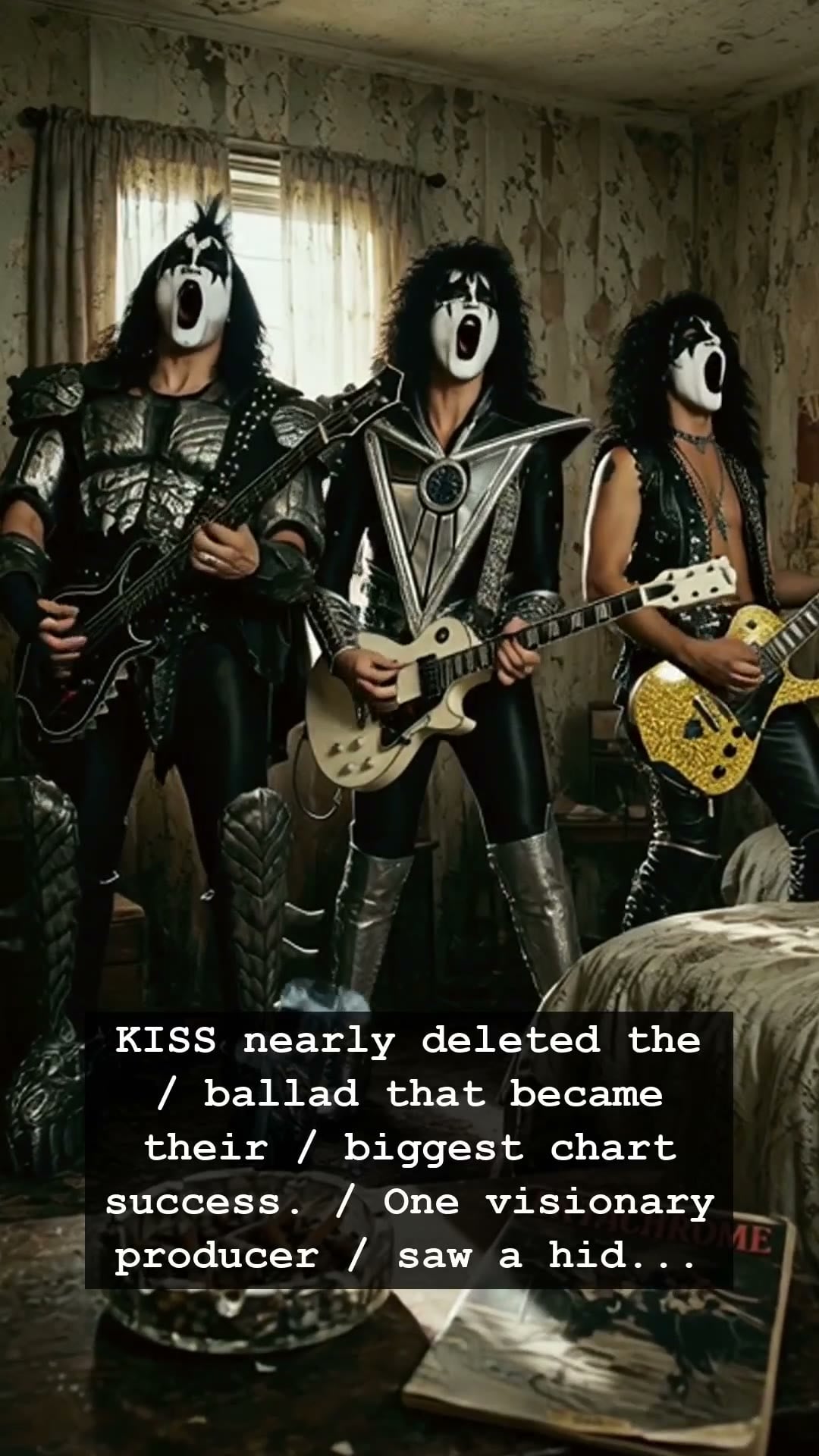
In 1976, the world was obsessed with the explosive, greasepaint-smeared chaos of KISS. They were the kings of high-octane arena rock, known for pyrotechnics, blood-spitting antics, and a stage presence that terrified suburban parents. But behind the curtain of leather, spikes, and calculated controversy, the band was on the verge of throwing away a masterpiece. Deep in the studio, while recording the album Destroyer, the band members were ready to bury a soft, piano-driven ballad that seemed completely at odds with their aggressive persona. To them, it was just a piece of filler, a soft-hearted mistake that didn’t fit the KISS brand.
However, visionary producer Bob Ezrin saw something the band couldn’t. He recognized that there was a soul hiding behind the drums, a vulnerability that had been silenced by the heavy, distorted riffs of their previous hits. That drummer was Peter Criss, and the song was Beth. At the time, the members of KISS were notoriously dismissive of anything that didn’t scream rock and roll, viewing the ballad as an alien anomaly in their catalog. They nearly deleted the track, oblivious to the fact that it was destined to become their greatest chart success and a permanent anthem of late-seventies heartbreak.
To understand the gravity of this moment, one must look back at the era of the jukebox and the transition toward the power ballad phenomenon. While the rest of the world was dancing under the shimmering lights of Studio 54 or cranking up the volume on their portable Walkman players, KISS was struggling to define their sonic identity beyond the spectacle. Peter Criss, often the overlooked member of the original lineup, poured his own melancholy into the recording of Beth. His raspy, authentic vocal delivery wasn’t just a performance; it was a candid glimpse into the loneliness that often accompanies the blinding glare of rock stardom. It was a stark departure from the theatrical bravado the fans expected, yet it struck a universal nerve that the band’s pyrotechnics never could.
The success of Beth changed the trajectory of the band forever. When it finally hit the airwaves, it proved that even the toughest glam metal icons could be brought to their knees by a simple, honest melody. It remains a haunting reminder of the tension between an artist’s carefully crafted public image and the raw, unvarnished human experience hiding beneath the surface. The song climbed the charts not because it was calculated, but because it was undeniably real—a rare moment of emotional transparency in an industry fueled by excess.
Even decades later, listening to the swelling strings and Peter Criss’s weary voice evokes the distinct atmosphere of 1970s rock radio. It serves as a poignant reminder that the greatest art often comes from the friction between a band’s ego and a producer’s intuition. Whether you remember the night you first heard it on the radio or are discovering this piece of history for the first time, take a moment to look past the makeup and the lights. Sometimes, the most powerful stories are the ones the legends almost left on the cutting room floor.