
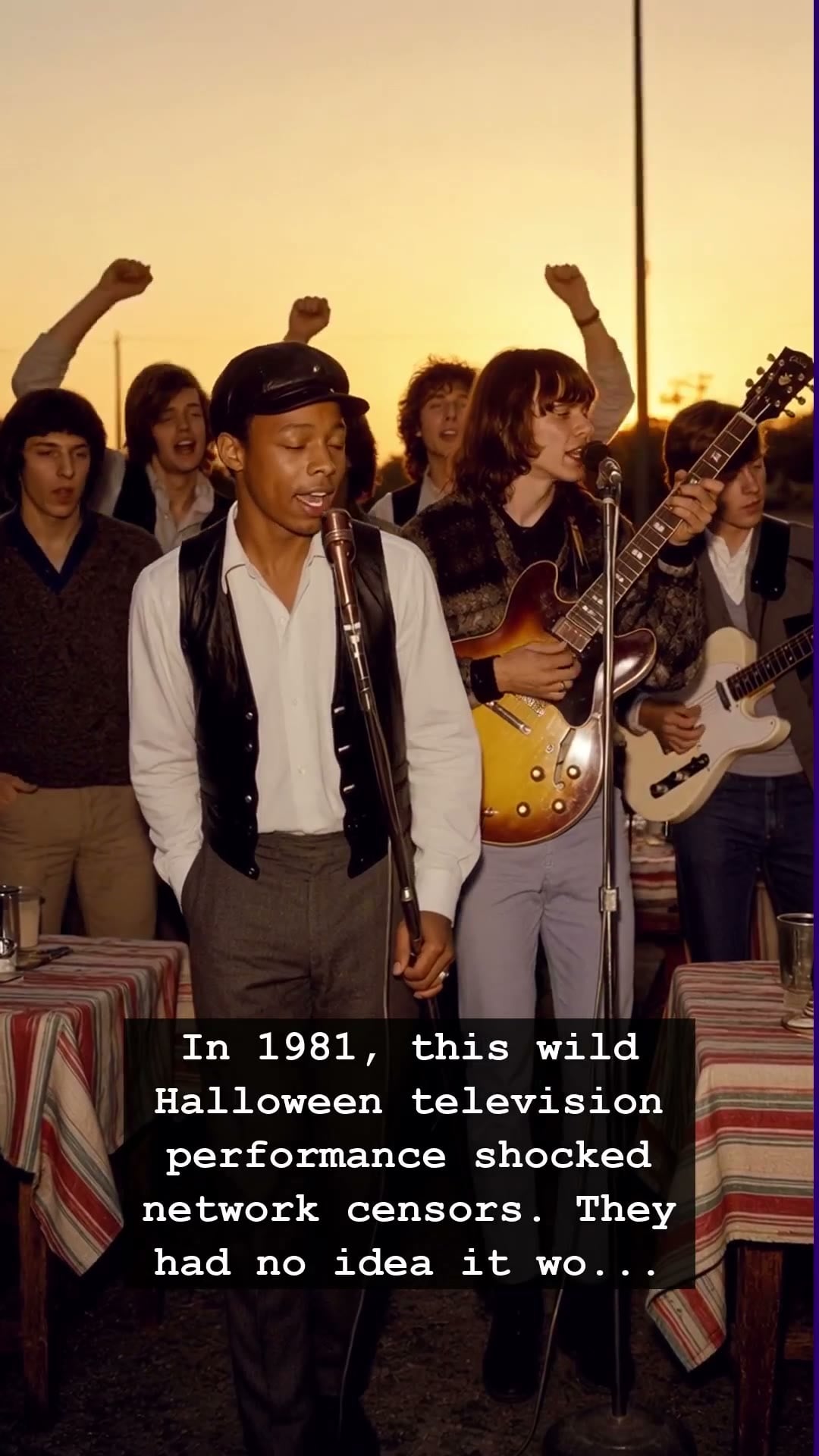
It was Halloween night in 1981, a time when the glow of the television set was the beating heart of every American living room. Families gathered around, expecting the usual seasonal variety show fare, but instead, they were met with a raw, unapologetic explosion of bass and attitude. Rick James, the flamboyant king of punk-funk, stepped onto the stage with an aura that felt less like a musical performance and more like a cultural intrusion. He wasn’t just singing; he was commanding an uprising, and the network censors, caught completely off-guard by his provocative stage presence and rebellious groove, were left scrambling in the dark.
Before that night, the airwaves were still shaking off the remnants of the disco era, transitioning into the neon-drenched uncertainty of the early eighties. Rick James had already been bubbling under the surface, but this performance acted as a volatile catalyst. He brought the grime and glory of the streets directly into the living rooms of suburban America. His anthem, vibrating with a deep, pulsating rhythm, felt dangerous. It was an assault on the sanitized standards of television, and for those watching, it was the moment they realized that music was becoming leaner, meaner, and far more honest than the corporate suits ever intended.
The backstory of Rick James is one of sheer, unchecked magnetism combined with a self-destructive intensity that defined the era of Studio 54 and beyond. He was a man who lived at a velocity that most could not comprehend, fueled by a relentless drive to be the center of gravity in a world of spinning stars. To understand Rick James is to understand the friction between the polished pop stars of the late seventies and the raw, gritty reality of the eighties funk movement. He wasn’t playing by the rules of the industry; he was actively rewriting them to favor the rhythm above all else.
His influence during this period cannot be overstated. By breaking the boundaries of what was acceptable for live broadcast, he paved the way for the swagger and audacity that would eventually define the hip-hop generation. He carried himself with a royalty that felt earned through blood, sweat, and endless studio sessions. Even decades later, when we hear those iconic, distorted bass lines, we are transported back to that Halloween night—a moment of pure, unadulterated rebellion that forever changed the trajectory of pop history.
Today, as we look back through the lens of nostalgia, the image of Rick James standing under the hot studio lights remains a symbol of an era that refused to be quieted. He reminds us that true art often requires a little bit of chaos and a total disregard for the status quo. His legacy is etched into every funky breakbeat and every daring artist who refuses to compromise for the sake of a censor’s approval. Do you remember the shiver of excitement you felt when the music started? Some nights in history simply refuse to be forgotten.