
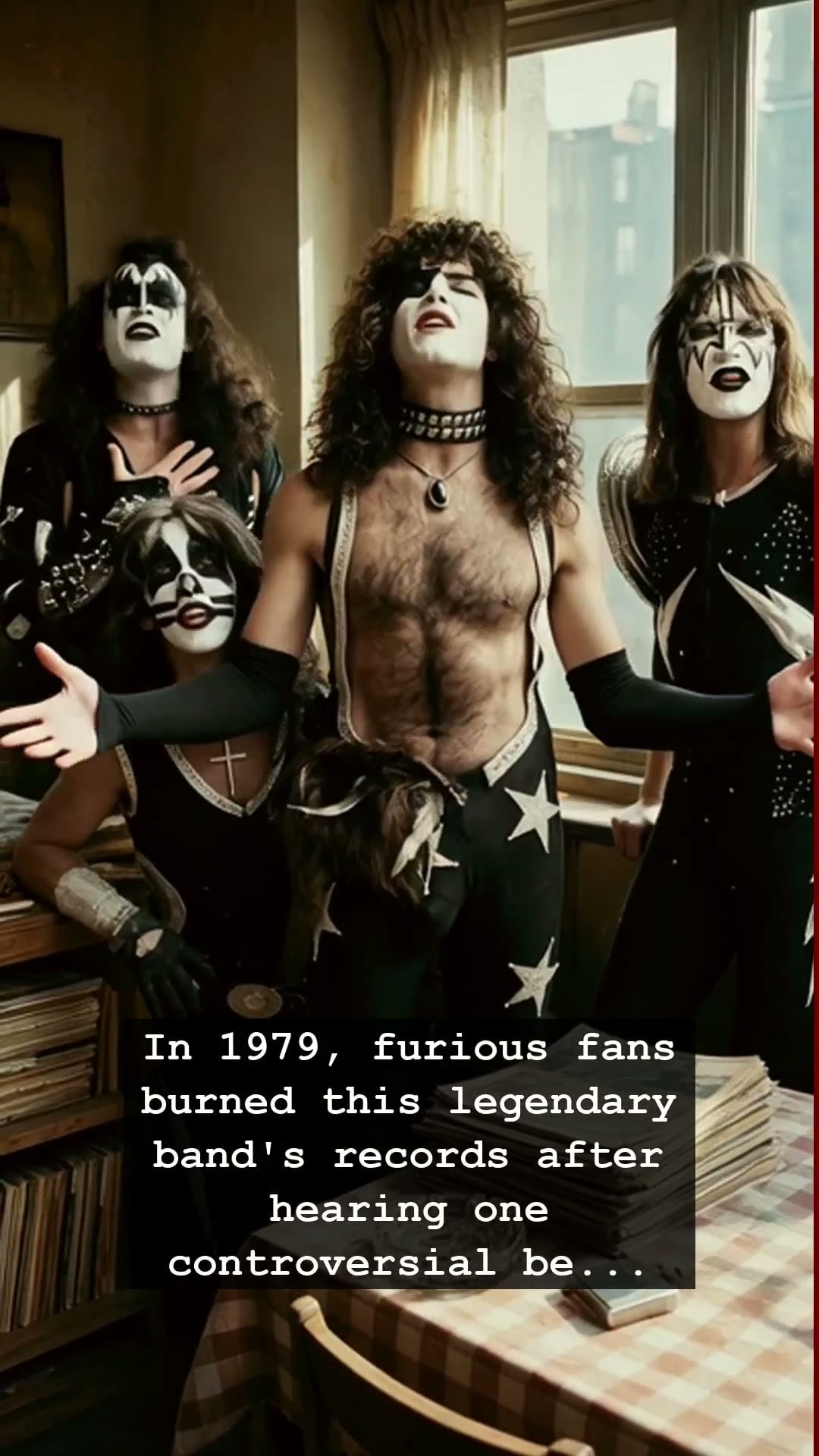
It was 1979, an era defined by the crackle of vinyl on a turntable and the neon haze of Studio 54. For the members of the KISS Army, rock and roll was not just a genre; it was a religion built on greasepaint, platform boots, and high-octane distortion. But that year, the high priests of heavy metal committed what their most devoted followers considered the ultimate sin. In a desperate attempt to stay relevant during the meteoric rise of the disco craze, KISS released I Was Made for Lovin’ You. The reaction was not just disappointment; it was an act of war. Furious fans across the country organized public events to incinerate their precious collections, convinced that their heroes had sold their souls to the devil of the dance floor.
To understand the magnitude of this betrayal, one must remember the cultural landscape of the late seventies. The airwaves were saturated with the slick, synthesized grooves of disco, leaving the raw, gritty energy of hard rock feeling sidelined. When Paul Stanley and the rest of the KISS band stepped into the recording studio to experiment with a four-on-the-floor beat, they were chasing the chart-topping success of artists like Donna Summer. While the track became an undeniable international smash, it felt like a dagger in the heart for listeners who looked to KISS as the antithesis of the glittery, polished disco aesthetic. The chasm between the band and its core audience had never been wider.
Beneath the surface of this musical pivot lay the exhausting pressure of superstardom. The late seventies were a period of intense volatility for the band, plagued by internal power struggles, exhaustion, and the intoxicating weight of their own mythology. By adopting the disco sound, the members of KISS were attempting to navigate an industry that was rapidly shifting beneath their feet, yet they underestimated the ferocity of their fans’ loyalty to the band’s original identity. Those bonfires were more than just protests against a song; they were a frantic, desperate effort to preserve the integrity of the rock icons they had worshiped since the early seventies.
Looking back from the vantage point of the modern era, the incident remains a quintessential example of the friction between artistic evolution and fan expectation. It captures the exact moment when the grit of hard rock collided with the infectious, polished sheen of the disco era. Decades later, the irony is palpable; I Was Made for Lovin’ You is now viewed as one of the band’s most iconic anthems, a bridge between two wildly different worlds. The chaos of 1979 serves as a vivid, slightly scorched reminder of a time when music mattered so much that fans were willing to turn their collections into ash to defend the purity of the sound they loved.
So, as you reach for your vintage records today, do you hear the controversy or just the beat? The story of KISS and their infamous disco departure reminds us that the best music often comes from the most uncomfortable places. Whether you still harbor that old resentment or have finally learned to dance to the rhythm, one thing is certain: that moment in 1979 changed the trajectory of rock forever. Tell us, if you were there, would you have tossed your favorite album into the fire, or would you have cranked up the volume?