
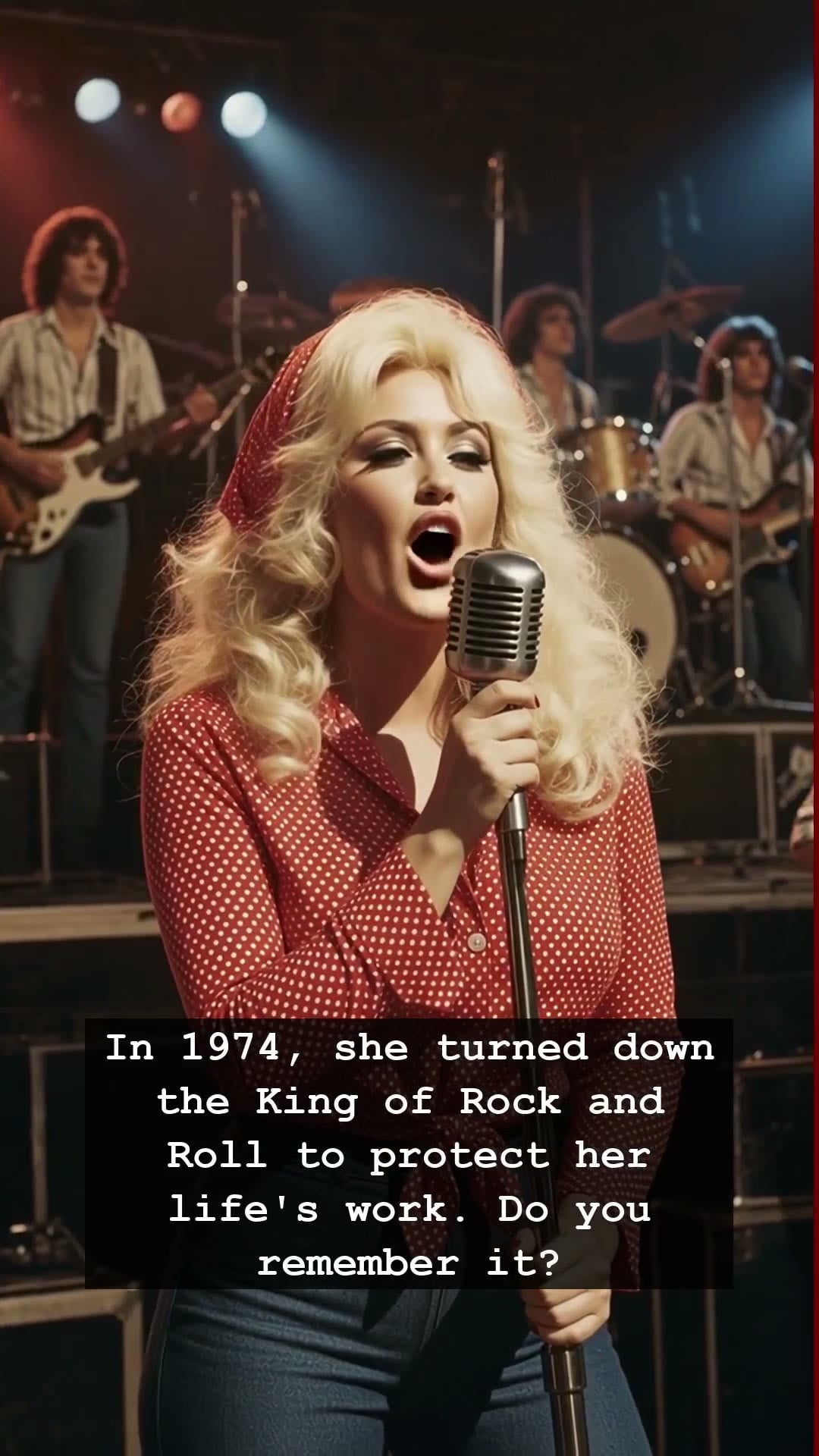
The year was 1974. The neon lights of Nashville were burning bright, and the jukeboxes across America were spinning a ballad that would eventually become a cultural monolith. But before it became the anthem that soared on the wings of Whitney Houston, it belonged solely to a woman with a mountain-high spirit and a business acumen that defied the chauvinistic norms of the era. Dolly Parton, a rising star with a voice as sweet as Southern honey, found herself in a high-stakes standoff against the most powerful man in the music industry: Elvis Presley. The King of Rock and Roll, iconic and untouchable, wanted to record her masterpiece, I Will Always Love You. There was only one catch, a demand that would have stripped Dolly Parton of her life’s work.
Colonel Tom Parker, the formidable manager of Elvis, approached Dolly with a deal that seemed like a golden ticket to global stardom. In the rigid landscape of the 1970s, where record labels often treated artists like disposable inventory, the standard protocol for a cover of this magnitude was for the original songwriter to sign over half of the publishing rights. To the casual observer, it was a fair trade—a slice of the copyright for the massive exposure of having the King sing your song. But Dolly Parton, sitting in her office, felt the weight of her future. She knew that the song was not just a hit; it was a legacy intended for her own catalog, a piece of her soul she was not prepared to auction off for mere fame.
She famously recounted the story of how she spent the night in tears, agonizing over the decision. Her husband told her that if she did not stand her ground, she would regret it for the rest of her life. The tension was palpable; to say no to Elvis Presley was to risk being blacklisted or labeled as difficult by the titans of the industry. Yet, with a quiet strength that belied her petite frame, Dolly Parton chose to protect her songwriting copyright. She politely declined the King’s request, turning down what could have been the most lucrative cover version in history. It was a move that showcased a rare, steely resilience behind her glamorous, glitzy exterior.
This pivotal moment resonates today because it highlights the vulnerability of artists during the golden age of music. In an era dominated by grand arena tours and the cold mechanics of the record business, Dolly Parton was fighting a silent war for creative ownership. She didn’t have the protection of modern digital rights; she had only her intuition and the courage to bet on herself. Her decision turned out to be one of the smartest business moves in country music history, ensuring that the song remained hers when it was later licensed and immortalized decades later.
Looking back at 1974, we see a woman who navigated the shark-infested waters of the music industry with grace and grit. While the world watched Elvis command the stage at the height of his powers, Dolly Parton was quietly building an empire from her own songs. When you hear those opening chords today, remember that it is more than just a melody. It is the sound of a woman who chose her integrity over the King, proving that a song, like a dream, is worth fighting for.