
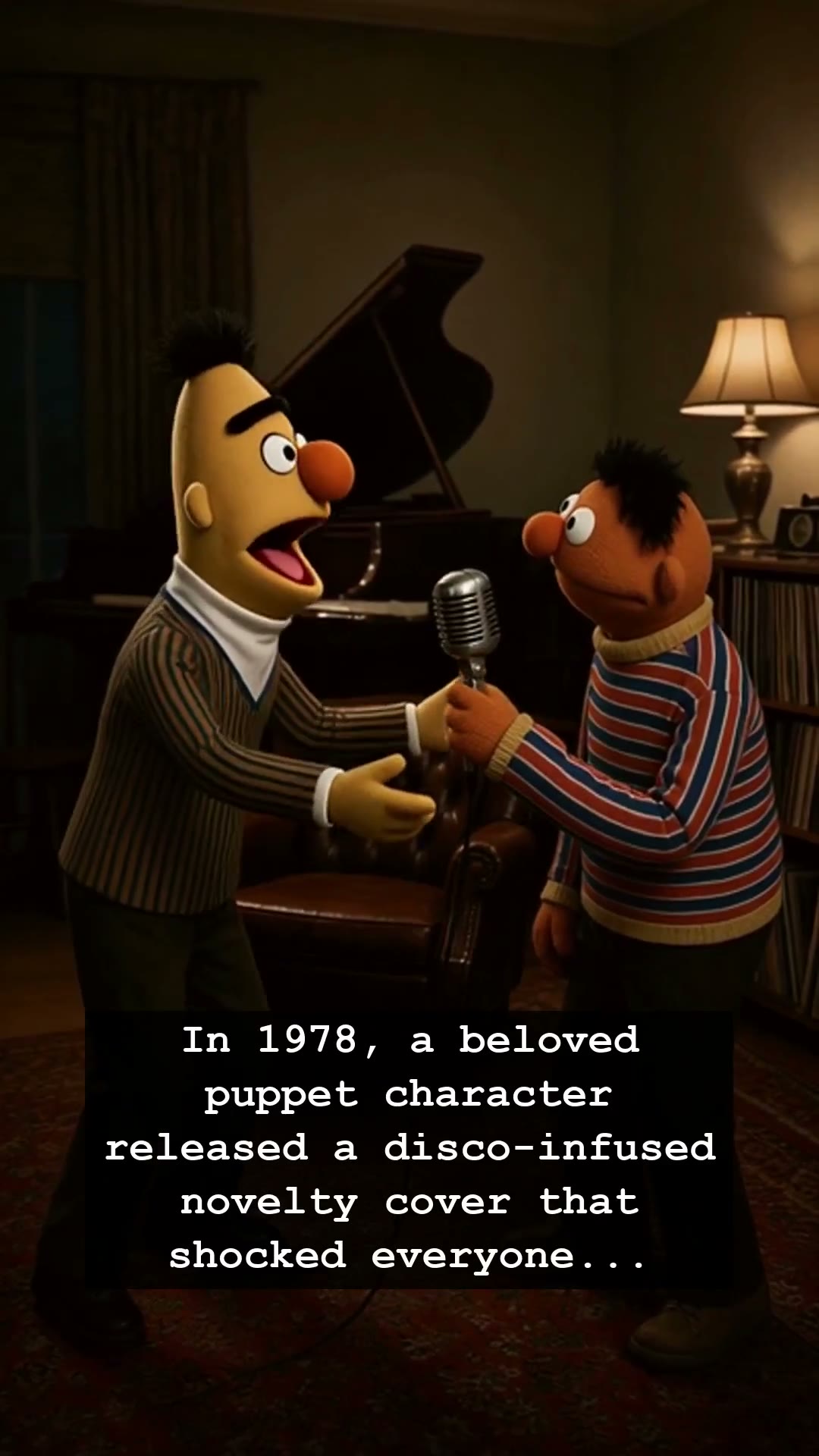
The year was 1978. While the velvet ropes of Studio 54 were guarding the most exclusive parties in New York City and the neon lights of the disco era were blindingly bright, an unlikely superstar was preparing to hijack the airwaves. You might have expected a polished pop icon or a gritty rock band to dominate the summer rotation, but instead, the music industry was brought to its knees by a cheerful, orange-faced puppet with a rubber ducky in his hand. It was the moment Sesame Street Ernie stepped out of his brownstone apartment and onto the global stage with his hit, Rubber Duckie, a disco-infused novelty track that defied every rule of the music business.
At the time, the airwaves were saturated with the pulsating basslines of the Bee Gees and the shimmering synthesizers of Donna Summer. Yet, when this Sesame Street Ernie track dropped, it didn’t just capture the hearts of toddlers; it captivated an entire nation of disillusioned adults looking for a moment of pure, unadulterated joy. The track was a clever, upbeat remix that perfectly tapped into the zeitgeist of the disco phenomenon. It was lighthearted, infectious, and undeniably catchy, proving that even a resident of a fictional city street could produce a gold-certified hit that sat comfortably alongside the heavyweights of the Billboard charts.
The backstory of this musical anomaly is as fascinating as the song itself. Producers realized that the innocence of Sesame Street Ernie provided a necessary respite from the dark, substance-fueled decadence that defined the late seventies music scene. While rockers were losing themselves in the abyss of excess, Ernie was singing about bath time. It was a cultural pivot point—a rare instance where the barrier between educational children’s programming and the mainstream commercial music industry completely dissolved, leaving listeners genuinely surprised by the song’s unexpected staying power.
Beyond the novelty, there was a brilliant craft involved. The studio musicians behind the production weren’t just playing for a puppet; they were crafting a legit disco arrangement complete with funky guitar scratches and tight percussion. This gave the Sesame Street Ernie record an authentic sonic texture that allowed it to survive on jukeboxes across the country. It was a bizarre collision of worlds, representing a unique time in history when the boundaries of pop culture were fluid and anything, even a Muppet, could become a genuine rockstar.
Looking back, the success of this track serves as a time capsule for an era that was defined by both its wild excesses and its surprising capacity for whimsy. As we navigate the digital age, the memory of Ernie dominating the charts reminds us of a simpler time when radio play was the ultimate arbiter of cool. It remains a bizarre, charming footnote in music history, proving that even in the height of disco fever, the most famous resident of Sesame Street could still lead the parade. Do you remember where you were when you first heard that iconic melody echoing through the speakers of your living room?