
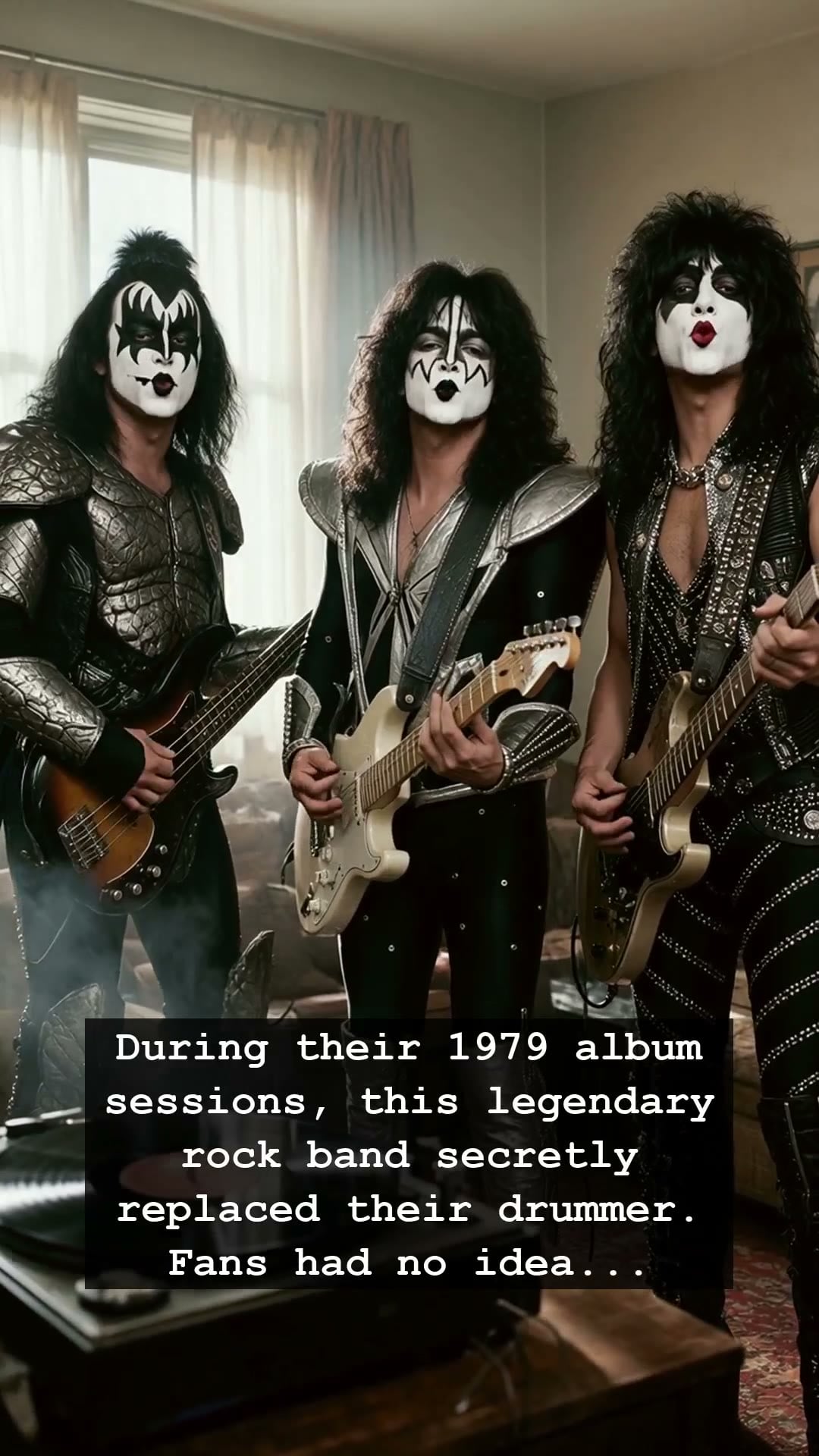
It was 1979, the golden age of Arena Rock, when the smoke of the stage was beginning to suffocate those standing in the spotlight. To the millions of fans worldwide, KISS was an unstoppable force, a monolithic entity of greasepaint and leather. Yet, behind the scenes of the Dynasty album sessions, the gears were grinding to a halt. While the public envisioned the original lineup as four brothers-in-arms, the reality was a crumbling facade of substance abuse and deepening resentment. The most shocking secret of all? The man behind the kit was already being sidelined.
Peter Criss, the iconic Catman whose soulful voice defined the ballad Beth, was physically and emotionally present, yet spiritually absent. As the studio atmosphere grew toxic, the band made a decision that would change the trajectory of their history forever. Without a word to the legions of fans waiting for the next tour, the group began utilizing session drummers to handle the heavy lifting. Anton Fig was brought in to play on nearly all the tracks for the album, effectively replacing Peter Criss while the Catman was still, at least in name, a member of the band. It was a cold, calculated move in a business that often prioritizes the bottom line over the pulse of the rhythm section.
This era was defined by the relentless pressure of the industry, where the lines between reality and the stage persona often blurred. The members were living through the excess of the seventies, fueled by the neon lights of Studio 54 and the constant grind of stadium tours. For Peter Criss, the isolation was profound. Being the heartbeat of a band that was actively looking for your successor is a unique kind of professional betrayal. This tension wasn’t just a clash of personalities; it was the inevitable explosion of a group that had burned too brightly, too fast, and too soon.
What makes this story resonate today is how it humanizes the myth of rock stardom. Fans who grew up listening to their records on vinyl or carrying their Walkmans through the halls of high school rarely caught a glimpse of the jagged edges of this dysfunction. We loved the spectacle, the pyrotechnics, and the rebellious spirit of the music, but we were blind to the loneliness of the performers. Peter Criss was a man caught in a whirlwind of ego and contractual obligation, watching his position slip away as the band searched for a sound that lacked his signature swing.
Today, the legacy of KISS remains a cornerstone of American rock history, but the story of 1979 serves as a sobering reminder of the costs of fame. The secret replacement of Peter Criss is no longer a mystery, but it remains a poignant chapter in the band’s folklore. It reminds us that even when the house lights go down and the makeup comes off, the human stories behind the music are often far more complex than any stage play. Next time you drop the needle on a vintage KISS record, listen closely for the echoes of the men who were slowly drifting apart.