
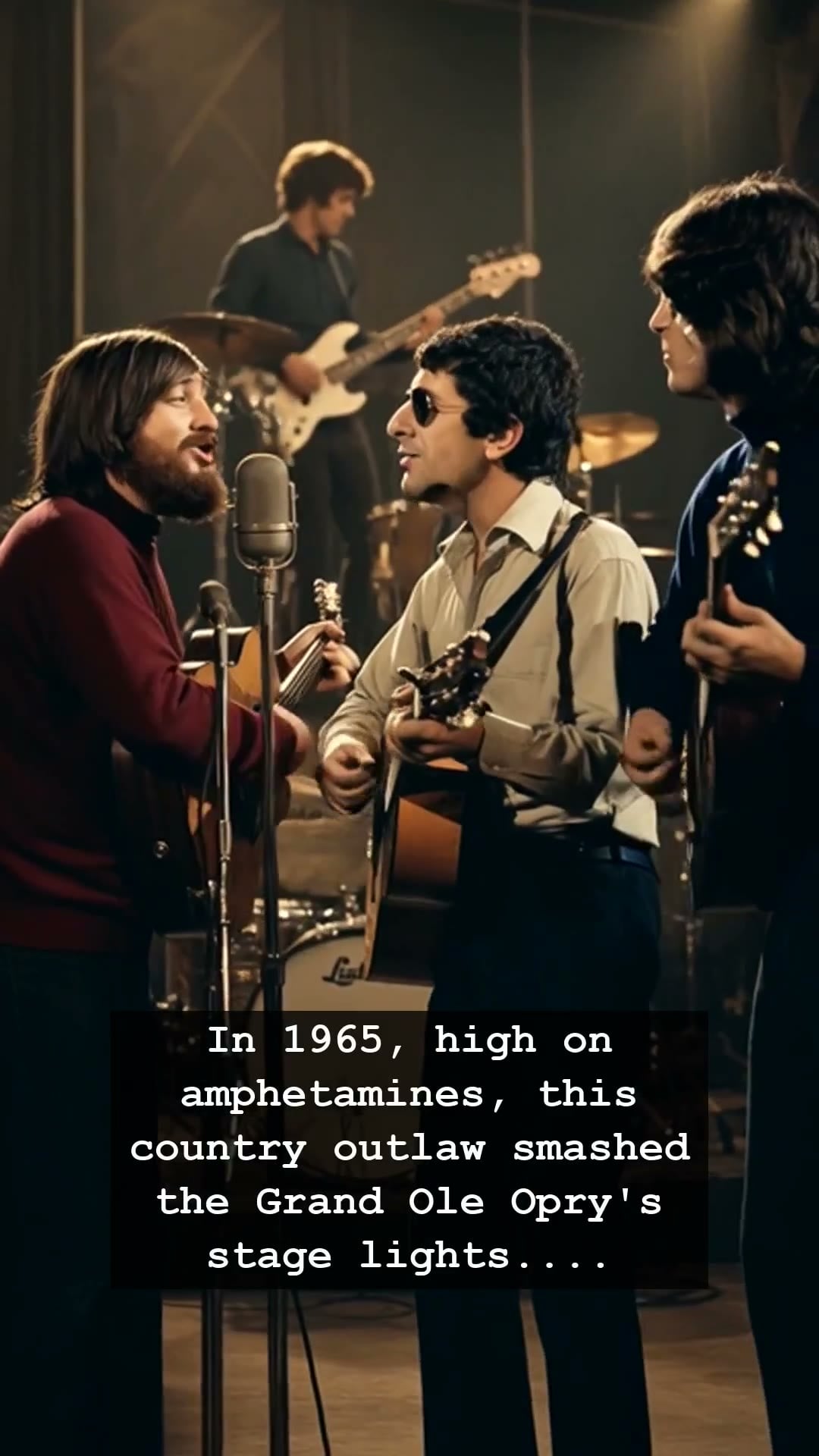
In the hallowed, conservative halls of the Grand Ole Opry, tradition was a religion. But in 1965, the temple of country music met its most volatile match: a man dressed in black, fueled by a cocktail of amphetamines and raw, unadulterated rebellion. Johnny Cash did not just perform that night; he unleashed a torrent of pent-up aggression that left the audience in shock and the Opry management scrambling to erase his presence from their history. It was a moment of pure, dangerous rock and roll attitude inside a venue that demanded nothing less than polished perfection.
As the legend goes, Johnny Cash was spiraling. The crushing weight of fame and the grueling schedule of the touring life had pushed him to the brink. Under the influence of heavy stimulants, his typical brooding intensity curdled into a manic, destructive energy. Mid-performance, as the spotlights glared down like judgmental eyes, he dragged his microphone stand across the floor with visceral force, systematically shattering every single footlight on the stage. The sound of glass exploding echoed through the auditorium, a jagged, violent punctuation mark to a career that was rapidly teetering on the edge of a total breakdown.
This incident resulted in an immediate and indefinite ban from the Grand Ole Opry. For any other artist, this might have been a career-ending humiliation. But for the Man in Black, it solidified his status as the ultimate country outlaw. In an era before the gritty reality of the punk movement or the raw cynicism of later decades, Johnny Cash was a man walking his own jagged path. He was not just singing about prison life; he was living a chaotic, high-stakes existence that terrified the Nashville establishment while captivating the hearts of millions who felt trapped by the status quo.
Looking back, this explosive moment serves as a haunting reminder of the dark underbelly of fame in the 1960s. While teenagers were discovering the jingle of the jukebox and the communal joy of the era’s pop hits, Johnny Cash was battling demons that thrived in the shadows of the studio. His outburst wasn’t just a tantrum; it was a desperate cry of a soul pushing against the suffocating constraints of his industry. The Nashville brass wanted a clean-cut star, but they had inherited a force of nature that refused to be tamed or packaged for the masses.
Today, we look back at this night not with judgment, but with a strange sense of empathy. The broken glass at the Opry stands as a monument to the human cost of legendary status. Johnny Cash eventually found his way back, finding redemption through his music and the steadying grace of June Carter, but that 1965 night remains a chilling highlight of his legacy. It reminds us that behind the voice that defined American music, there was a man who lived loudly, fell hard, and burned bright. Do you still feel the echo of that shattered glass when you listen to his records today?