
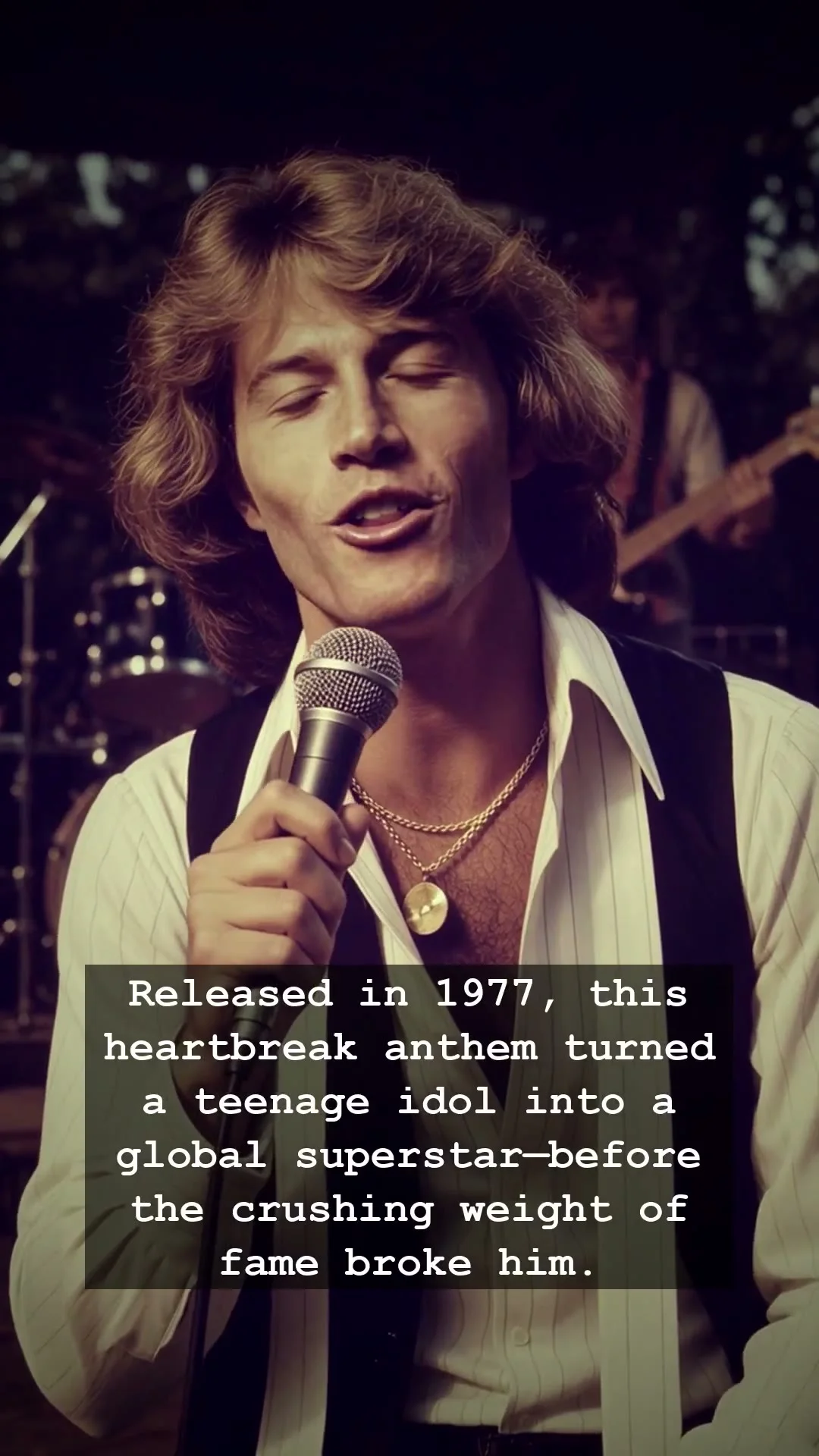
In 1977, the airwaves were dominated by the rhythmic pulse of disco and the shimmering neon lights of the era. Among the titans of the industry stood a young man with golden hair and a smile that seemed to promise eternal youth. Andy Gibb, the younger brother of the Bee Gees, burst onto the global stage with his heartbreaking anthem I Just Want to Be Your Everything. It was a song that turned a fresh-faced teenager into an international superstar overnight. But behind the polished melodies and the screaming crowds that filled arenas, a much darker reality was beginning to take hold, one that would eventually consume the golden boy of pop music.
To understand the magnitude of Andy Gibb, one must recall the late seventies. This was the age of the Jukebox and the burgeoning influence of television programs that could make or break a career in a single evening. Andy was more than just a chart-topper; he was the ultimate teen idol, embodying the carefree spirit of a generation caught between the fading remnants of the hippie movement and the hedonistic excess of the coming decade. Yet, while fans saw a glamorous life of sold-out concerts and endless praise, Andy was struggling with the crushing weight of living up to the massive legacy of his brothers while battling his own internal demons.
Fame in the late seventies was a different beast. There were no social media filters to hide behind; there were only the unforgiving spotlights and the relentless pressure of constant public scrutiny. Andy Gibb found himself trapped in a whirlwind of expectation. As he climbed the Billboard charts, the isolation of celebrity began to erode his spirit. The transition from a promising newcomer to a household name brought with it the dark temptation of substances, a path that was all too common for the rock stars of that era who sought an escape from the suffocating demands of their handlers and the media.
His downfall was as swift as his ascent. The same industry that embraced him as the poster child of pop success eventually grew cold as his personal struggles became impossible to ignore. By the early eighties, the music landscape was shifting toward new wave and synth-pop, and Andy found himself adrift. He remained a talented performer with a voice that could convey pure vulnerability, but the life he had been thrust into had taken a permanent toll on his health and his heart. The tragedy of Andy Gibb is not just a story of a lost talent, but a cautionary tale about the high price of fame.
Today, when we hear the opening notes of his greatest hits, we are transported back to a simpler time of vinyl records and slow dances. Yet, we also remember the man behind the music, a gentle soul who was simply looking for a place to belong. Andy Gibb remains a poignant reminder that even the brightest stars can be extinguished too soon by the pressures of the spotlight. May his music continue to echo through the halls of history, a beautiful, bittersweet tribute to a life lived in the glare of the world.